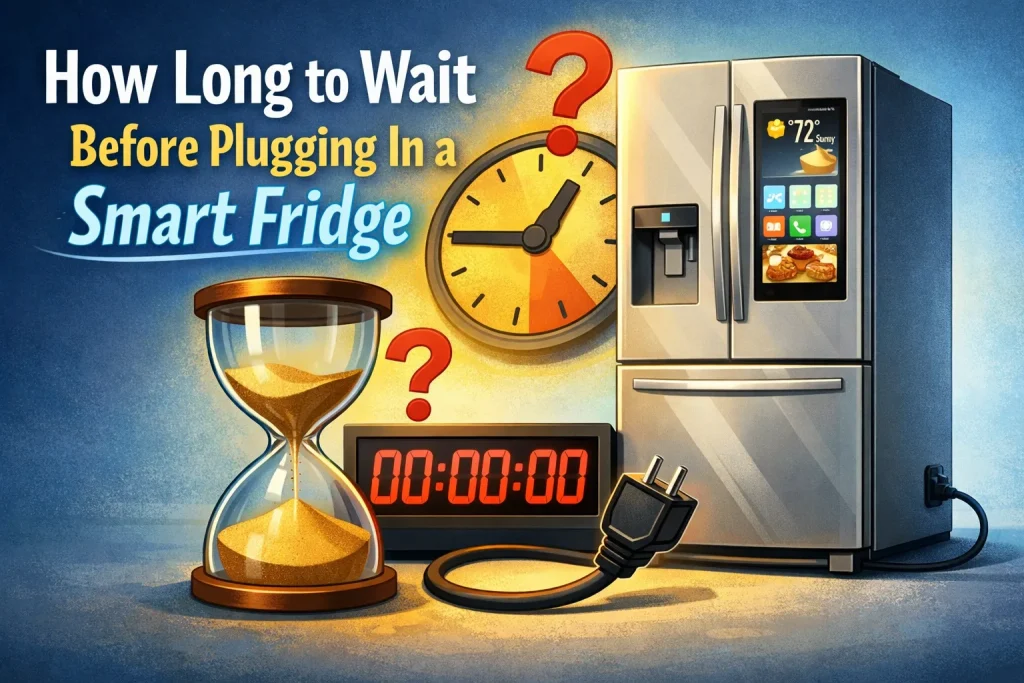
Wait at least 4 hours if your smart fridge was transported upright, and 12–24 hours if it was tilted or laid on its side. This allows the compressor oil to settle properly, preventing damage. The benefit is long-term reliability, while the main limitation is a short delay before use. Understanding How Long to Wait Before Plugging In a Smart Fridge is essential for optimal performance.
Why You Should Wait Before Plugging In a Smart Fridge
- Moving a fridge can displace compressor oil.
- Powering it on too soon may block refrigerant flow.
- Early startup can cause loud noises, uneven cooling, or permanent damage.
- Smart features don’t eliminate these mechanical risks.
“Allowing compressor oil to settle is essential for safe operation and long-term performance,” says Mark Stevens, certified refrigeration technician.
How Long Should You Wait?
Upright Transport
- Wait 4 hours minimum.
- Suitable for most standard deliveries.
Slightly Tilted Transport
- Wait 6–8 hours.
- Reduces risk if fridge leaned slightly during moving.
On Its Side or Heavily Tilted
- Wait 12–24 hours.
- Longer waiting time ensures oil returns to compressor.
Quick Reference Table:
| Transport Position | Waiting Time |
|---|---|
| Upright | 4 hours |
| Slightly tilted | 6–8 hours |
| On its side | 12–24 hours |
| Unknown position | 24 hours |
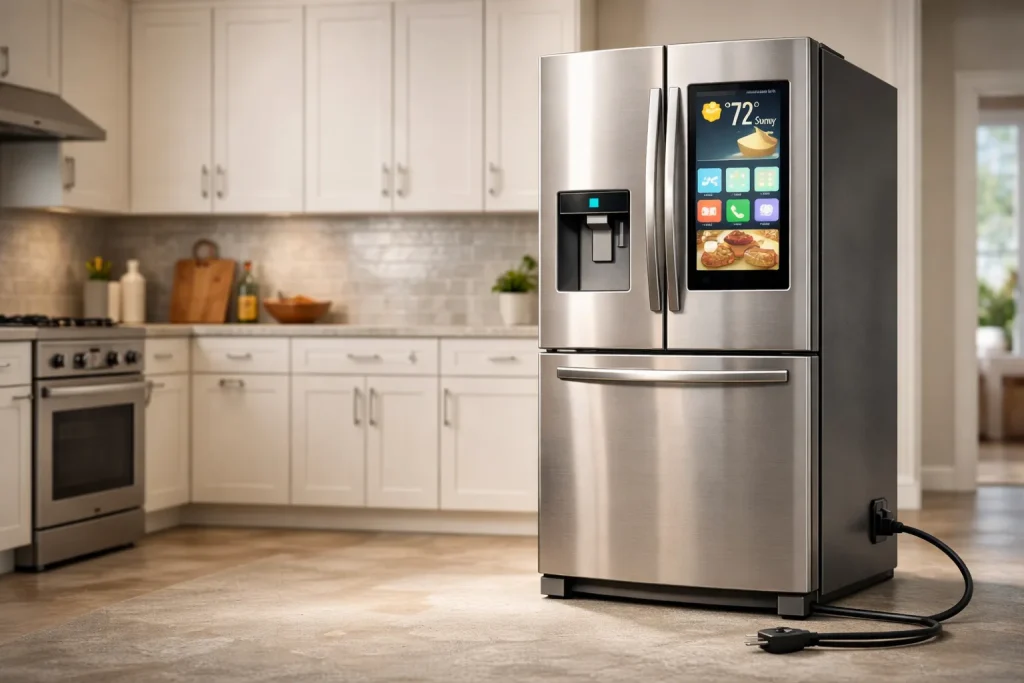
What Happens If You Plug It In Too Soon?
- Compressor may overheat.
- Oil can block refrigerant lines.
- Cooling becomes weak or uneven.
- Loud clicking or knocking noises may occur.
- Appliance lifespan can shorten.
The USDA notes that refrigerators must maintain safe cooling temperatures to prevent food spoilage and bacterial growth.
Smart Fridge Setup Tips After Waiting
- Plug into a dedicated outlet, not an extension cord.
- Let the fridge run empty for a few hours before adding food.
- Connect Wi-Fi only after the cooling system stabilizes.
- If it fails to start, refer to smart refrigerator troubleshooting.
Pros & Cons of Waiting
| Pros | Cons |
|---|---|
| Protects compressor | Short delay before use |
| Prevents costly repairs | Requires planning |
| Ensures proper cooling | Minimal inconvenience |
| Supports longer appliance life | None if planned properly |
Common Mistakes to Avoid
- Plugging in immediately – even a short test can circulate oil incorrectly.
- Assuming smart tech eliminates waiting – compressor rules still apply.
- Skipping leveling – affects cooling and door seal.
- Blocking ventilation – leave clearance around fridge.
Who This Is Best For / Not Ideal For
Best for:
- New smart fridge owners
- Fridges transported on a truck or van
- First-time appliance movers
Not ideal for:
- Fridges already running in place
- Minor repositioning without tilting
FAQs
Can I plug it in after 1–2 hours?
No. Even upright, minimum 4 hours is safest.
Does brand affect wait time?
No. Samsung, LG, Whirlpool, and others all require the same compressor settling.
What if I don’t know how it was transported?
Wait 24 hours to ensure safety.
Does this apply to normal fridges too?
Yes. Traditional refrigerators have the same mechanical requirements.
Will it cool faster if I plug it in early?
No. Early startup increases risk of damage.
Conclusion
Waiting before plugging in a smart fridge prevents compressor damage, ensures proper cooling, and avoids costly repairs. If you’re unsure about transport position, waiting 24 hours is the safest choice. Patience at setup leads to years of reliable operation.

Hi, I’m the lead researcher and appliance enthusiast behind RefrigeratorSolve. With years of hands-on experience troubleshooting cooling systems and testing home appliances, I am dedicated to bringing you honest reviews, energy-saving tips, and practical solutions to keep your refrigerator running perfectly.