Finding water underneath your Frigidaire refrigerator can be frustrating, especially when you cannot tell where it is coming from. Sometimes the problem is a loose water supply connection or an incorrectly installed filter. In other cases, a frozen defrost drain, dispenser issue, or prolonged open door may be responsible.
The best way to stop the leak is to identify where the water first appears before replacing any parts. In this guide, I’ll explain the common reasons a Frigidaire refrigerator leaks water, how to recognize each problem, and which troubleshooting steps you can safely try at home.
Quick Answer: Why Is My Frigidaire Refrigerator Leaking Water?
A Frigidaire refrigerator may leak water because of a loose water supply connection, cracked water filter, faulty inlet valve, clogged defrost drain, frost inside the ice dispenser chute, or trapped air in the water line. Leaving the refrigerator door open for too long can also cause evaporator icing and water leakage from underneath the appliance.
Start by identifying where the water appears. Checking the rear connections, water filter, dispenser, and door closure can help narrow down the problem before you call a repair technician.
Where Is Your Frigidaire Refrigerator Leaking Water From?
Before attempting a repair, take a moment to identify the exact location of the leak.
Water does not always appear directly underneath the damaged component. It can travel along the refrigerator’s internal surfaces or base before reaching the floor.
Use this table to narrow down the possible source.
| Where You Notice Water | Possible Cause |
|---|---|
| Underneath the refrigerator | Water line leak, evaporator icing, or drainage problem |
| Behind the refrigerator | Loose supply line or leaking water inlet connection |
| Inside the refrigerator | Cracked water filter or internal water connection |
| Under the crisper drawers | Possible drainage issue or accumulated moisture |
| Around the water dispenser | Trapped air or frost inside the dispenser chute |
| Near the ice maker | Water feed connection or ice maker-related issue |
| Around the refrigerator door | Condensation or poor door sealing |
One important detail: a puddle underneath the refrigerator does not automatically mean the drain pan or defrost system is damaged. First, find where the water is coming from.
8 Common Reasons Your Frigidaire Refrigerator Is Leaking Water

Let’s look at the most common problems worth investigating and how you can identify them.
1. Loose or Damaged Water Supply Line
A loose or damaged water supply line is one of the first things to check when water appears behind your Frigidaire refrigerator.
The supply line connects your refrigerator to the household water supply. It delivers water to components such as the ice maker and water dispenser.
Over time, the tubing or its connections may loosen, crack, or become damaged. This can allow water to escape and collect behind or underneath the refrigerator.
Common signs include:
- Water collecting behind the refrigerator.
- Dampness around the water connection.
- A visible crack or damaged section of tubing.
- Water appearing near the lower rear corner.
- Leakage that started after moving or installing the refrigerator.
How to check and fix it:
- Turn off the refrigerator’s water supply using the accessible shutoff valve.
- Carefully inspect the visible water line and connections.
- Use a dry paper towel to check which connection is wet.
- Look for cracks, loose fittings, or damaged tubing.
- Follow the manufacturer’s instructions to secure a loose connection.
- Replace damaged tubing with a compatible water supply line.
Do not use tape or glue as a permanent repair for a cracked pressurized water line.
Be careful when moving the refrigerator. It is heavy, and pulling it out too far can damage the water tubing or electrical cord. Get assistance when necessary.
If the leak comes from the household shutoff valve or a damaged plumbing connection, a plumber may be needed.
For more detailed instructions, read our guide on how to fix a refrigerator water line leak.
2. Improperly Installed or Cracked Water Filter
If your Frigidaire refrigerator is leaking water inside the cabinet, check the water filter.
A refrigerator water filter must fit securely into its housing to create a proper seal. If the cartridge is not installed correctly, water may escape around the connection.
A cracked filter can also cause leakage inside the refrigerator. You may notice water around the filter compartment, underneath the filter housing, or near the shelves.
This problem deserves special attention if the leak started shortly after replacing the water filter.
Common signs include:
- Water droplets around the filter cartridge.
- Moisture underneath the filter housing.
- Water appearing shortly after filter replacement.
- The dispenser producing slow or irregular water flow.
- A visible crack in the filter cartridge.
How to check and fix it:
- Turn off the water supply if there is an active leak.
- Find the water filter location using your refrigerator’s owner manual.
- Remove the filter following the model-specific instructions.
- Inspect the cartridge for visible cracks or damage.
- Check the sealing area and filter housing for signs of leakage.
- Reinstall the correct filter securely or replace a damaged cartridge.
- Restore the water supply carefully and check for new leaks.
Never force a filter into its housing. Different Frigidaire models use different filter designs, so the installation procedure may vary.
A damaged filter housing or filter head can also cause continuous leakage. If a correctly installed replacement filter does not solve the problem, the housing assembly may need professional inspection.
You can find more troubleshooting information in our detailed guide on why a refrigerator water filter leaks and how to fix it.
For manufacturer-specific instructions, see Frigidaire’s official refrigerator water leak troubleshooting guide.
3. Faulty Water Inlet Valve or Internal Water Connection
The water inlet valve controls the flow of water entering your refrigerator.
It supplies water to components such as the ice maker and dispenser. When the refrigerator needs water, the valve opens to allow the required amount to enter.
If the valve develops a crack, its fittings become loose, or the assembly begins leaking, water may collect near the back or underneath the refrigerator.
Some refrigerators also contain internal water tank or reservoir assemblies. A damaged connection or leaking tank can produce moisture inside the cabinet.
Possible warning signs include:
- Water appearing near the lower rear section.
- Moisture around the inlet valve connections.
- Continuous leakage even when the dispenser is not being used.
- Water collecting inside the refrigerator without an obvious filter leak.
- Leakage returning after tightening an external connection.
What should you do?
First, close the refrigerator’s water shutoff valve if you suspect an active water supply leak.
You can visually inspect accessible external connections for moisture. However, checking the internal valve, electrical connections, and water reservoir may require removing service panels.
I recommend leaving those inspections to a qualified appliance technician.
Replacing the inlet valve without confirming the source of the leak can waste money and may not solve the problem.
Use a replacement component that matches your refrigerator’s complete model number.
4. Frozen or Clogged Defrost Drain
A blocked or frozen defrost drain can cause water to collect inside a refrigerator or leak onto the kitchen floor.
During an automatic defrost cycle, frost melts from the evaporator area. The resulting water normally travels through a drainage passage toward a drain pan, where it gradually evaporates.
If the drainage opening or tube becomes blocked, water may collect instead of draining properly.
Possible signs include:
- Water collecting underneath the refrigerator drawers.
- Ice forming on the bottom of the freezer or refrigerator compartment.
- Repeated moisture appearing in the same location.
- Water appearing after a defrost cycle.
How to troubleshoot it:
- Check your Frigidaire owner manual to locate the defrost drain.
- Inspect the accessible drainage area for visible ice or debris.
- Check whether the drain opening is designed for user maintenance.
- Follow the cleaning procedure specified for your model.
- Monitor the refrigerator to see whether water returns.
Do not insert knives, screwdrivers, sharp wires, or other objects into the drainage opening. They can damage the drain tube or nearby components.
Also, do not pour boiling water into the drain unless the manufacturer specifically approves the procedure for your model.
An important model-specific note: Frigidaire’s official general water-leak guide focuses on rear water connections, the water filter, prolonged door opening, and dispenser problems. It does not identify a clogged defrost drain as a universal cause. However, Frigidaire Appliance Parts’ refrigerator leak troubleshooting guide identifies a frozen or clogged defrost drain as a possible cause on applicable refrigerator designs.
If the drain is hidden behind an internal panel or repeatedly freezes, arrange a professional inspection.
5. Ice or Frost Blocking the Water Dispenser Chute
Does your Frigidaire refrigerator leak water around the ice or water dispenser?
If so, inspect the visible dispenser chute for ice or frost buildup.
Ice can accumulate inside or around the chute. When that ice melts, water may run down the chute and appear around the dispenser opening or refrigerator door.
This is particularly worth checking if you notice water only around the dispenser area.
Common signs include:
- Water dripping around the ice dispenser opening.
- Frost visible inside the ice chute.
- Moisture appearing on the refrigerator door.
- Water collecting in the dispenser recess.
- Ice fragments remaining inside the chute.
How to check it:
- Open the refrigerator door.
- Look down the accessible ice chute.
- Check for visible frost or ice buildup.
- Follow the cleaning or defrosting instructions in your owner manual.
- Make sure the chute flap closes properly.
Do not use sharp tools to remove ice. A damaged chute or seal can create further problems.
Frigidaire specifically identifies melting ice inside the dispenser chute as a possible source of water leakage. You can read its official frost buildup troubleshooting guidance.
6. Trapped Air in the Water Line After Filter Replacement
Sometimes, a Frigidaire refrigerator water dispenser starts dripping or producing irregular water flow after a filter replacement.
This can happen because air becomes trapped inside the water line.
When air remains in the system, the water may sputter, come out unevenly, or produce droplets at the dispenser tip.
The issue can also occur after installing a new refrigerator or connecting a new water supply.
Common signs include:
- Water dripping from the dispenser tip.
- Irregular water flow.
- Sputtering when dispensing water.
- Leakage beginning after installing a new filter.
- Water flow becoming more consistent after several dispensing cycles.
How to fix it:
Frigidaire recommends priming and purging the water supply system after installing a new refrigerator or replacement water filter.
The general procedure is:
- Place a suitable container under the water dispenser.
- Press and hold the dispenser paddle until water begins flowing.
- Keep dispensing water for several minutes to flush the system.
- Discard the collected water.
- Repeat the process according to your model’s instructions.
Frigidaire recommends discarding approximately 3–5 tall glasses of water after installing a new filter. For a newly installed refrigerator, it recommends discarding at least one gallon.
Always follow the instructions in your refrigerator’s owner manual if they specify a different procedure.
You can read Frigidaire’s official Prime and Purge Guide for additional instructions.
If the dispenser continues dripping after the system has been properly purged, the problem may involve the dispenser mechanism, inlet valve, or an internal connection.
For additional troubleshooting, see our guide on how to fix a leaking refrigerator water dispenser.
7. Refrigerator Door Left Open for Too Long
An open refrigerator door can sometimes lead to water leakage underneath the appliance.
When the door remains open for an extended period, warm, humid air enters the refrigerator and freezer compartments.
This can cause excess frost to develop around the evaporator. When that ice melts, water may escape from the bottom of the refrigerator or near the ice maker area.
Frigidaire specifically identifies prolonged door opening as a possible reason for evaporator icing and subsequent water leakage.
Common signs include:
- The refrigerator door was accidentally left open.
- Excess frost appears inside the freezer.
- Water starts appearing underneath the refrigerator.
- The door does not close properly.
- Moisture or frost returns after the refrigerator has been in normal use.
How to fix it:
- Close the refrigerator and freezer doors completely.
- Check whether food containers or shelves are preventing proper closure.
- Inspect the visible door gasket for dirt, tears, or twists.
- Remove any obstruction that prevents the door from closing.
- Allow the refrigerator to return to normal operating conditions.
- Monitor the floor for additional water.
If the gasket is damaged or no longer seals properly, it may need replacement.
You can follow our step-by-step guide on how to replace a door seal on a Frigidaire refrigerator.
If water continues leaking after correcting the door problem, the evaporator area or another drainage component may need professional attention.
8. Damaged Water Filter Housing, Filter Head, or Water Tank Assembly
Sometimes, replacing the water filter does not stop a Frigidaire refrigerator from leaking.
The reason may be a damaged component behind the filter rather than the cartridge itself.
The filter housing holds the cartridge in place, while the filter head connects the assembly to the refrigerator’s water system.
If the housing develops a crack or the filter head seal becomes damaged, water may escape even when a new filter is installed correctly.
Some models also contain an internal water tank or reservoir that can develop a leak.
Possible signs include:
- Water collecting underneath the filter compartment.
- Leakage continuing after installing a compatible filter.
- Moisture around the internal water tank area.
- Water appearing inside the refrigerator without visible damage to the filter cartridge.
What should you do?
First, check that the filter is compatible with your refrigerator and properly installed.
If the leakage continues, avoid repeatedly removing and reinstalling the filter.
A cracked housing, damaged filter head, or leaking water tank assembly usually requires a model-specific replacement part.
Because these components may be hidden inside the refrigerator, professional diagnosis is often the safest option.
Is Your Frigidaire Refrigerator Leaking Water or Just Producing Condensation?
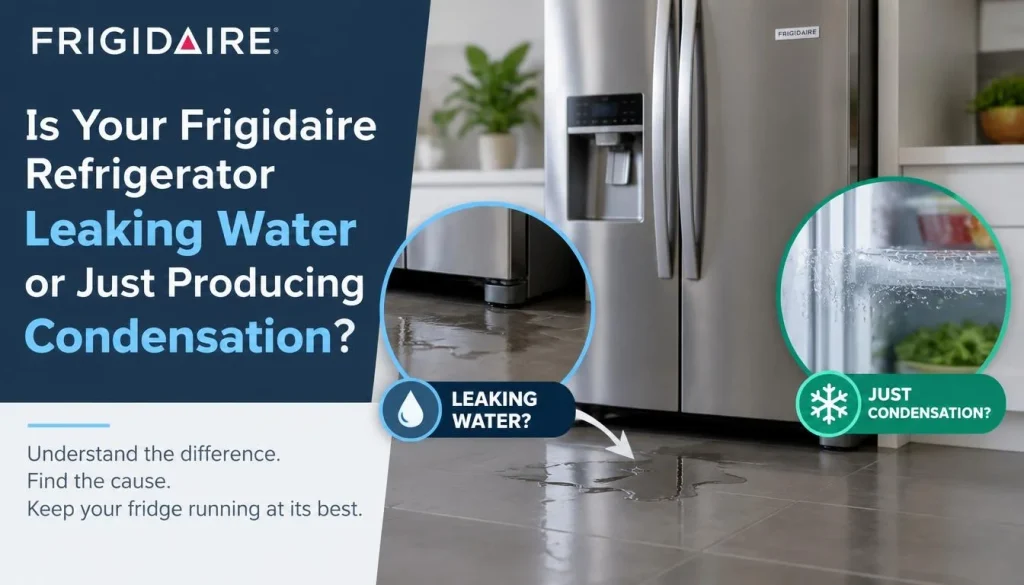
Not every wet spot inside or around a refrigerator indicates a mechanical leak.
Sometimes, the moisture is normal condensation caused by warm, humid air entering the refrigerator.
This distinction matters because replacing a water valve or drainage component will not solve a condensation problem.
Here are some situations worth checking.
Water collecting inside crisper drawers
Moisture can accumulate inside produce drawers because fruits and vegetables naturally release water. Washed produce can also drain excess water into the drawer.
Check whether the moisture appears consistently around a particular component or only after storing wet vegetables.
Moisture on refrigerator walls
Condensation may appear when warm, humid air meets cold interior surfaces.
Check that the doors are fully closed and that food packages are not blocking the door.
Moisture around the door frame
A damaged or poorly sealing gasket can allow warm air to enter.
Inspect the rubber seal for visible tears, dirt, or gaps.
Water around the dispenser after use
A few droplets remaining immediately after dispensing may be related to trapped air or water left in the dispensing system.
However, continuous dripping should not be ignored.
If moisture repeatedly returns to the same location, investigate the source instead of assuming it is normal condensation.
How to Troubleshoot a Leaking Frigidaire Refrigerator Step by Step
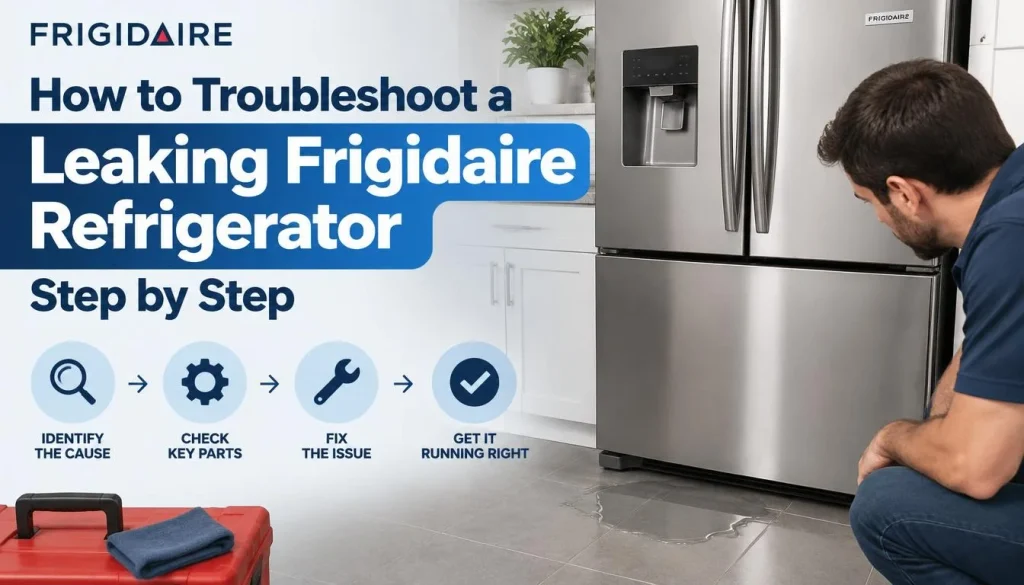
If you are unsure where to begin, follow this simple inspection process.
Step 1: Identify the leak location
Check the refrigerator interior, water filter area, dispenser, freezer, and floor around the appliance.
Note whether the water appears behind the refrigerator, underneath it, or inside the cabinet.
Step 2: Protect the surrounding area
Move nearby items away from the water and dry the floor.
Keep water away from electrical outlets, extension cords, and the refrigerator’s power connection.
If water has reached electrical components or the power cord, do not touch the wet equipment. Isolate power at the circuit breaker from a safe, dry location if possible, and arrange professional assistance.
For additional guidance, see the Electrical Safety Foundation International’s kitchen safety recommendations.
Step 3: Check the water supply line
If the leak appears behind the appliance, inspect the accessible water connections and tubing.
Turn off the water supply before attempting any connection repair.
Step 4: Inspect the water filter
Check whether the filter is seated correctly and whether the cartridge or accessible housing shows visible damage.
Use a replacement that matches your refrigerator model.
Step 5: Examine the dispenser
Look for frost inside the ice chute and moisture around the dispenser tip.
If you recently changed the filter, follow the manufacturer’s priming and purging instructions.
Step 6: Check the doors
Make sure the refrigerator and freezer doors close fully.
Inspect the gasket and remove anything blocking the doors.
Step 7: Check the drainage system if applicable
If water collects under the drawers or on the freezer floor, consult your owner manual for the location and maintenance procedure of the defrost drain.
Do not remove internal panels or force tools into hidden drainage components.
Step 8: Monitor the refrigerator
After completing a safe correction, restore the water supply carefully and check the inspected areas for fresh moisture.
If the leak returns, stop using the affected water feature and arrange professional service.
When Should You Call a Frigidaire Refrigerator Repair Technician?
Some refrigerator leaks are manageable through basic troubleshooting. Others require professional repair.
Contact a qualified appliance technician if:
- Water continues leaking after checking the accessible connections.
- The water inlet valve appears damaged.
- The internal water tank or filter housing is leaking.
- The defrost drain repeatedly becomes blocked.
- Water is leaking from behind internal panels.
- The dispenser continues dripping after the line has been properly purged.
- The ice maker repeatedly leaks water.
- Water has reached electrical components.
- You cannot identify the source of the leakage.
Do not attempt to test electrical components or replace internal water-system parts while the refrigerator is connected to power.
If your refrigerator is newly installed and the leakage started within the first 30 days, Frigidaire recommends contacting the original installer to resolve the issue. Check the manufacturer’s guidance and your warranty terms before arranging an independent repair.
Frequently Asked Questions
1. Why is my Frigidaire refrigerator leaking water onto the floor?
Your Frigidaire refrigerator may leak water onto the floor because of a loose water supply connection, damaged water filter, faulty inlet valve, drainage problem, or evaporator icing caused by a door left open for too long. Check the location where the water first appears before replacing any components.
2. Why is my Frigidaire refrigerator leaking water from the bottom?
Water leaking from the bottom may be related to a loose rear water connection, an internal leak, or melting ice around the evaporator area. Frigidaire specifically identifies prolonged door opening as one possible cause of evaporator icing and water leaking underneath the appliance.
3. Why is my Frigidaire refrigerator leaking water inside?
A cracked or incorrectly installed water filter is one possible cause of water leaking inside a Frigidaire refrigerator. A damaged filter housing or internal water connection may also be responsible. Check the filter first, especially if the leakage started after replacing it.
4. Why is my Frigidaire refrigerator leaking water after changing the filter?
Water may leak after changing the filter because the cartridge is not securely installed, the replacement filter is incompatible, or the filter is damaged. Trapped air can also cause irregular water flow or dripping at the dispenser. Check the installation and follow Frigidaire’s recommended priming procedure.
5. Why is my Frigidaire water dispenser dripping?
A Frigidaire water dispenser may drip because of trapped air in the water line or frost inside the ice dispenser chute. If the dripping continues after properly purging the water line and checking the chute, the dispenser assembly or inlet valve may require professional inspection.
6. Can a clogged defrost drain cause a Frigidaire refrigerator to leak?
Yes, a frozen or clogged defrost drain can cause water to collect inside or underneath refrigerator models that use this type of drainage system. However, drain designs differ between models. Check your owner’s manual before attempting to clean the drainage system.
7. Why is water collecting under my Frigidaire crisper drawers?
Water under the crisper drawers may indicate a drainage problem, but it is not always a mechanical leak. Wet produce and condensation can also contribute to moisture accumulation. If water repeatedly returns or ice forms on the refrigerator floor, inspect the applicable drainage system.
8. Why is my Frigidaire refrigerator leaking water from the back?
Water leaking from behind the refrigerator may come from a loose water supply connection, damaged tubing, or a leaking inlet valve. Turn off the water supply and inspect accessible connections. If the leak comes from an internal component, arrange professional repair.
9. Is it safe to use a Frigidaire refrigerator that is leaking water?
It depends on the location and severity of the leak. A small water leak away from electrical components may not immediately affect refrigerator operation, but it should still be investigated. If water reaches the power cord, outlet, or electrical parts, do not touch the wet equipment. Isolate power from a safe, dry location and contact a qualified technician.
Final Thoughts
A leaking Frigidaire refrigerator does not always require an expensive repair. Sometimes, the problem is simply a loose water supply connection, an incorrectly installed filter, frost inside the dispenser chute, or trapped air in the water line.
The important thing is to identify where the water is coming from before replacing any parts.
Start with the accessible water connections, filter, dispenser, and door closure. If the problem involves an internal water component, repeated drainage blockage, or electrical equipment, get help from a qualified appliance technician.
Also, remember that Frigidaire refrigerators do not all use identical water and drainage systems. Always check the complete model number and follow the instructions in the correct owner manual.
A careful inspection can help you avoid unnecessary part replacements, protect your kitchen floor, and get your refrigerator back to normal operation.

Hi, I’m the lead researcher and appliance enthusiast behind RefrigeratorSolve. With years of hands-on experience troubleshooting cooling systems and testing home appliances, I am dedicated to bringing you honest reviews, energy-saving tips, and practical solutions to keep your refrigerator running perfectly.