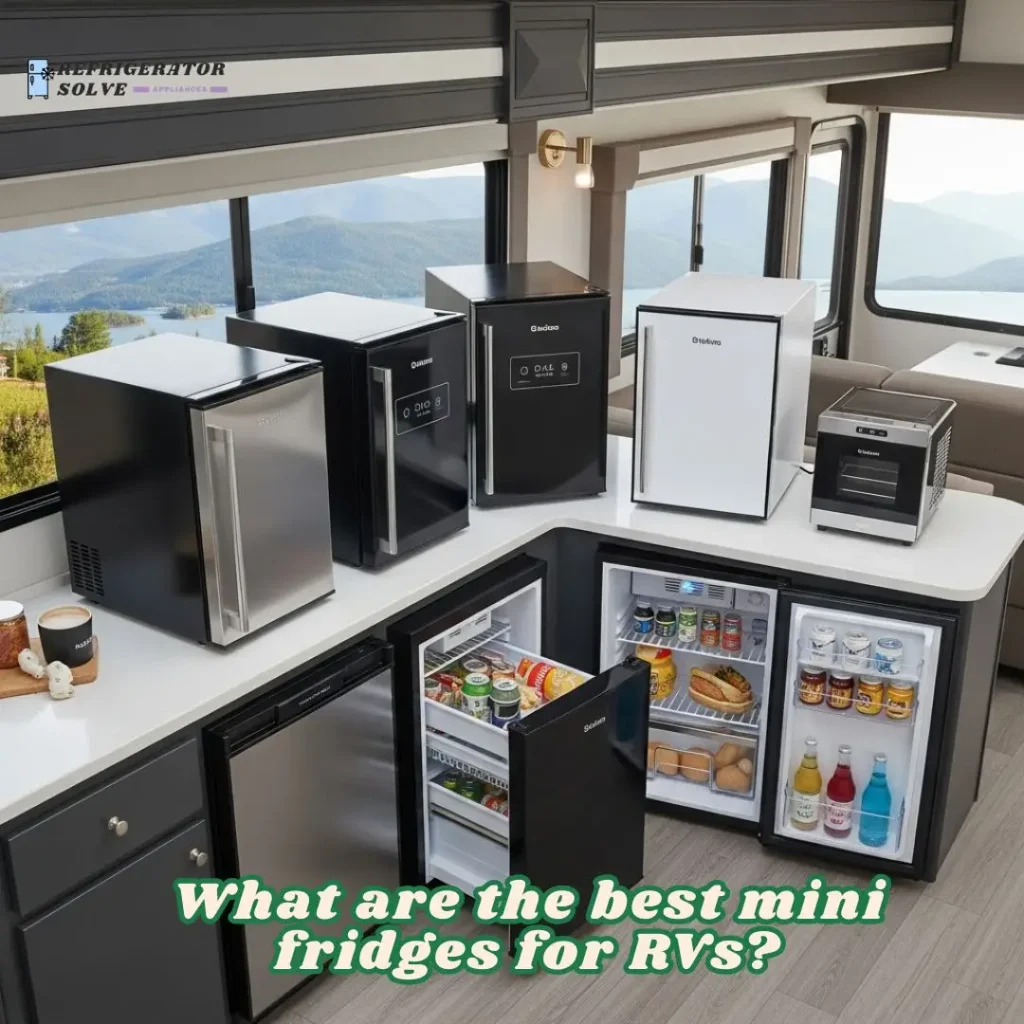
The best mini fridges for RVs balance efficient cooling with your vehicle’s power limits, offering reliable performance whether you’re plugged in or off-grid. Your ideal choice depends on your specific travel style, power setup, and space needs.
For years, my husband and I dreamed of hitting the open road. We finally took the plunge, sold a bunch of our stuff, and moved into a used Class C motorhome. It was thrilling! That is, until our third day on the road, when I opened the door to our aging, built-in absorption fridge and was greeted by the sour smell of warm milk and limp vegetables. Our grand adventure was facing its first major test: a broken refrigerator.
That frustrating experience sent me on a deep search for a solution. I spent hours in online forums, talked to other RVers at campgrounds, and read countless product manuals. I became, by necessity, the family expert on RV cooling. I learned that the question “What are the best mini fridges for RVs?” doesn’t have a single answer, but a perfect one for you is out there.
Why You Might Need a Mini Fridge for Your RV

Maybe you’re in the same boat we were your main fridge gave up the ghost. Or perhaps you’re a weekend warrior who just needs extra space for drinks and snacks. A mini fridge can be a total upgrade for your RV life. It gives you flexibility, acts as a backup, and can even become your primary fridge if you choose the right model.
The pain points are real. You worry about power drain, especially if you love boondocking away from hookups. You’re frustrated by a fridge that can’t keep a consistent temperature. You’ve probably struggled with limited space and an awkward layout that makes it hard to store a gallon of milk. I get it. I’ve been there, staring at a warm beer and wondering where it all went wrong.
The Big Choice: Absorption vs. Compressor Fridges
This is the first crossroads you’ll meet. Most older RVs come with an absorption refrigerator. These units use a heat source (either propane or electric) to cool your food. They’ve been the standard for decades, but they have some big drawbacks.
- Pros: Can run on propane, which is great for off-grid camping.
- Cons: They need to be perfectly level to work correctly, they are less efficient on electricity, and they take a long time to cool down.
The modern alternative is the compressor fridge (like the one in your house). These use a small motor and refrigerant to cool the interior.
- Pros: They cool down very fast, are much more energy-efficient, and don’t care if your RV isn’t perfectly level.
- Cons: They typically only run on electricity (AC or DC).
For us, the switch to a compressor model was a revelation. No more worrying about being level in a parking lot for a quick lunch stop. The temperature control was precise, and our food stayed fresher, longer. As my friend and fellow RVer, Mark Richardson, told me, “Switching to a 12V compressor fridge was the single best upgrade for our boondocking setup. The peace of mind knowing our food is cold, regardless of the RV’s angle, is priceless.”
Key Features to Look For in Your RV Mini Fridge
Once you’ve decided on the type, it’s time to look at the specifics. Here’s what I learned to prioritize:
- Power Source (AC/DC/Propane): This is huge. Where will you get your power?
- 12V DC: Plugs directly into your RV’s electrical system. Perfect for driving or running off your house batteries.
- 120V AC: Needs to be plugged into a standard wall outlet or a powerful inverter. Best for when you have a shore power connection.
- Dual-Power: Many modern portable fridges can switch between 12V DC and 120V AC, giving you maximum flexibility.
- Propane: The domain of absorption fridges, best for long-term boondocking without electrical hookups.
- Energy Efficiency: This is your best friend for battery life. Look for models with low amp draw on 12V. An energy-star rated appliance, if you’re looking at a 120V model, is a good sign for efficiency.
- Size and Capacity: Measure your space twice! Think about both the external dimensions and the internal storage. Capacity is usually measured in liters or cubic feet. A 1.7 cubic feet model might be fine for a couple, but a family of four might need 3.5 cubic feet or more.
- Portability and Design: Do you need handles and a lightweight build to move it in and out? A sleek, stainless steel finish might look nice, but a durable plastic exterior can be lighter and more resistant to scratches.
- Temperature Control and Consistency: A digital thermostat is a wonderful feature. It allows you to set an exact temperature and know your fridge is maintaining it, which is crucial for food safety.
- Durability and Brand Reputation: Look for brands known for quality and good customer service. You want a fridge that can handle the bumps and vibrations of travel.
Our Top Picks: Finding the Best Fit for Your Needs
Based on my research and conversations with the RV community, here are a few standout categories. Remember, “best” is personal!
For the Serious Boondocker: The Dometic CFX3 Series
These 12V compressor fridges are the gold standard for off-grid reliability. They are incredibly efficient, built like tanks, and often feature smartphone connectivity to monitor and control temperature remotely. They are an investment, but for those who spend weeks off the grid, the performance and low power consumption are worth every penny.
The All-Around Family Favorite: The ICECO GO20 Series
ICECO offers a fantastic balance of performance and value. Their dual-zone models are brilliant, allowing you to have one side as a fridge and the other as a freezer. They are efficient, well-insulated, and come with features like a low battery protection system to prevent draining your RV batteries completely.
The Budget-Friendly Upgrade: A Standard Mini Fridge
You can find many affordable 120V AC mini fridges from brands like Danby or Galanz at your local home store. These are perfect if you primarily camp with full hookups and want a simple, cheap unit for extra soda and beer. Just know you’ll need a sufficiently sized inverter to run it from your batteries.
The Space-Saver: A Chest-Style Portable Fridge
The chest-style design is naturally more efficient because cold air sinks and doesn’t spill out when you open the lid. They are great for organization with baskets and tend to have better insulation. They can be a bit deeper, so check your vertical space.
My Personal Experience: Making the Switch
We ultimately chose a 35-liter 12V compressor fridge from a reputable brand to replace our old absorption unit. The installation was straightforward; we simply secured it in the old fridge cavity and wired it to our auxiliary battery fuse panel.
The difference was night and day. On our first trip, we drove for six hours, and the fridge, running off the vehicle’s alternator, kept our food perfectly cold. That evening, parked off-grid, it sipped power from our solar-charged battery bank. We woke up to a fridge full of cold food and a battery that was still happily charged. It completely changed our confidence in remote travel.
As Sarah Chen, a full-time RVer I met in Arizona, perfectly summed it up: “In RVing, your comfort is directly tied to your systems’ reliability. A good fridge isn’t a luxury; it’s the heart of a happy kitchen on wheels.”
Installation Tips and Power Management
You don’t need to be an electrician, but you do need to be careful.
- Ventilation: Compressor fridges need space to breathe. Never install them in a completely sealed cabinet. Ensure there’s at least an inch or two of space around the back and sides for heat to dissipate.
- Secure It: Your fridge is heavy and becomes a projectile in a sudden stop. Use brackets, straps, or velcro to secure it firmly.
- Wiring: If you’re installing a 12V fridge, use the correct wire gauge for the distance and amperage. A fuse on the positive wire is non-negotiable for safety. If you’re unsure, consult a professional or a very detailed guide from a source like the RV Industry Association.
- Know Your Power: Calculate your power needs. A fridge that draws 3 amps per hour will use 72 amp-hours in a 24-hour period. If your battery bank is only 100 amp-hours, you’ll need a way to recharge, like solar panels or a generator, to avoid running out of power.
Frequently Asked Questions for What are the Best Mini Fridges for RVs
Can I just use a regular house mini fridge in my RV?
You can, but it’s not ideal. A standard 120V fridge will only work when you’re plugged into shore power or have a large, active inverter. They are also less efficient and not built to handle the vibration of travel, which could lead to an early failure.
How do I keep my RV fridge cool in hot weather?
This is a common struggle! Park in the shade if possible. Ensure the fridge’s vents (if it’s a built-in) are clean and unobstructed. For any fridge, try not to open the door too often, and consider using a small fan inside the fridge to circulate air.
What size fridge do I really need?
A good rule of thumb is 1.5 to 2 cubic feet (40-60 liters) for one or two people. Add another 1 cubic foot (30 liters) for each additional person. Think about how often you shop; if you restock every few days, you can get away with a smaller unit.
Are there mini fridges with separate freezers?
Yes! Many models, especially the dual-zone portable fridges, can operate as a freezer or a fridge. Some smaller upright models also have a tiny freezer compartment, but expect it to be suitable for ice packs or a pint of ice cream, not for freezing a week’s worth of meat.
Conclusion
Finding the best mini fridge for your RV is all about matching the appliance to your lifestyle. There’s no one-size-fits-all solution. Whether you’re a weekend warrior needing extra drink space or a full-time boondocker relying on solar power, the right fridge is out there.
Think about your power sources, measure your space, and be honest about your capacity needs. Investing in a good quality, efficient fridge will pay you back in peace of mind and cold drinks for years to come. It transformed our RV experience from a constant worry about food spoilage to a truly carefree adventure. As the great explorer John Muir once said, “The mountains are calling, and I must go.” And now, with a reliable fridge, you can go with the confidence that your food and drinks will be just as you left them perfectly chilled.
Happy travels

Hi, I’m the lead researcher and appliance enthusiast behind RefrigeratorSolve. With years of hands-on experience troubleshooting cooling systems and testing home appliances, I am dedicated to bringing you honest reviews, energy-saving tips, and practical solutions to keep your refrigerator running perfectly.