A loud noise coming from your Samsung refrigerator can quickly turn from a small annoyance to a big worry. That constant buzzing, rattling, or humming is not just distracting—it can also be a sign that something’s not right inside your fridge.
Whether you’re trying to get a good night’s sleep or just want a quieter kitchen, understanding what causes these noises and how to fix them is important. This guide gives you clear answers, practical steps, and some expert tips to help you deal with a noisy Samsung refrigerator.
Why Is My Samsung Refrigerator Making Loud Noise?
Most refrigerators make some sound as they work. But when the noise becomes much louder, sharper, or different from normal, it often means there’s a problem. The sound could come from the back, inside, or even underneath the fridge. Common causes include issues with the evaporator fan, condenser fan, compressor, or even something as simple as items touching inside the fridge.
Here’s what many Samsung refrigerator owners experience:
- Buzzing or humming from the back or bottom
- Clicking or popping sounds
- Rattling when the compressor turns on
- Grinding or scraping from inside the fridge
Knowing where the noise comes from and what it sounds like can help you find the cause and solution faster.
Common Causes Of Loud Noise In Samsung Refrigerators
Understanding the root of the noise is the first step. Let’s look at the most frequent reasons for a loud Samsung refrigerator.
1. Evaporator Fan Problems
The evaporator fan circulates cold air inside your fridge. If it gets blocked by ice, food, or debris, it can make a loud noise. Sometimes the motor itself wears out and starts to whine or grind.
- Typical sound: Whirring, squealing, or grinding inside the fridge or freezer
- Check: Open your freezer; if the noise gets louder, it’s likely the evaporator fan
2. Condenser Fan Issues
The condenser fan is located at the back near the bottom. Dust, pet hair, or a loose fan blade can cause rattling or vibrating noises.
- Typical sound: Rattling or vibrating from the rear bottom area
- Check: Move the fridge out a little and listen at the back
3. Compressor Noise
The compressor is like the engine of your fridge. It usually hums quietly, but if it’s wearing out, the sound can become much louder, sometimes with clicking or knocking.
- Typical sound: Deep humming or knocking, often from the bottom rear
- Check: The sound may start and stop as the compressor cycles on and off
4. Ice Build-up
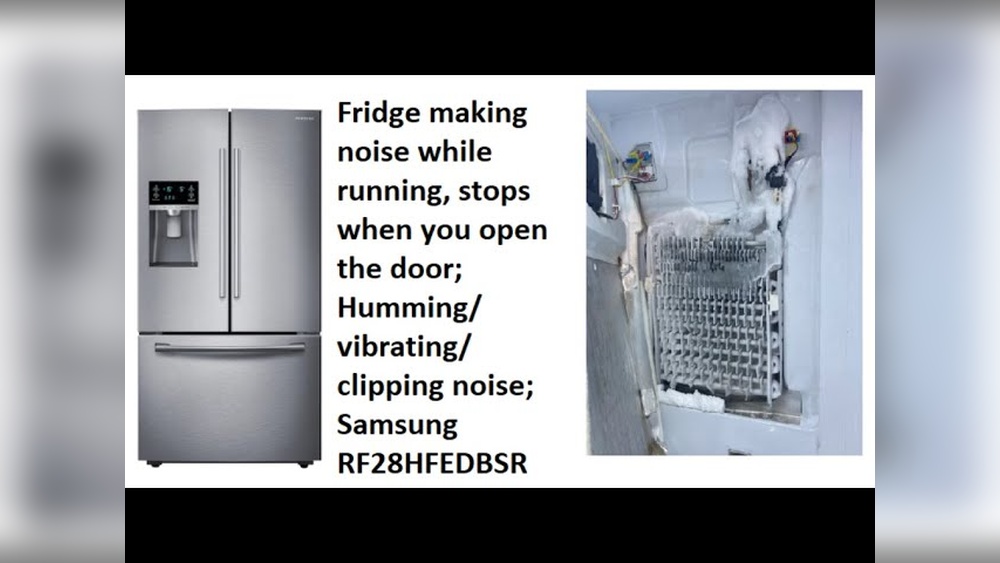
Sometimes ice forms where it shouldn’t—around the fan or air vents. As the fan spins, it hits the ice, causing a loud noise.
- Typical sound: Scraping or grinding, often right after a defrost cycle
- Check: Look for frost buildup in your freezer
5. Items Vibrating
A surprising cause is everyday items inside or on top of the fridge. Bottles or pans touching the fridge walls can create extra noise as the fridge vibrates.
- Typical sound: Rattling or buzzing, especially when the compressor runs
- Check: Move items around and see if the noise changes
6. Loose Or Damaged Parts
Over time, screws, panels, or shelves can come loose, creating shaking or vibrating sounds.
- Typical sound: Rattling or clattering, usually from inside or behind
- Check: Press gently on shelves, bins, and panels to see if they move
7. Water Valve Or Icemaker
If your fridge has a water dispenser or icemaker, the water valve can make a buzzing or clicking sound, especially when filling.
- Typical sound: Clicking, buzzing, or hissing, sometimes only for a few seconds
- Check: Listen when you press the water or ice dispenser
How To Diagnose The Source Of The Noise
Finding out exactly where the noise is coming from will save you time and money. Here’s a simple approach:
- Turn off the fridge briefly: Unplug the fridge for a minute. If the noise stops, it’s likely from a moving part (fan, compressor).
- Open and close doors: Some noises change or stop when the door is open. If so, the sound may be from the evaporator fan.
- Check during cycles: Listen during defrost and cooling cycles. Some sounds are normal during these times but should not be very loud.
- Use a flashlight: Check for ice buildup in the freezer compartment.
- Move the fridge: Carefully pull the fridge out and listen at the back. Sometimes the sound is much clearer from there.
Diy Fixes For A Noisy Samsung Refrigerator
Not every noise means you need a repair technician. Here are some fixes you can try at home:
Cleaning The Condenser Fan
Dusty or blocked condenser fans are a leading cause of noise.
- Unplug the fridge for safety.
- Remove the back panel at the bottom.
- Use a vacuum or soft brush to clean the fan and coils.
- Spin the fan gently to see if it moves freely.
Defrosting Ice Buildup
If you find ice around the fan or vents:
- Unplug the refrigerator.
- Leave the doors open for several hours.
- Place towels to catch water from melting ice.
- Plug the fridge back in and check if the noise is gone.
Securing Loose Parts
- Tighten any loose screws on panels or inside shelves.
- Reseat bins and trays that rattle.
- Adjust the leveling feet so the fridge stands firm on the floor.
Moving Items
- Rearrange bottles, jars, or pans so they don’t touch the fridge walls.
- Remove items from the top that may vibrate.
Resetting The Icemaker
If the noise comes from the icemaker:
- Remove the ice bin.
- Look for any stuck ice cubes.
- Press the icemaker reset button (check your manual for location).

Credit: www.youtube.com
When You Need A Professional
Some noises mean it’s time to call a technician. These include:
- Loud knocking or banging from the compressor
- Grinding or squealing that doesn’t stop after cleaning
- Repeated clicking or popping sounds
- Water leaking along with noise
Attempting to fix the compressor or sealed parts yourself can be dangerous and may void your warranty. If your Samsung fridge is still under warranty, always contact the official service center.
How Noise Levels Compare: Samsung Vs. Other Brands
Understanding what’s normal can help set your expectations. Below is a comparison of typical noise levels (in decibels) for popular refrigerator brands.
| Brand | Average Noise Level (dB) | Typical Noise Type |
|---|---|---|
| Samsung | 36-42 | Humming, soft whirring |
| LG | 37-40 | Soft hum, occasional clicks |
| Whirlpool | 38-44 | Buzzing, water sounds |
| GE | 39-43 | Humming, soft thumps |
A noise above 45 dB is usually considered loud for a modern fridge. If your Samsung refrigerator suddenly sounds much louder than before, it’s worth checking.

Credit: justintimeappliance.com
Preventing Loud Noises In Your Samsung Refrigerator
Prevention can save you a lot of trouble. Here’s what you can do:
- Clean the condenser coils every 6 months. Dust makes the fan work harder and louder.
- Don’t overload shelves. Too much weight can cause shelves and bins to rattle.
- Keep the fridge level. An uneven fridge vibrates more.
- Check the door seals. If they’re loose, the fridge works harder and makes more noise.
- Defrost regularly if your model is not frost-free.
Real Owner Stories: Noise Fixes That Worked
Many Samsung owners have faced loud fridge noises. Here are two real examples:
- Anna from Texas: Her fridge made a loud scraping sound. She found ice had built up around the fan. After defrosting for 12 hours, the noise stopped.
- Mark in London: His new fridge rattled whenever it ran. He discovered a spoon had fallen behind the lower bin and was hitting the fan. Removing it fixed the issue.
One insight beginners miss: Not all noises mean something is broken. Sometimes, it’s just a cleaning issue or a loose item inside.
Another insight: A new fridge may sound slightly different as parts settle in during the first few weeks. Most new fridge sounds fade with time unless they get worse.
What Samsung Says About Refrigerator Noise
Samsung’s own support materials explain that some noise is normal. For example:
- Soft humming is the compressor and fans working.
- Gurgling or water sounds are refrigerant or water flowing.
- Clicking may happen as the fridge turns cooling parts on or off.
But loud, sharp, or constant noises are not normal and should be checked. You can read more on the official Samsung Support page.
Sample Timeline For Fixing Refrigerator Noise
A clear plan helps you solve the problem faster. Here’s a typical timeline:
| Time | Action | Expected Result |
|---|---|---|
| Day 1 | Identify noise, move fridge, listen to areas | Find the noise source |
| Day 2 | Clean fans, check for ice buildup | Noise may reduce or stop |
| Day 3 | Defrost if needed, check for loose parts | Most simple issues fixed |
| Day 4+ | Call technician if noise continues | Professional repair if needed |
Cost Of Repair: What To Expect
Repair costs can vary a lot. Here’s what you might pay for common fixes:
| Problem | DIY Cost | Pro Repair Cost |
|---|---|---|
| Clean condenser fan | $0 (your time) | $80–$120 |
| Defrost ice buildup | $0 (your time) | $100–$200 |
| Replace evaporator fan | $40–$80 (parts) | $150–$350 |
| Compressor replacement | Not recommended | $400–$700 |
A simple cleaning or reset is free, but more serious problems like a compressor can be expensive.
Frequently Asked Questions
What Noises Are Normal For A Samsung Refrigerator?
Most Samsung refrigerators make soft humming, gurgling, or clicking sounds. These are normal as the compressor, fans, and defrost system work. However, loud, sharp, or constant noises are not normal and should be checked.
Can I Fix A Loud Refrigerator Myself?
You can fix many common noises by cleaning fans, defrosting ice, or moving items that rattle. If the noise is from the compressor or if you are unsure, it’s better to call a technician.
How Do I Know If The Compressor Is Failing?
A failing compressor often makes loud humming, knocking, or clanking sounds. The fridge may also stop cooling properly. If you notice these, call for professional help.
Will A Loud Refrigerator Use More Electricity?
Yes, if parts like the fan or compressor are struggling, the fridge may run longer and use more power. Fixing the noise can help save on electricity bills.
Is It Safe To Keep Using A Noisy Refrigerator?
If the noise is new, very loud, or comes with other problems (like leaks or poor cooling), stop using the fridge and get it checked. Using a fridge with a failing compressor or fan can cause more damage.
A noisy Samsung refrigerator can be frustrating, but most causes are simple to fix if you know where to look. Paying attention to the type and location of the sound, doing basic cleaning, and calling for help when needed will keep your fridge running quietly and smoothly for years to come.

Credit: www.reddit.com