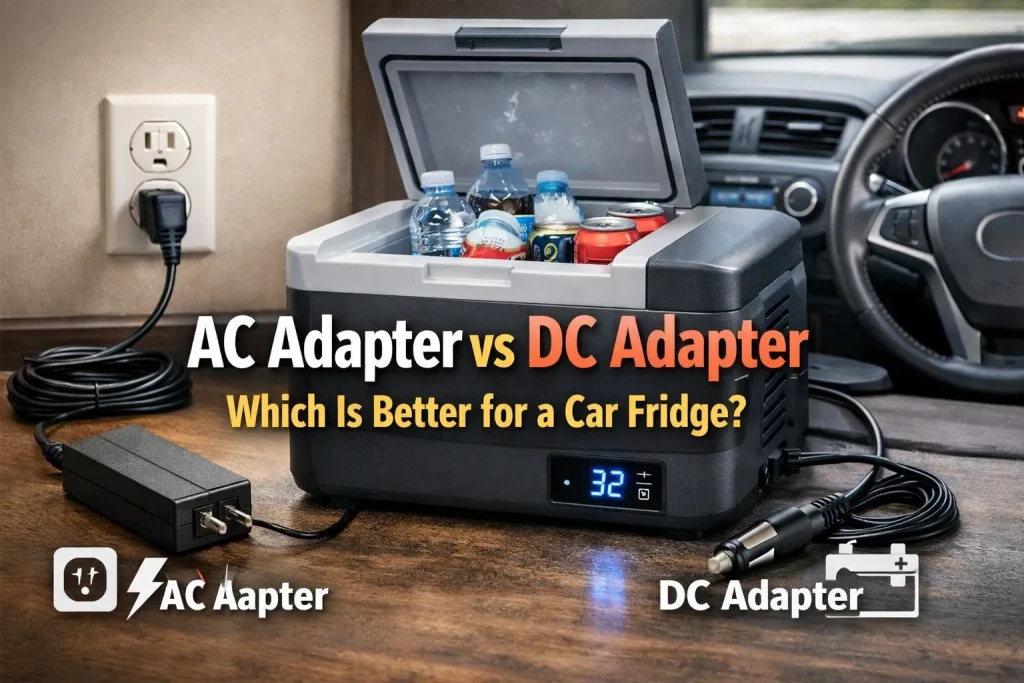
When I first bought a car fridge, I didn’t expect the biggest confusion to be the power source, not the fridge itself. Almost every portable fridge lists both AC and DC adapters, and a lot of buyers (myself included) end up asking the same question: Do I actually need both?
The confusion usually comes from unclear use cases. Some people only plan road trips, others want to use the fridge at home, in a garage, or at a campsite with shore power. I’ve tested car fridges with DC adapters plugged into vehicles and AC adapters connected to wall outlets, and the experience is very different depending on how and where you use them.
In this article, I’ll break down the real differences between AC and DC adapters for car fridges, explain where each one makes sense, and help you decide which option fits your travel style and daily use.
Quick Comparison
| Feature | AC Adapter | DC Adapter |
|---|---|---|
| Price Range | $15–$40 | $10–$30 |
| Core Function | Powers fridge from wall outlets | Powers fridge from vehicle |
| Best For | Home, hotel, campsite use | Driving, road trips, off-grid |
| One-Line Takeaway | Best for stationary power | Best for mobile cooling |
Quick takeaway:
If your fridge lives mostly in your car, DC wins. If you use it at home or campsites, AC matters more.
Product Overview – AC Adapter
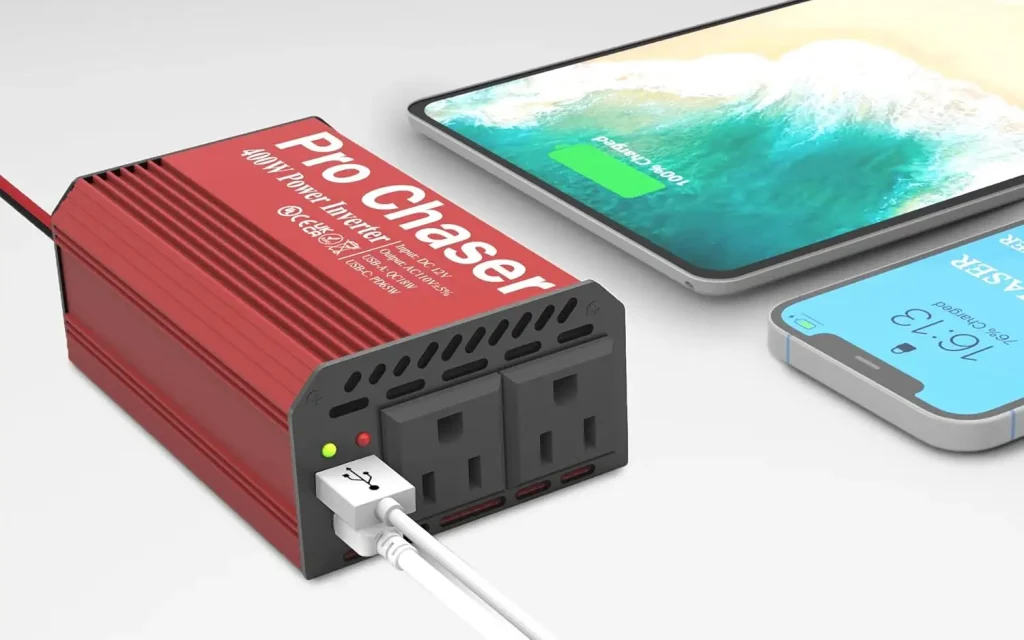
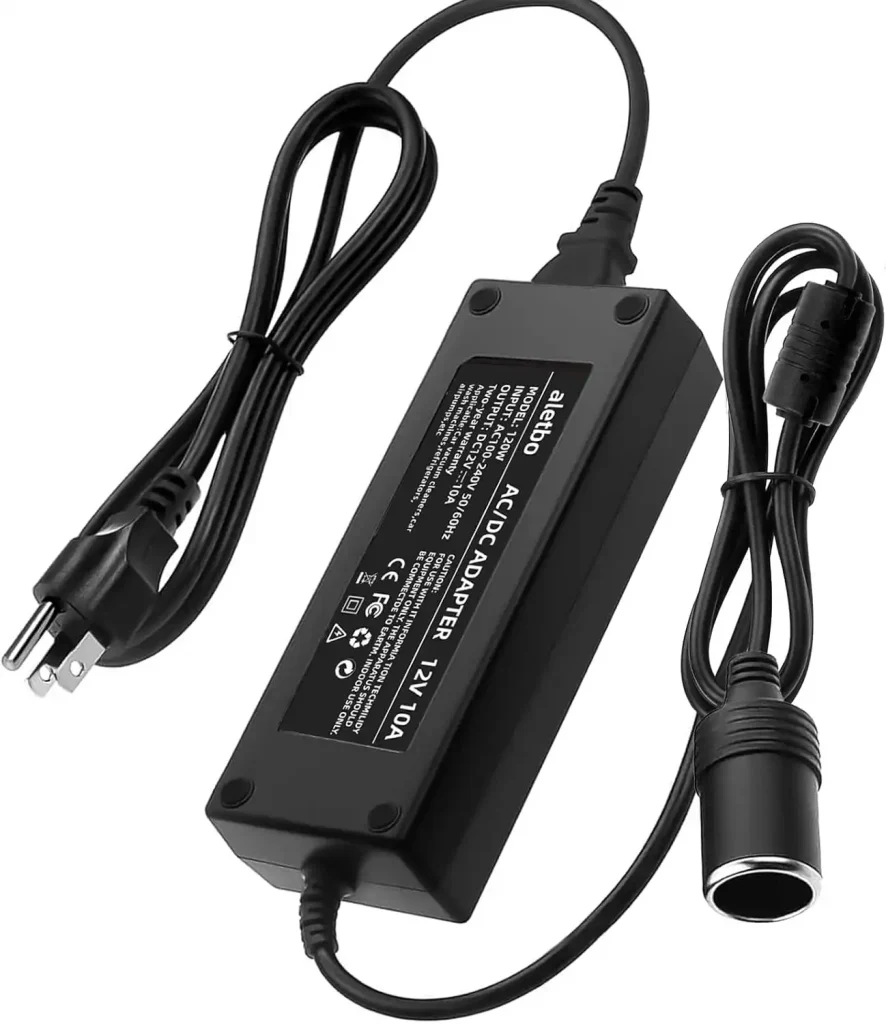
AC adapters are designed to let your car fridge run from a standard wall outlet (110–120V in the US, 220–240V in the UK, AU, and parts of Canada). Most reputable fridge brands include one or sell it as an optional accessory.
The main purpose of an AC adapter is flexibility. It allows you to pre-cool the fridge at home, run it in a hotel room, garage, or campsite with electrical hookups. In my experience, this is especially useful before long trips when you want everything cold before loading the car.
An AC adapter is best suited for users who regularly switch between indoor and vehicle use, or anyone who wants their car fridge to double as a small backup fridge at home.
Credit: Amazon
Check the latest price on Amazon
Product Overview – DC Adapter
A DC adapter is what actually makes a car fridge a car fridge. It plugs into a 12V or 24V socket, usually the cigarette lighter port in your vehicle. Nearly every portable fridge comes with a DC cable by default.
DC adapters are built for efficiency while driving. They draw power directly from the vehicle’s electrical system and are designed to handle vibration, movement, and fluctuating voltage. In real use, this is the adapter that keeps food cold during long drives, overlanding trips, and camping without shore power.
DC adapters are best for road trips, truck drivers, campers, van life users, and anyone who needs cooling while the engine is running or powered by a vehicle battery.
Credit: Amazon
Check the latest price on Amazon
Feature-by-Feature Comparison
| Feature | AC Adapter | DC Adapter |
|---|---|---|
| Design & Build Quality | Lightweight, indoor-focused | Rugged, vehicle-rated |
| Power Source | Wall outlet | Vehicle 12V/24V |
| Performance | Stable, consistent | Efficient, travel-optimized |
| Ease of Use | Plug-and-play indoors | Plug-and-play in vehicles |
| Cleaning & Maintenance | Minimal | Minimal |
| Durability | Less vibration-resistant | Built for movement |
Real-World Performance Comparison
In real use, I found that AC adapters provide more stable power, especially when running the fridge overnight indoors. There’s no voltage drop, and the compressor cycles smoothly. It’s also noticeably quieter when used on AC power.
DC adapters shine when you’re on the move. During long drives, the fridge stays cold without stressing the vehicle’s system, especially models with built-in low-voltage cutoffs. However, if you leave the fridge plugged into DC with the engine off, battery drain becomes a real limitation.
From daily use, I’d say AC feels more “set and forget,” while DC requires more awareness of battery health and driving time.
Pros & Cons (Side-by-Side)
AC Adapter – Pros & Cons
| Pros | Cons |
|---|---|
| Stable power supply | Not usable while driving |
| Quiet operation | Requires wall outlet |
| Great for pre-cooling | Less rugged |
| Ideal for indoor use | Extra accessory cost |
DC Adapter – Pros & Cons
| Pros | Cons |
|---|---|
| Essential for road trips | Can drain car battery |
| Designed for movement | Voltage fluctuations |
| Usually included | Not usable indoors |
| Energy-efficient | Depends on vehicle power |
Price vs Value Analysis
| Factor | AC Adapter | DC Adapter |
|---|---|---|
| Upfront Cost | Slightly higher | Often included |
| Long-Term Value | High for mixed use | High for travel-only |
| ROI | Best if used often indoors | Best for frequent driving |
| Replacement Cost | Moderate | Low |
From a value standpoint, DC adapters offer better ROI if you only travel. AC adapters become worth it if you use the fridge outside the vehicle even occasionally.
Who Should Choose Which Product?
Choose an AC Adapter if you:
- Use your car fridge at home or in hotels
- Want to pre-cool before trips
- Camp at powered campsites
- Need stable overnight operation
Choose a DC Adapter if you:
- Mainly use the fridge while driving
- Travel long distances
- Camp off-grid
- Want the simplest setup
Common Concerns & Deal-Breakers
- Noise: AC adapters tend to be quieter indoors
- Battery Drain: DC adapters can drain car batteries if unmanaged
- Size: Both adapters are compact and easy to store
- Reliability: DC adapters are more rugged, AC adapters last longer indoors
- Warranty: Most brands cover both, but check voltage compatibility
Final Verdict
After using both, I don’t see this as an either-or decision for most people. DC adapters are essential, while AC adapters are optional but extremely useful.
If I had to choose just one for pure travel, I’d stick with DC. But for flexibility, convenience, and stress-free cooling, having both makes the car fridge feel complete.
Best overall setup: DC for the road, AC for everything else.
FAQs on AC Adapter vs DC Adapter
Can a car fridge run only on DC power?
Yes, most are designed primarily for DC use.
Do I need an AC adapter if I only travel by car?
Not strictly, but it helps with pre-cooling and indoor use.
Will a DC adapter drain my car battery overnight?
Yes, unless the fridge has low-voltage protection.
Is AC power more efficient than DC?
AC is more stable, DC is more energy-efficient while driving.
Can I use both adapters interchangeably?
Only if the fridge supports both input types.

Hi, I’m the lead researcher and appliance enthusiast behind RefrigeratorSolve. With years of hands-on experience troubleshooting cooling systems and testing home appliances, I am dedicated to bringing you honest reviews, energy-saving tips, and practical solutions to keep your refrigerator running perfectly.