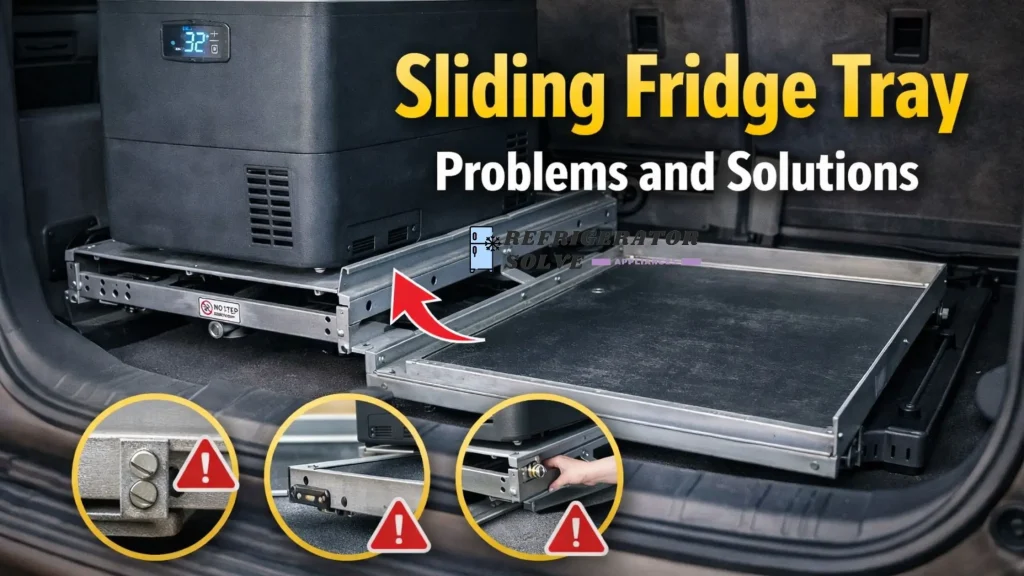
Sliding fridge trays (also called fridge slide rails or refrigerator slide-out trays) are becoming increasingly popular especially for car fridges, RV refrigerators, camping freezers, van-life setups, and overland vehicles.
They promise one simple thing: easy access.
But in real-life use, many users face issues like:
- Tray not sliding smoothly
- Tray getting stuck under load
- Excessive noise or vibration
- Misalignment after installation
- App or digital fridge errors (for smart fridges)
- Complete mechanical failure
This master pillar guide covers every problem and solution from choosing the right sliding fridge tray to daily usage, maintenance, breakdowns, and when to replace it.
What Is a Sliding Fridge Tray?
A sliding fridge tray is a metal rail system that allows a refrigerator or freezer to slide in and out smoothly. These are commonly used in:
- Vehicles (SUVs, trucks, vans)
- RVs and campers
- Boats
- Outdoor kitchens
- Garage fridge setups
Main Benefits
- Easy access without lifting
- Reduces back strain
- Saves space
- Improves organization
But cheap materials, poor installation, or overload can quickly turn this convenience into frustration.
Why Sliding Fridge Trays Fail
Before diving into solutions, understand the main reasons trays fail:
| Cause | Result |
|---|---|
| Wrong tray size | Jamming or instability |
| Overloading | Bent rails, broken bearings |
| Poor installation | Misalignment |
| Low-quality bearings | Rough sliding |
| Dirt & rust | Sticking |
| Vibration (vehicle use) | Loosened bolts |
| Moisture exposure | Corrosion |
Most failures are preventable.
Buying Stage Problems & Solutions
Problem 1: Buying the Wrong Size Tray
Symptoms:
- Fridge doesn’t fit
- Tray blocks ventilation
- Door doesn’t open fully
Solution:
- Measure fridge length, width, and height
- Leave 10–20 mm clearance on all sides
- Ensure full extension length is longer than fridge depth
Pro Tip:
Always check usable tray size, not just advertised dimensions.
Problem 2: Insufficient Load Capacity
Symptoms:
- Tray sags
- Hard to slide when fridge is full
- Rails bend over time
Solution:
- Calculate loaded fridge weight (fridge + food + drinks + ice)
- Choose a tray rated 30–50% higher than total weight
Example:
If fridge weight = 45 kg → Buy a 70–90 kg rated tray
Problem 3: Cheap Bearings or Thin Steel
Symptoms:
- Grinding noise
- Jerky sliding motion
- Early failure
Solution:
- Look for:
- Ball-bearing slides
- Powder-coated or stainless steel
- Reinforced corners
Installation & Setup Problems
Problem 4: Tray Not Sliding After Installation
Causes:
- Uneven surface
- Over-tightened bolts
- Frame twist
Solution:
- Place tray on a perfectly flat surface
- Tighten bolts gradually in a cross pattern
- Test sliding before mounting the fridge
Problem 5: Misalignment After Mounting
Symptoms:
- One side slides faster
- Tray jams halfway
Solution:
- Loosen mounting bolts
- Realign using a level
- Retighten evenly
Load & Weight Distribution Issues
Problem 6: Tray Slides Out Automatically
Cause:
Weight concentrated at the front.
Solution:
- Center the fridge on the tray
- Store heavy items toward the back
- Use locking slides or safety latches
Problem 7: Uneven Load Causes Rail Damage
Solution:
- Avoid placing bottles or ice packs on one side
- Use internal fridge baskets for balance
Daily Use Problems
Problem 8: Tray Feels Heavy to Pull
Causes:
- Dust buildup
- Dry bearings
- Overload
Solution:
- Clean rails monthly
- Apply dry silicone spray (never grease)
- Reduce load if needed
Problem 9: Tray Gets Stuck Halfway
Common Reasons:
- Bent rail
- Loose screws
- Dirt inside bearings
Fix:
- Remove tray
- Inspect rails for bending
- Tighten or replace damaged components
Noise, Vibration & Rattling Issues
Problem 10: Rattling Noise While Driving
Solution:
- Add rubber washers
- Tighten all bolts
- Use foam padding under mounting points
Problem 11: Grinding or Screeching Sound
Cause:
Metal-on-metal contact.
Solution:
- Clean rails
- Use dry lubricant
- Replace worn bearings if noise persists
Rust, Dirt & Environmental Damage
Problem 12: Rusted Rails
Common in:
- Coastal areas
- Humid climates
- Outdoor vehicles
Solution:
- Sand light rust
- Apply rust inhibitor spray
- Replace severely rusted trays
Problem 13: Mud, Sand, or Dust Blocking Slides
Solution:
- Wash with mild soap
- Use compressed air
- Install a protective cover
Smart Fridge & App-Related Issues
Some modern portable fridges include Bluetooth or app control.
Problem 14: App Not Connecting
Possible Causes:
- Weak signal
- App bug
- Power instability from tray wiring
Solution:
- Reset fridge
- Update app
- Ensure stable power source
Problem 15: Temperature Errors After Sliding
Cause:
Power cable tension while sliding.
Solution:
- Use flexible cables
- Secure slack using clips
- Avoid sharp bends
Mechanical Breakdown Problems
Problem 16: Bent or Broken Rails
Usually caused by:
- Overloading
- Sudden vehicle impact
Fix Options:
- Minor bend → straighten carefully
- Major damage → replacement required
Problem 17: Ball Bearings Falling Out
Solution:
- Replace slide rails
- Do not reuse damaged bearings
Repair vs Replacement Guide
| Condition | Repair | Replace |
|---|---|---|
| Loose bolts | ✅ | ❌ |
| Dirty rails | ✅ | ❌ |
| Minor rust | ✅ | ❌ |
| Bent frame | ❌ | ✅ |
| Broken bearings | ❌ | ✅ |
| Cracked welds | ❌ | ✅ |
Rule:
If safety or fridge stability is compromised → Replace immediately
Maintenance Checklist (Monthly)
- Clean rails
- Check bolt tightness
- Inspect bearings
- Check load balance
- Inspect power cables
- Test locking mechanism
Pro Tips to Avoid Future Problems
- Never exceed rated capacity
- Choose trays with lock-in & lock-out
- Use rubber isolation pads
- Clean after off-road trips
- Replace early if performance drops
Final Verdict
Sliding fridge trays are excellent tools—but only when:
- Correctly chosen
- Properly installed
- Maintained regularly
Most problems are not product defects, but user mistakes during buying, setup, or daily use.
If you follow this guide, your sliding fridge tray can last 5–10 years even in harsh conditions.

Hi, I’m the lead researcher and appliance enthusiast behind RefrigeratorSolve. With years of hands-on experience troubleshooting cooling systems and testing home appliances, I am dedicated to bringing you honest reviews, energy-saving tips, and practical solutions to keep your refrigerator running perfectly.