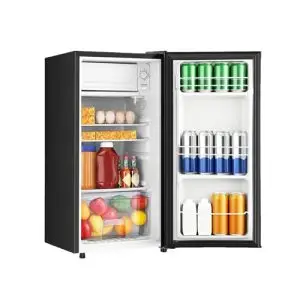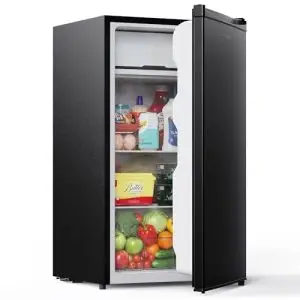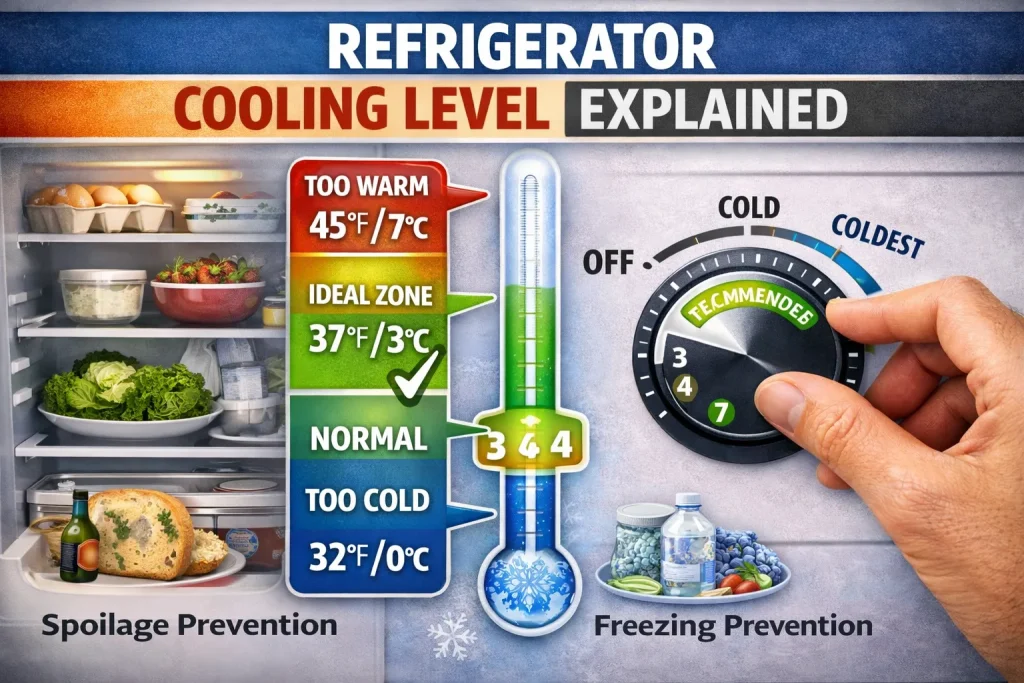
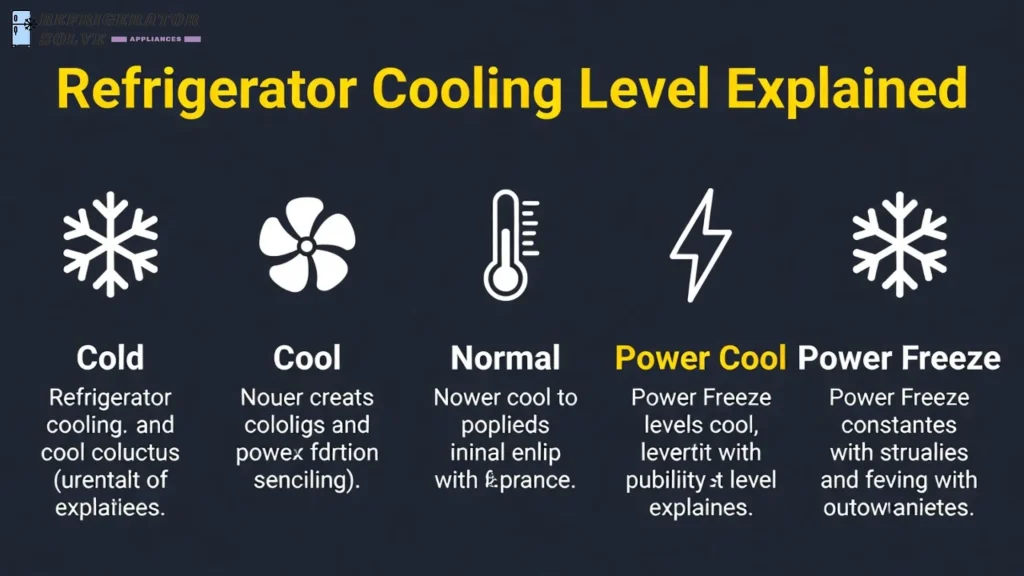
On most refrigerators, the cooling level is controlled by a dial where the highest number, typically a 5 or 7 represents the coldest setting because it forces the compressor to work the hardest. For digital displays, the ideal cooling level for food safety is between 37°F and 40°F (3°C to 4°C).
Why I Know These Dials Can Be Tricky
I spent five years as a property manager before focusing on appliance writing, and if I had a dollar for every time a tenant called me about “broken” milk that was actually just a setting error, I’d have retired by now. I once walked into a kitchen where the resident had the dial set to 1, thinking it meant “1 degree.” Everything in their fridge was essentially sitting at room temperature.
I’ve spent countless hours with my head inside various fridge models, testing thermometers and adjusting knobs to see how different brands respond. That experience taught me that while every fridge looks different, the logic behind the cooling levels is surprisingly consistent once you know the secret code.
“Most service calls for ‘cooling issues’ are actually just users who don’t have a clear understanding your fridge temperature control knob numbers. They treat the dial like a temperature gauge rather than a power level.” — Dave Miller, Senior Appliance Technician
Real User Pain Points
Living with a fridge that isn’t set correctly is more than just a minor annoyance. Here are the common issues I see people dealing with every day:
- The “Ice in the Lettuce” Surprise: You go to make a sandwich and find your greens are frozen solid and translucent.
- The Rapid-Spoil Mystery: You bought fresh milk or meat two days ago, but it already smells off despite the expiration date being a week away.
- The Dial Confusion: You see a knob with numbers 1 through 7 but have no idea if 1 is “low cooling” or “low temperature.”
- The Noisy Compressor: Your fridge sounds like a jet engine taking off every twenty minutes because it’s struggling to reach a setting that’s too high.
- The Summer Sweat: Your fridge was fine all winter, but now that it’s July, the drinks feel lukewarm even though you haven’t touched the dial.
How to Solve Your Fridge Temperature Problems
Solving the “1 to 7” Number Confusion
The most frequent question I get is: which is colder on fridge 1 to 7? Most people assume 1 is the coldest because 1 degree is freezing. In reality, these numbers usually refer to the “level of cooling power.”
If you look at your knob and wonder, does higher number mean colder fridge, the answer is almost always yes. A setting of 7 tells the fridge to put in the maximum effort to drop the temperature. Conversely, 1 is the lowest effort, meaning it’s the warmest setting. To get a clear picture of how this works, check out this fridge temperature setting 1 to 7 explained breakdown.
Stopping Your Food From Freezing
If your yogurt is turning into a popsicle, you likely have the setting too high. People often think that for the best preservation, they should find the fridge settings coldest number and leave it there.
However, is 7 the coldest setting on a fridge? While 7 is the maximum cooling power, it often drops the internal temperature below 32°F (0°C). This isn’t helpful for fresh food. I recommend a normal fridge setting number, which is usually right in the middle—around a 3 or 4. This keeps the cabin at that safe 37-38°F sweet spot.
Keeping Milk and Meat Safe
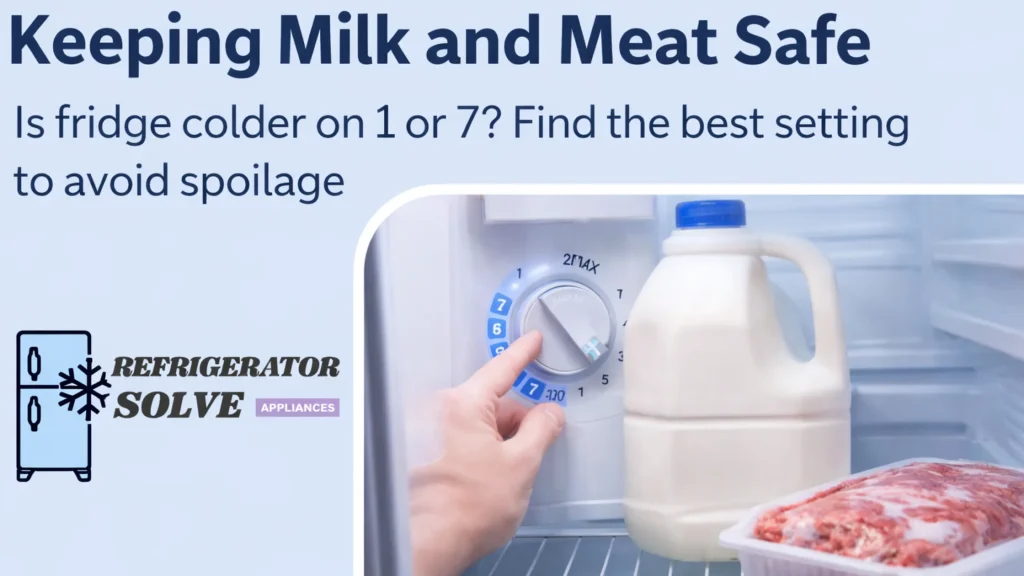
If things are spoiling, you need to look at the fridge number settings meaning differently. If your current setting is at 2, it’s likely too warm. You’ll want to know which fridge setting is coldest to make a proper adjustment. Move the dial up one notch and wait 24 hours.
I’ve found that many people are unsure is fridge colder on 1 or 7 when they notice their milk is souring. If you are on 1, you are on the warmest setting. Increasing to 4 or 5 usually solves the spoilage issue immediately.
Adjusting for Seasonal Heat
Your kitchen environment matters. I once lived in an attic apartment where the fridge couldn’t keep up in August. Many ask what fridge setting should use in summer. Since the fridge has to work harder when the room is hot, you might need to bump the dial up by one number compared to your winter setting.
If you are still confused about what does 1 to 7 mean on a refrigerator, think of it as a power scale. In summer, you need more power (a higher number) to fight the heat leaking in every time you open the door.
“Food safety is about consistency. If your fridge fluctuates between 35°F and 45°F because of poor settings, you are entering the danger zone for bacteria growth. A steady setting of 4 is usually the safest bet for most households.” — Linda Garcia, Food Safety Consultant
Country-Specific Context: How Where You Live Changes Things
The way we use fridges varies wildly depending on our local climate and home setup.
USA
In the States, we tend to have the largest refrigerators in the world. Because these units are so big, air circulation is a major factor. If you pack a massive American-style fridge to the brim, a setting of 4 might not be enough because the cold air can’t reach the front of the shelves. We also deal with high electricity costs in states like California, so finding the lowest effective setting is a huge financial win.
UK
In the UK, many kitchens use under-counter fridges or smaller “tall” larder fridges. These units often have the cooling coils built into the back wall. If you push your food all the way back so it touches that wall, it will freeze, regardless of whether you have refrigerator temperature control numbers set to 1 or 5.
Canada
Canadian homes are usually well-insulated and heavily heated in the winter. This means your fridge might actually have a harder time in the winter than you’d expect because the indoor air is so dry and warm. I’ve noticed that in Canadian winters, people often forget to check their settings when the furnace is running 24/7.
Australia
In Australia, the “summer” setting is almost a permanent requirement in some regions. High ambient humidity can also cause frost build-up if the fridge is set too cold. If you are in Queensland or WA, you really need to be certain which number is colder in fridge 1 to 7 so you can compensate for that 35°C afternoon heat.
Real Benefits I’ve Seen From Proper Settings
When I finally figured out the fridge temperature numbers explained, my kitchen life changed in three specific ways:
- Lower Grocery Bills: I stopped throwing away “slimy” cucumbers and sour milk. By keeping the fridge at a consistent 3°C (37°F), my produce lasted nearly twice as long.
- Energy Savings: My fridge stopped running 24/7. I realized I had it set to the fridge dial 1 to 7 which is coldest (setting 7) for no reason. Dialing it back to 4 made my kitchen quieter and lowered my monthly bill by a few dollars.
- Better Food Quality: Have you ever tried to spread butter that was too cold or eat ice cream that was half-melted? Proper temperature control means your food is at the exact texture it was meant to be.
“In my experience, people often overload their fridges and then wonder why it isn’t cold. It’s not always the dial—it’s the airflow. If the air can’t move, the cooling level doesn’t matter.” — Sam Reed, Kitchen Designer
Practical Tips You Can Use Today
If you want to get your fridge in perfect shape, follow these simple steps:
- The Middle-of-the-Road Start: If you are starting fresh, set your dial to the middle number. If your scale is 1-7, pick 4. If it’s 1-5, pick 3.
- Don’t Hug the Walls: Leave about an inch of space between your food and the interior walls of the fridge. This allows the cold air to circulate.
- The Glass of Water Trick: To get an accurate reading, place a thermometer in a glass of water and leave it in the center of the fridge overnight. This measures the actual temperature of your food, not just the air that escapes when you open the door.
- Check Your Gaskets: If your fridge feels warm even on a high setting, check the rubber seal around the door. If it’s cracked or dirty, cold air is escaping, and no amount of dial-turning will fix that.
- Vacuum the Coils: Twice a year, pull your fridge out and vacuum the dust off the coils at the back or bottom. This helps the fridge cool much more efficiently.
FAQ
I have a dial with no numbers, just a thin-to-thick line. What does that mean?
The thickest part of the line represents the coldest setting (equivalent to a 7 or 9). The thinnest part is the warmest.
Does it matter if I put hot leftovers in the fridge?
Yes. Placing a steaming pot of soup inside will raise the internal temperature of the entire fridge, potentially putting other food at risk. Let things cool on the counter for 20-30 minutes first.
Why does my fridge have two dials?
One is usually for the freezer and one is for the fridge. However, they often share the same cold air source. If you turn the freezer to the coldest setting, it may actually reduce the amount of cold air sent to the fridge section.
How long does it take for a setting change to work?
You must wait at least 24 hours. Fridges are large insulated boxes; they don’t change temperature instantly.
Is it okay to keep my fridge completely full?
While a full fridge stays cold better than an empty one (the cold food acts as a thermal mass), an overstuffed fridge blocks air vents and leads to warm spots.
My fridge dial goes up to 9. What is the best setting?
Usually, a 5 or 6 is ideal for a 1-9 scale.
Summary of Key Takeaways
Getting your refrigerator cooling level right doesn’t have to be a guessing game. Just remember that on almost every dial-controlled unit, higher numbers mean colder temperatures.
- Start with a middle setting (like 4).
- Wait 24 hours before making another change.
- Keep your vents clear to let the air move.
- Use a thermometer if you want to be 100% sure about food safety.
By making these small adjustments, you’ll save money, reduce food waste, and keep your kitchen running smoothly. For more detailed safety guidelines, the FDA provides an excellent breakdown of safe food storage temperatures that is worth a quick read.