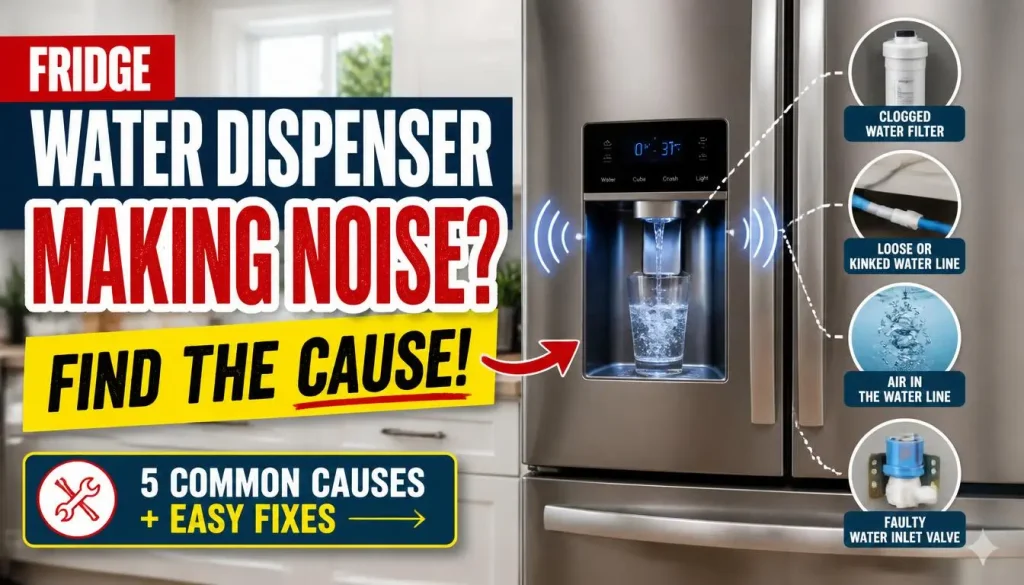
If you are wondering, “Why is my refrigerator water dispenser making noise?”, the good news is that the cause is often something fairly simple. A refrigerator water dispenser may hum, buzz, click, gurgle, chatter, or briefly vibrate as water moves through the supply line and the inlet valve opens. Those sounds are not automatically signs of a failing refrigerator.
What matters is whether the noise is new, unusually loud, continuous, or accompanied by another symptom such as slow water flow, sputtering, no water, leaking, or a filter that was recently replaced.
Common causes include air trapped in the water line, a clogged or incorrectly installed filter, a kinked supply tube, low or fluctuating water pressure, a partially closed shutoff valve, vibration behind the refrigerator, or a worn water inlet valve.
The easiest way to solve the problem is to pay attention to what the noise sounds like, when it happens, and how the water flows at the same time. That usually narrows the problem down quickly.
Why Is My Refrigerator Water Dispenser Making Noise?
Your refrigerator water dispenser makes noise because dispensing water is not a completely silent process. Pressing the dispenser activates components that allow household water to enter and move through the refrigerator.
A brief humming or buzzing sound can simply be the water inlet valve opening. You may also hear water moving through the tubing.
A louder or unusual sound can be caused by:
- Air trapped in the water line
- A clogged water filter
- An incorrectly installed filter
- Low or fluctuating water pressure
- A partially closed water supply valve
- A kinked or pinched supply line
- Water tubing vibrating against the refrigerator or wall
- A restricted internal water line
- Water hammer in household plumbing
- A worn or failing water inlet valve
Before replacing a part, start with the filter, water supply, and tubing. These are easier to check and are responsible for many dispenser complaints.
Is It Normal for a Refrigerator Water Dispenser to Make Noise?
Yes, some refrigerator water dispenser noises are normal.
The water system contains valves and narrow tubing, so you may hear a brief sound whenever water begins or stops flowing.
Normal Water Dispenser Sounds
Sounds that are often harmless include:
- A short hum when you press the dispenser
- A brief buzz as the water valve opens
- A light click when dispensing starts or stops
- Soft water-flow sounds
- Mild gurgling after a filter change
- A small amount of vibration while water is flowing
If the sound lasts only while dispensing and your water stream is strong and steady, there may be nothing to repair.
You can also read RefrigeratorSolve’s guide to fixing a refrigerator making loud noise if the sound seems to come from somewhere other than the dispenser.
Water Dispenser Sounds That May Indicate a Problem
Take a closer look if you hear:
- Loud buzzing
- Rapid chattering
- Repeated clicking
- Strong vibration
- Hammering or banging
- A jackhammer-like sound
- Loud whistling
- Persistent squealing
- Pulsating noise
- Noise accompanied by weak water flow
- Noise when no water comes out
The sound alone does not always identify the failed part. The other symptoms are just as important.
What Does the Type of Refrigerator Water Dispenser Noise Mean?
Different sounds can point you toward different areas of the water system.
Refrigerator Water Dispenser Making a Humming Noise
A short humming sound is usually caused by the water inlet valve operating when you press the dispenser.
It becomes more suspicious when the hum is much louder than before or the dispenser hums but produces little or no water.
Check:
- Water supply valve
- Water filter
- Supply tubing
- Water pressure
- Water inlet valve
If the refrigerator hums even when you are not using the dispenser, another refrigerator component may be responsible.
Refrigerator Water Dispenser Making a Buzzing Noise
Buzzing is another common water-valve sound.
A brief buzz may be normal. A loud or prolonged buzz can occur when the valve is trying to draw water through a restricted system.
Possible causes include:
- Clogged filter
- Partially closed shutoff valve
- Kinked water line
- Low water pressure
- Worn inlet valve
For more general buzzing problems, see RefrigeratorSolve’s refrigerator buzzing noise troubleshooting guide.
Refrigerator Water Dispenser Making a Chattering Noise
Chattering usually sounds like a rapid series of taps, vibrations, or clicks while water is being dispensed.
This often happens when water flow or pressure is unstable.
Check for:
- A kinked supply tube
- Air in the water system
- A restricted filter
- A partially closed supply valve
- Fluctuating water pressure
- A vibrating inlet valve
A dispenser that chatters and also has weak water flow strongly suggests that you should investigate the water supply before replacing refrigerator parts.
Refrigerator Water Dispenser Making a Rattling Noise
Rattling may come from the water line behind the refrigerator rather than from the dispenser itself.
When the water valve opens, the supply tube can move slightly. If that tube touches the wall, cabinet, back panel, or another pipe, the movement can create a surprisingly loud rattle.
Pull the refrigerator forward carefully and inspect the tubing.
Refrigerator Water Dispenser Making a Vibrating Noise
A vibrating water dispenser can be caused by water pressure changes or by tubing transmitting vibration through the refrigerator cabinet.
Check whether:
- The supply tube is touching the wall
- The refrigerator is pushed too far back
- The tubing is loosely secured
- The fridge is uneven
- The water valve vibrates excessively during operation
If vibration is happening throughout the appliance rather than only while dispensing, RefrigeratorSolve’s guide to refrigerator vibrating noises covers additional causes.
Refrigerator Water Dispenser Making a Pulsating Noise
A rhythmic pulsing sound can happen when water flow repeatedly increases and decreases.
Look for anything restricting the water system, including:
- Clogged filter
- Poorly seated filter
- Kinked tubing
- Low or unstable pressure
- Inlet valve problems
Remember that some modern refrigerators can also produce normal pulsating sounds from variable-speed cooling components. Confirm that the sound actually begins when you press the water dispenser before assuming the water system is responsible.
Refrigerator Water Dispenser Making a Machine-Gun or Jackhammer Noise
A rapid machine-gun or jackhammer-like sound is usually not something to ignore.
Possible causes include:
- Inlet valve rapidly cycling
- Water pressure instability
- Restricted water flow
- Incorrectly installed water filter
- Air trapped in the system
- Water hammer
- A valve or filter-housing problem
Start with the simplest checks: filter installation, supply valve, tubing, and water pressure.
Refrigerator Water Dispenser Making a Knocking Noise
Knocking may occur when water suddenly starts or stops moving through the household plumbing.
If the sound seems to come from the wall rather than the refrigerator itself, water hammer is a strong possibility.
Refrigerator Water Dispenser Making a Thumping or Banging Noise
A loud bang when the dispenser starts or stops can also point to water hammer.
Water hammer occurs when moving water suddenly changes speed after a valve opens or closes.
You may hear the sound:
- Behind the refrigerator
- Inside the wall
- Near the household shutoff valve
- In nearby plumbing pipes
If household plumbing pressure is responsible, the solution may require a plumber rather than an appliance repair.
Refrigerator Water Dispenser Making a Gurgling or Burping Noise
Gurgling after changing a filter or connecting a refrigerator to water for the first time may simply be air moving through the lines.
If the sound disappears after the system has been flushed and the water becomes steady, it was probably trapped air.
Refrigerator Water Dispenser Sputtering or Spitting Water
Sputtering is one of the clearest signs that air may be trapped in the refrigerator water system.
It often appears:
- After installing the refrigerator
- After replacing the water filter
- After reconnecting the water line
- After the household water supply has been interrupted
Dispense water according to the flushing procedure in your refrigerator’s owner’s manual until the stream becomes steady.
Refrigerator Water Dispenser Making a Squealing or Whistling Noise
Whistling can occur when water is being forced through a narrow restriction.
Possible causes include:
- Clogged filter
- Pinched supply line
- Partially closed valve
- Restricted fitting
- Pressure problem
If the sound started after installing a new filter, remove and reinstall the filter correctly before doing anything more complicated.
Refrigerator Water Dispenser Making a Clicking Noise
One click when the dispenser activates may simply be a switch or valve operating.
Rapid repeated clicking is different.
If you hear several clicks while the water stream pulses or stops, inspect the water supply and filter.
For refrigerator clicking that happens even when the dispenser is not being used, see RefrigeratorSolve’s refrigerator clicking noise guide.
10 Common Reasons Your Refrigerator Water Dispenser Is Making Noise
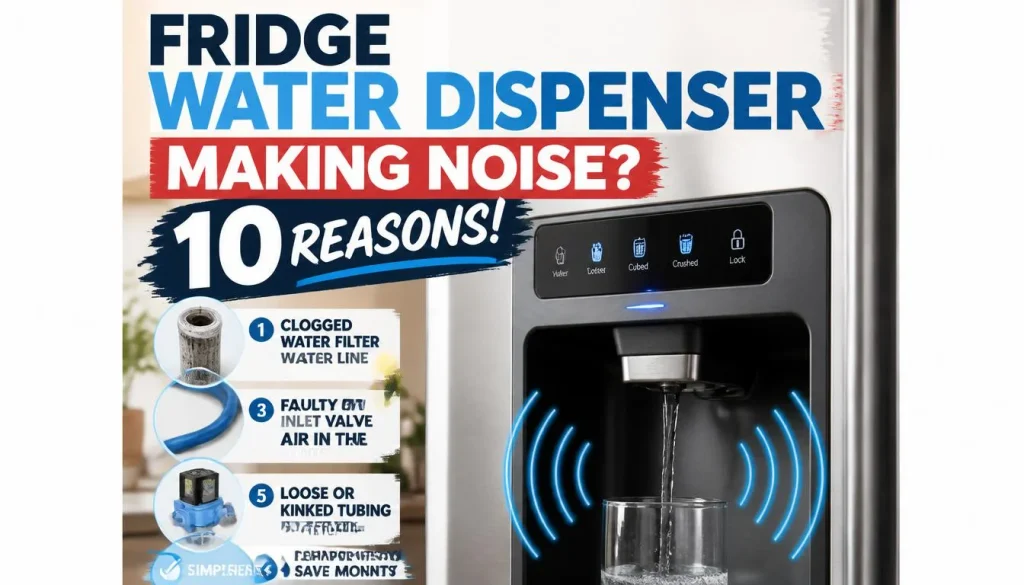
Now that you know what the different sounds can mean, work through the most common causes.
1. Air Is Trapped in the Water Line
Air can enter the refrigerator’s water system when:
- A refrigerator is first installed
- The water supply is disconnected
- A filter is replaced
- Plumbing work is performed
- The household water supply is shut off temporarily
The trapped air may create:
- Gurgling
- Sputtering
- Burping
- Pulsating flow
- Uneven water pressure
How to Fix It
Flush the dispenser according to your manufacturer’s instructions.
Place a large container under the dispenser and dispense water in intervals if required by your model. Continue until the stream becomes smooth and the sputtering stops.
Do not assume every manufacturer uses the same flushing amount or procedure. Check the owner’s manual for your refrigerator.
2. The Water Filter Is Clogged or Incorrectly Installed
The water filter is one of the first things you should inspect when a dispenser becomes noisy and water flow decreases.
A clogged filter makes it harder for water to pass through the system. That restriction may change the way the inlet valve sounds.
A filter can cause problems when it is:
- Old
- Clogged with sediment
- Incorrectly installed
- Not fully seated
- Damaged
- Not compatible with the refrigerator
How to Fix It
If the filter is overdue for replacement, install the correct replacement for your model.
If you recently changed it, remove the filter and reinstall it carefully. Make sure it locks or seats exactly as described in the owner’s manual.
Then flush the water system.
3. The Water Inlet Valve Is Making Noise
The water inlet valve controls the flow of household water into the refrigerator.
It normally makes some sound when opening.
A valve deserves closer inspection if you notice:
- Buzzing much louder than before
- Strong vibration
- Rapid chattering
- Weak water flow
- Intermittent dispensing
- No water despite a good household supply
Before replacing the valve, rule out restricted water flow. A perfectly functional valve can sound unusual when it does not receive adequate water.
4. Water Pressure Is Too Low, Too High, or Unstable
Refrigerator dispensers are designed to operate within a specified water-pressure range.
Too little pressure can result in:
- Slow water flow
- Valve noise
- Chattering
- Poor ice production
- Intermittent dispensing
Excessive or rapidly changing pressure can contribute to banging or water hammer.
Because pressure requirements vary by refrigerator and water-system configuration, check your owner’s manual instead of relying on a universal pressure number.
Can a Reverse Osmosis System Affect Refrigerator Dispenser Noise?
Yes.
A reverse osmosis system can change the pressure and flow available to the refrigerator, particularly if its storage tank is depleted, filters are restricted, or the system is not configured appropriately for the refrigerator.
If your dispenser became noisy after connecting it to an RO system, compare the refrigerator’s water-pressure requirements with the RO system’s output specifications.
5. The Refrigerator Water Supply Valve Is Not Fully Open
A partially closed household shutoff valve may allow enough water through for the dispenser to work, but not enough for it to work normally.
The result can be:
- Buzzing
- Chattering
- Weak flow
- Slow dispensing
- Pulsating water
Locate the refrigerator’s household water shutoff valve and make sure it is fully open.
If the valve is corroded, leaking, damaged, or difficult to operate, consider having a plumber inspect it.
6. The Water Supply Line Is Kinked or Pinched
Look behind the refrigerator.
If the appliance has been pushed tightly against the wall, the water line may be folded, pinched, or sharply bent.
A kink reduces water flow and can contribute to noisy valve operation.
This problem is particularly common after:
- Moving the refrigerator
- Cleaning behind it
- Installing new flooring
- Reconnecting the water supply
- Repositioning the appliance
Carefully straighten the line without damaging it and leave enough space behind the refrigerator to prevent it from being pinched again.
7. Water Hammer Is Creating a Knocking or Banging Noise
Water hammer is a plumbing issue caused by a rapid change in water flow.
When the refrigerator’s valve closes, moving water can create a pressure shock in household pipes. The result may be a loud knock or bang.
You may initially think the refrigerator itself is broken because the sound happens exactly when you use the dispenser.
How to Reduce Water Hammer
Start by checking that:
- The water supply is properly configured
- Tubing is secured
- Household water pressure is appropriate
- Shutoff valves are functioning correctly
If the noise clearly comes from household plumbing or affects other fixtures, a licensed plumber is usually the better person to call.
8. The Internal Water Line Is Restricted
The refrigerator contains internal tubing that carries water from the inlet system toward the filter, reservoir, ice maker, and dispenser.
A restriction somewhere in that path may result in:
- Slow water
- Intermittent flow
- Noise while dispensing
- Water that stops completely
On some refrigerators, freezing in part of the water system can also interfere with flow.
If external tubing, pressure, and the filter all appear normal but water remains slow, the internal system may need further diagnosis.
9. The Water Filter Housing or Related Connection Has a Problem
If noise began immediately after changing the filter and reinstalling the filter does not fix it, pay attention to the filter connection itself.
Possible symptoms include:
- Pulsating water
- Chattering
- Filter that does not seat properly
- Leaking around the filter
- Noise that changes when the filter is removed or reinstalled
Do not force a filter into place.
A damaged housing, connection, or internal valve may require professional repair.
10. The Water Line Is Vibrating Against the Refrigerator or Wall
A water line does not have to be kinked to make noise.
Even a perfectly open line can move slightly when water begins flowing.
If it touches:
- The refrigerator cabinet
- Rear cover
- Wall
- Floor
- Another pipe
that movement can produce rattling, tapping, or vibrating sounds.
Carefully reposition the line so it is not pressed against a hard surface.
Why Is My Refrigerator Water Dispenser Making Noise After Changing the Filter?
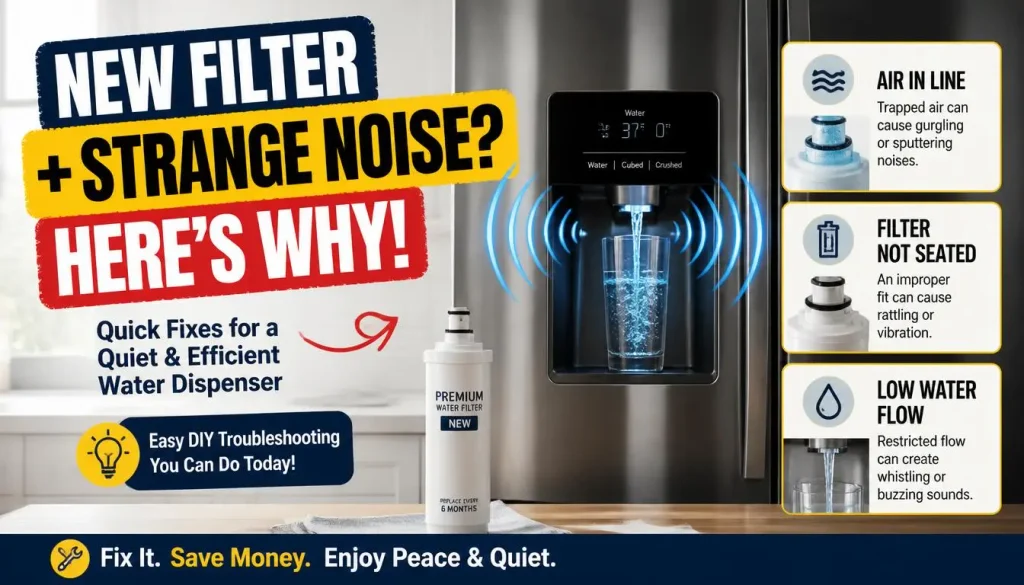
Noise after a filter change is common and does not automatically mean the new filter is defective.
Start with three possibilities.
Air Entered the Water System
Removing the old filter can allow air into the lines.
You may hear gurgling or experience sputtering until that air is removed.
The Filter Is Not Fully Seated
An incorrectly installed filter can restrict water flow.
Remove the filter and reinstall it using the instructions for your exact refrigerator model.
The System Has Not Been Flushed
A new filter usually needs to be flushed after installation.
Follow the manufacturer’s flushing procedure rather than guessing how much water to dispense.
If noise continues after the water runs smoothly, investigate pressure, tubing, and the filter connection.
Why Is My Refrigerator Water Dispenser Making Noise After Installation or Moving?
If the problem began immediately after the refrigerator was installed or moved, focus on installation-related causes first.
Check:
- Is the household water valve fully open?
- Is the water line kinked behind the refrigerator?
- Was the line trapped under the appliance?
- Does the system contain air?
- Is the filter installed correctly?
- Is the refrigerator pushed against the water tubing?
- Is the appliance sitting firmly and level?
Moving the refrigerator can turn a perfectly normal supply line into a pinched one without anyone noticing.
Why Does My Refrigerator Make Noise Only When I Dispense Water?
This timing is actually helpful.
If the refrigerator is quiet until you press the dispenser, you can narrow your attention to the water system.
Pressing the dispenser typically causes:
- The dispenser switch to activate.
- The water inlet valve to open.
- Water to move through the supply tubing.
- Water to travel through the filter and internal lines.
- Pressure to change as water begins and stops moving.
A problem anywhere along that path can become audible only while water is flowing.
Why Is My Refrigerator Making Water Dispenser Noise When I Am Not Dispensing Water?
If the sound happens when nobody is using the dispenser, make sure it actually comes from the dispenser system.
The refrigerator may be:
- Filling the ice maker
- Running a fan
- Cycling the compressor
- Moving refrigerant
- Performing a defrost cycle
The ice maker uses the refrigerator’s water supply too, so the inlet valve can activate even when nobody presses the dispenser.
If your refrigerator has an ice maker but is not connected to a water supply, check your manufacturer’s instructions. In many cases, the ice maker should be turned off when no water is connected.
If you are having difficulty identifying the sound, RefrigeratorSolve’s guide to weird refrigerator noises may help narrow down other sources.
Refrigerator Water Dispenser Makes Noise but No Water Comes Out
A noisy dispenser with no water usually means the system is trying to operate but water is not reaching the dispenser properly.
Check these items in order:
- Confirm that the household water supply is on.
- Make sure the shutoff valve is fully open.
- Inspect the supply line for a kink.
- Check the water filter.
- Make sure a recently changed filter is properly seated.
- Consider whether the water line may be frozen or restricted.
- Check whether household water pressure has changed.
If water reaches the refrigerator properly but the dispenser still produces no water, an internal valve, switch, line, or dispenser component may require diagnosis.
Refrigerator Water Dispenser Makes Noise and Water Comes Out Slowly
Slow water plus noise is an important clue because both symptoms can have the same cause.
Start with:
- Clogged water filter
- Partially closed shutoff valve
- Kinked supply line
- Low household water pressure
- Incorrectly installed filter
- Restricted internal tubing
- Inlet valve problem
Do not start by replacing the inlet valve unless you have checked the simpler water-flow problems first.
How to Troubleshoot a Noisy Refrigerator Water Dispenser Step by Step
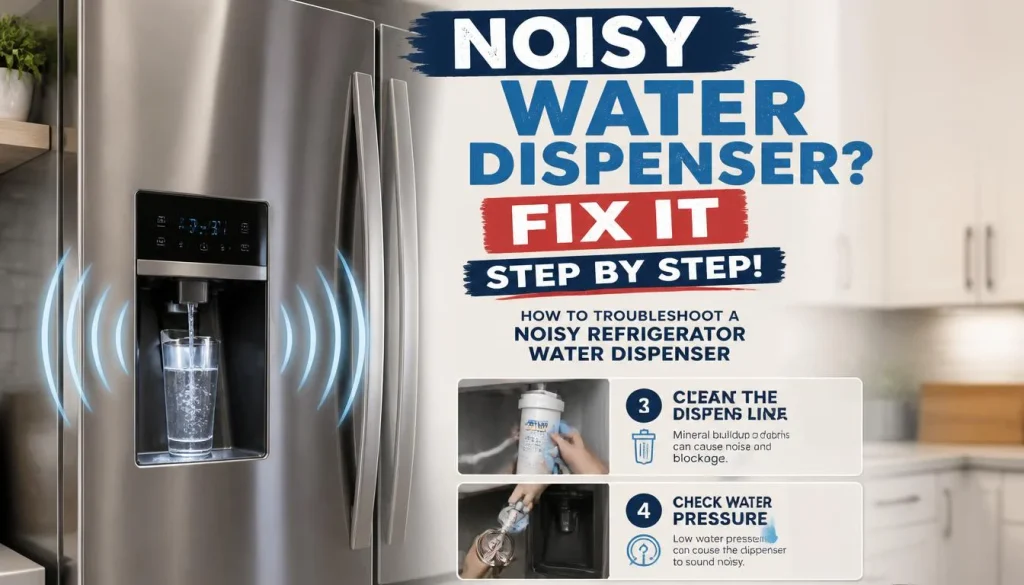
Instead of replacing parts at random, follow a logical sequence.
Step 1: Identify the Sound
Is it:
- Buzzing?
- Chattering?
- Rattling?
- Knocking?
- Gurgling?
- Whistling?
- Clicking?
- Vibrating?
Also note exactly when it starts and stops.
Step 2: Check Water Flow
Dispense a glass of water.
Ask:
- Is the stream strong?
- Is it slower than before?
- Does it pulse?
- Does it sputter?
- Does it stop completely?
Noise combined with weak flow points toward a restriction or pressure problem.
Step 3: Check the Water Filter
If the filter is old, replace it.
If it was recently replaced, confirm that it is the correct filter and properly installed.
Step 4: Flush Air From the Water System
If the refrigerator or filter was recently installed, flush the system following the manufacturer’s instructions.
Watch for sputtering gradually disappearing.
Step 5: Check the Household Water Valve
Make sure the shutoff valve supplying the refrigerator is fully open.
Step 6: Inspect the Supply Line
Pull the refrigerator forward carefully.
Look for:
- Kinks
- Sharp bends
- Pinched tubing
- Tubing pressed against the wall
- Tubing vibrating against the appliance
Step 7: Check Refrigerator Position
Make sure the refrigerator is stable and not pushed tightly against surrounding surfaces.
Step 8: Consider Water Pressure
If several plumbing fixtures have recently changed in pressure, the issue may not be limited to the refrigerator.
If necessary, have household pressure checked by a qualified plumber.
Step 9: Listen to the Inlet Valve
If all water-supply checks pass but the valve produces unusually loud buzzing, chattering, or vibration, it may need professional inspection.
Step 10: Stop If the Repair Requires Electrical or Plumbing Disassembly
Simple external troubleshooting is one thing. Disassembling electrical valves, wiring, or household plumbing is another.
If the problem is beyond filter replacement, tubing inspection, or basic manufacturer-approved maintenance, professional service is the safer option.
Quick Diagnosis: Noise, Likely Cause, and First Check
| Noise or Symptom | Possible Cause | First Thing to Check |
|---|---|---|
| Short hum | Normal inlet valve operation | Water flow |
| Loud buzzing | Restricted water supply or valve | Filter and shutoff valve |
| Chattering | Unstable pressure or restriction | Filter, tubing, pressure |
| Rattling | Vibrating water line | Tubing behind refrigerator |
| Vibrating | Water line or valve vibration | Clearance and tubing |
| Pulsating | Restricted or unstable flow | Filter and pressure |
| Jackhammer sound | Rapid valve cycling or water hammer | Pressure and supply |
| Knocking | Water hammer | Household plumbing |
| Banging | Pressure shock in water line | Water pressure |
| Gurgling | Air in water system | Flush system |
| Sputtering | Trapped air | Flush water line |
| Whistling | Flow restriction | Filter and supply valve |
| Clicking | Valve/switch activation or restriction | Timing and water flow |
| Noise + slow water | Restricted flow | Filter, line, pressure |
| Noise + no water | Supply interruption or blockage | Shutoff valve and tubing |
When Should You Call a Refrigerator Repair Technician?
Not every noisy dispenser needs professional repair.
Call a qualified refrigerator technician when:
- The dispenser suddenly becomes extremely loud
- Water will not dispense after basic checks
- The inlet valve continuously buzzes or chatters
- Water leaks from inside the refrigerator
- The filter housing appears damaged
- Internal tubing appears frozen or blocked
- Electrical components require testing
- You smell something burning
- Noise continues after checking the filter, line, valve, and water supply
If the banging clearly comes from household pipes, contact a plumber instead.
How to Prevent Refrigerator Water Dispenser Noise
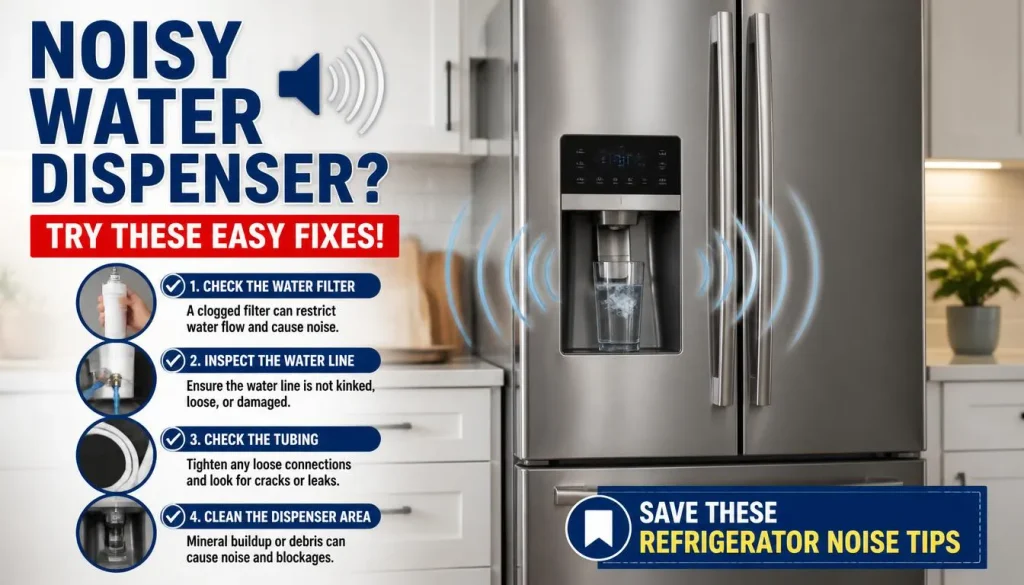
A little routine maintenance can prevent several common dispenser problems.
Replace the Water Filter When Required
Follow the replacement interval recommended for your refrigerator and filter.
Do not wait until water flow becomes extremely slow.
Flush the System After Filter Replacement
Removing trapped air helps prevent sputtering and irregular water flow.
Keep the Water Line Free of Kinks
Whenever you move the refrigerator, check the line before pushing the appliance back into place.
Do Not Push the Refrigerator Against the Supply Tube
Leave enough space so the tubing is not crushed between the appliance and the wall.
Keep the Household Supply Valve Fully Open
A partially closed valve can restrict flow even when some water still reaches the dispenser.
Pay Attention to New Sounds
You do not need to worry about every hum or click, but a sound that suddenly changes is worth investigating.
A five-second buzz that your refrigerator has made for years is very different from loud chattering that appeared yesterday along with slow water.
Frequently Asked Questions
Why does my fridge water dispenser make a loud noise?
A loud refrigerator water dispenser may be experiencing restricted water flow, unstable pressure, a clogged filter, vibrating tubing, or an inlet valve problem. Check whether water flow has also become slower, because that can help identify a restriction.
Why is my refrigerator water dispenser making a buzzing noise?
A brief buzz can be normal when the water inlet valve opens. A louder or prolonged buzz may result from a clogged filter, kinked water line, partially closed supply valve, low pressure, or worn inlet valve.
Why does my refrigerator water dispenser sound like a jackhammer?
A jackhammer-like sound may result from rapid valve cycling, water pressure fluctuations, a flow restriction, trapped air, or water hammer. Start by checking the filter, supply line, shutoff valve, and household water pressure.
Why is my refrigerator water dispenser vibrating?
The water supply tube may be touching the refrigerator or wall, or the inlet valve may be transmitting vibration while water flows. Check behind the refrigerator for loose or poorly positioned tubing.
Why is my refrigerator water dispenser pulsating?
Pulsating can happen when water flow is repeatedly restricted or pressure is unstable. A clogged filter, poorly installed filter, kinked line, or valve problem may be responsible.
Why is my water dispenser making noise after changing the filter?
Air may have entered the water system, the new filter may not be fully seated, or the system may need flushing. Reinstall the filter correctly and follow your manufacturer’s flushing instructions.
Can a clogged refrigerator water filter cause noise?
Yes. A severely restricted filter can reduce water flow and alter the sound made by the water system or inlet valve. Slow dispensing along with new buzzing or chattering makes the filter worth checking.
Can low water pressure make a refrigerator dispenser noisy?
Yes. Inadequate or inconsistent pressure can contribute to slow flow, chattering, and unusual valve sounds.
Why does my refrigerator water dispenser sputter?
Sputtering usually indicates air in the water system, especially after a filter change, refrigerator installation, or interruption to the water supply. Flushing the dispenser normally removes the trapped air.
Why does my fridge bang when I dispense water?
A bang that occurs when water starts or stops flowing may be caused by water hammer in the household plumbing. If the sound comes from pipes inside the wall, a plumber may need to inspect the water pressure and plumbing system.
Why is my refrigerator making dispenser noises when nobody is using it?
The ice maker may be filling with water, which also activates the refrigerator’s water inlet valve. Other refrigerator systems such as fans and the compressor can create similar noises, so confirm where the sound is coming from.
Why is my refrigerator water dispenser making noise but no water comes out?
Check the household water supply, shutoff valve, water line, filter, and water pressure. If those are normal, an internal water-system component may need repair.
Why is my refrigerator water dispenser noisy and dispensing slowly?
The combination of slow water and noise commonly points to a restriction. Check the water filter, shutoff valve, supply tubing, and household water pressure before assuming the inlet valve has failed.
Is a noisy refrigerator water inlet valve dangerous?
A brief operating sound is usually normal. However, unusually loud, continuous, or rapidly chattering valve noise should be investigated, especially if it is accompanied by leaking, poor dispensing, or electrical symptoms.
When should I replace the refrigerator water inlet valve?
Do not replace it based on noise alone. First rule out a clogged filter, kinked line, closed supply valve, trapped air, and pressure problems. If the valve still operates abnormally after those checks, have it tested or replaced according to the refrigerator manufacturer’s service procedure.
Final Thoughts
If your refrigerator water dispenser is making noise, begin with the water-flow system rather than assuming a major component has failed.
Check the filter first, especially if the problem appeared after a filter change. Then make sure the household supply valve is fully open, inspect the tubing for kinks or vibration, flush trapped air from the system, and pay attention to whether water pressure seems normal.
A short hum, click, or buzz while dispensing can be perfectly normal. Loud chattering, hammering, continuous buzzing, sputtering that never improves, or noise combined with very weak water flow deserves more attention.
Most importantly, troubleshoot in order. The sound is a clue, but when the noise happens and what the water is doing at the same time usually tell you far more than the sound alone.

Hi, I’m the lead researcher and appliance enthusiast behind RefrigeratorSolve. With years of hands-on experience troubleshooting cooling systems and testing home appliances, I am dedicated to bringing you honest reviews, energy-saving tips, and practical solutions to keep your refrigerator running perfectly.