Fridge temperature settings work by controlling how long the cooling system runs, not by setting an exact temperature. Higher numbers usually mean colder operation because the compressor stays on longer to remove more heat.
I learned how fridge temperature settings work the hard way, by throwing away spoiled milk more than once and dealing with frozen vegetables in the crisper drawer. After years of using different refrigerators at home, in shared offices, and even small apartments, I realized most people misunderstand what those numbers actually control.

Real User Pain Points
Food freezing in the fridge section
Many people open their fridge to find lettuce frozen solid or drinks forming ice crystals.
Food spoiling too quickly
Milk going bad early, leftovers smelling off, or produce wilting faster than expected is a common issue.
Confusion about dial numbers
People often ask whether 1 or 7 is colder, especially on manual dial models.
Seasonal temperature changes
A fridge that works fine in winter suddenly struggles in summer.
Shared fridge conflicts
In offices or shared homes, settings get changed without anyone knowing.
How Each Pain Point Is Solved
Why food freezes in the fridge
Most fridge temperature controls don’t directly set degrees. Instead, they regulate how long cooling runs. When the setting is too high, cold air circulates longer and can freeze items near vents. I’ve seen this happen often when someone turns the dial up thinking it cools faster.
Understanding which number is actually coldest helps prevent this issue, especially on 1–7 dials where higher numbers usually mean colder operation. This explanation is clearly covered in guides like which is colder on fridge 1 to 7 and does higher number mean colder fridge.

Why food spoils early
When the setting is too low, the fridge may not stay cold long enough between cycles. I’ve noticed this most in compact fridges where people keep the dial at 1 or 2, assuming it saves energy. In reality, inconsistent cooling leads to faster spoilage.
Resources like normal fridge setting number and fridge temperature numbers explained help clarify balanced settings for everyday use.
Clearing up number confusion
Manual dials are not intuitive. Many users believe lower numbers mean colder, but in most refrigerators, it’s the opposite. Articles such as is fridge colder on 1 or 7 and what does 1 to 7 mean on a refrigerator explain this clearly using real examples.
Adjusting for seasons
In summer, ambient heat forces the fridge to work harder. I always adjust my fridge slightly colder during hot months, especially when it’s opened frequently. This aligns with guidance found in what fridge setting should use in summer.
Handling shared fridge changes
In offices, I’ve seen food ruined simply because someone adjusted the dial without telling others. Understanding refrigerator temperature control numbers makes it easier to reset things properly instead of guessing.
Country-Specific Context
USA
Large family fridges are common, and frequent door opening is typical. Energy costs vary by state, so balanced settings help avoid waste.
UK
Smaller kitchens and integrated fridges mean airflow is limited. Correct dial positioning matters more here to prevent uneven cooling.
Canada
Cold winters and warm summers mean seasonal adjustments are essential. I’ve seen fridges overcool in winter garages.
Australia
Heat and humidity put extra pressure on fridges. Slightly colder settings help maintain food safety during extreme temperatures.
Experience-Based Benefits
After setting my fridge correctly, I noticed milk lasted closer to its printed date, vegetables stayed crisp, and frost stopped forming where it shouldn’t. Power usage also stabilized since the fridge wasn’t overworking unnecessarily.
“Most fridge issues we see come down to incorrect temperature control use rather than faulty hardware.”
— Mark Lewis, Appliance Service Technician
“Manual dial settings confuse users because they control run time, not temperature directly.”
— Helen Carter, Consumer Appliance Researcher
“Seasonal temperature changes are a major reason fridge settings need adjustment.”
— Daniel Moore, Home Energy Consultant
Practical Tips
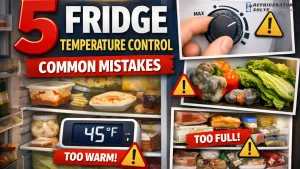
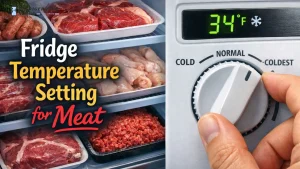
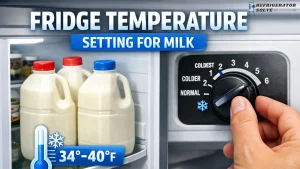
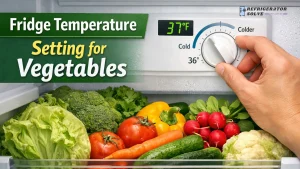
- Keep the fridge between 37°F and 40°F using a thermometer.
- Avoid placing food directly in front of air vents.
- Adjust settings slightly during seasonal changes.
- Don’t overload shelves; airflow matters.
- Check settings after power outages or cleaning.
Understanding guides like fridge dial 1 to 7 which is coldest and which fridge setting is coldest makes these steps easier to follow.
FAQs for How Fridge Temperature Settings Work
Does a higher fridge number mean colder?
In most models, yes. Higher numbers keep the compressor running longer.
Is 7 always the coldest setting?
Often, but not always. Check guides like is 7 the coldest setting on a fridge.
Why does my fridge freeze food on setting 5?
Items may be too close to vents or airflow may be restricted.
Should I change fridge settings in summer?
Yes. Warmer air requires slightly colder operation to stay safe.
How do I know my fridge is cold enough?
Use a thermometer instead of relying on dial numbers.
Conclusion
Fridge temperature settings are simple once you know what they control. By setting them correctly and adjusting for real-life conditions, you protect food, reduce waste, and avoid common frustrations.
For food safety standards, guidance from the U.S. Food & Drug Administration supports keeping refrigerators at 40°F or below.