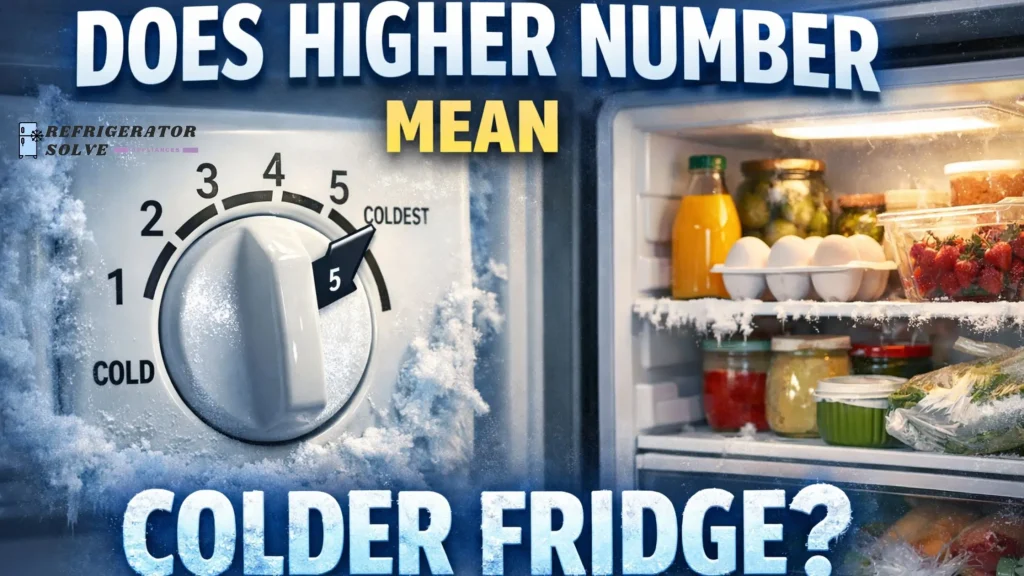
Yes, in the vast majority of refrigerators, a higher number means a colder fridge setting. Think of the numbers as cooling power levels: 1 is the minimum cooling power (warmest), and the highest number (often 5, 7, or 9) is the maximum cooling power (coldest).
Have you ever stared at that little dial inside your refrigerator, holding a carton of milk that smells slightly suspicious, and wondered, “Am I making this colder or warmer?”
I’ve been there. I remember waking up one humid Tuesday morning to make a coffee, only to find my milk had turned into a science experiment. I had fiddled with the dial the night before, thinking I was turning the temperature down. It turns out, I was actually turning the cooling power off. It’s a frustrating moment that leads to wasted food and wasted money.
If you are confused about refrigerator temperature control numbers, you are not alone. Whether you are in London, Toronto, or Sydney, fridge manufacturers don’t make it easy. They rarely put “degrees” on the dial. Instead, they give us a cryptic set of numbers.
In this guide, I’m going to walk you through exactly how these settings work, how to keep your groceries fresh, and how to stop freezing your lettuce by accident.
The Short Answer: How the Dial Actually Works
For most standard appliances, the rule of thumb is simple: High Number = High Cooling Power.
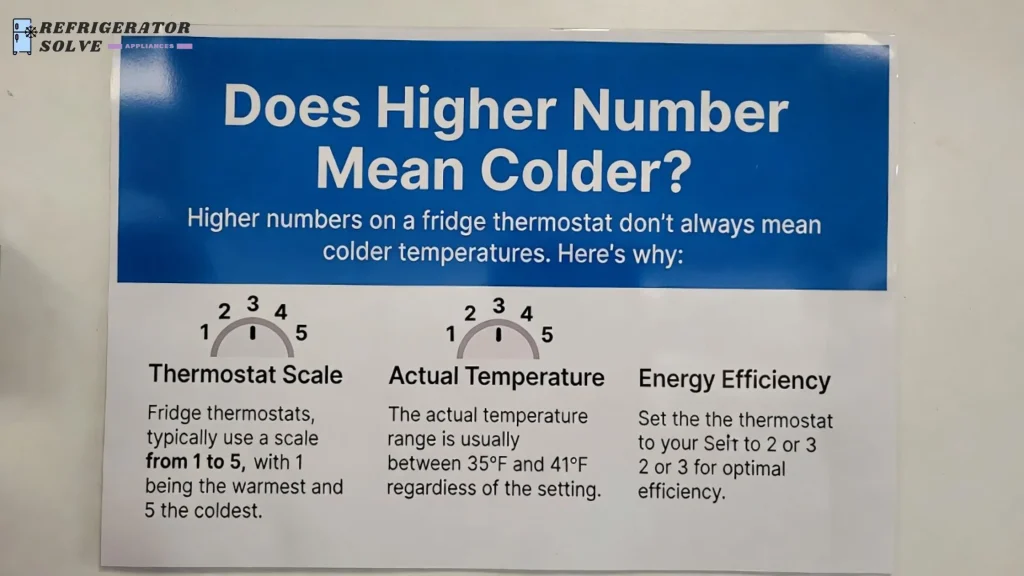
When you turn the dial from 1 to 5 (or 1 to 7), you are telling the compressor to run longer and work harder. You aren’t setting a specific temperature like you would on a digital thermostat; you are setting the intensity of the cooling cycle.
- Setting 1: Minimum cooling. This is the warmest setting.
- Setting 3-4: usually the recommended “normal” setting.
- Setting 7 (or max): Maximum cooling. This is the coldest setting.
However, getting the temperature right isn’t just about cranking the dial to the max. Doing that can actually damage your fresh produce.
“Safety is 30% Common Sense, 80% Compliance.” – Stephen Covey
(Note: When it comes to food safety, compliance with the 40°F/4°C rule is key!)
Decoding the Numbers: 1 to 7 Explained
A very common question I get is about the specific range on the dial. If you are staring at your appliance wondering what does 1 to 7 mean on a refrigerator, think of it like the volume knob on a stereo.
If you turn the volume to 1, it’s quiet. If you turn it to 7, it’s loud. Similarly, if you set your fridge to 1, the compressor is quiet and runs less (warmer). If you set it to 7, the compressor runs aggressively (colder).
But this leads to a specific dilemma: which is colder on fridge 1 to 7?
The answer is 7.
If you have a dial that goes up to 5, then 5 is the coldest. If it goes to 9, then 9 is the coldest. The logic remains the same across almost all brands, whether it’s a Whirlpool in the US or a Bosch in the UK.
Why Do Manufacturers Do This?
It seems counterintuitive, right? We are used to thinking about temperature. In our minds, a lower number (like 32°F) is colder than a higher number (like 40°F).
But the manufacturers aren’t showing you degrees. They are showing you “Refrigerant Power.” By using a simple fridge temperature setting 1 to 7 explained system, they simplify the engineering, even if it complicates things for us users.
The “Goldilocks” Zone: Where Should You Set It?
Okay, so we know which fridge setting is coldest (it’s the highest number), but should you actually keep it there?
Almost certainly not.
I once set my fridge to 7 because I had just loaded it with warm groceries after a Costco run. I forgot to change it back. Two days later, my cucumbers were frozen solid blocks of ice, and my eggs had cracked from the cold.
Here is my recommended strategy:
- Start in the Middle: If your dial goes 1-7, set it to 4. This is usually the factory-recommended spot.
- Wait 24 Hours: Fridges are slow beasts. It takes time for the air to stabilize.
- Check the Texture: Touch your butter. Is it soft? It’s too warm. Is it rock hard? It might be too cold.
If you are still unsure which number is colder in fridge 1 to 7, just remember that moving the dial up makes it colder. If your milk is spoiling before the expiration date, move from 4 to 5. If your lettuce is freezing, move from 4 to 3.
Troubleshooting: When the “High Number” Rule Doesn’t Work
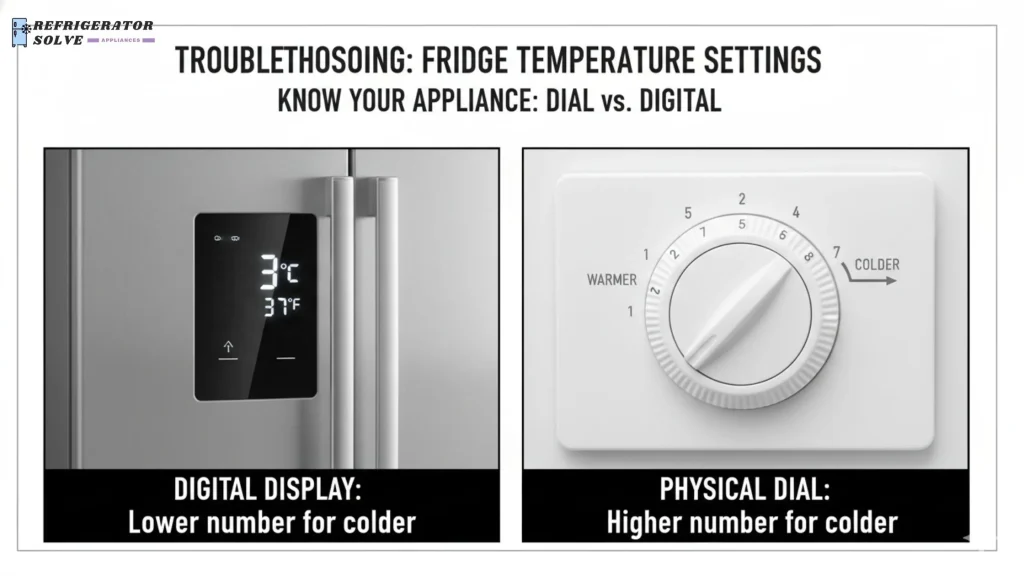
I want to be transparent here. There are rare exceptions. Some modern digital fridges display the actual temperature.
If you see a digital display that says “3°C” or “37°F,” then obviously, lowering that number makes it colder. But if it is a physical dial or a wheel with range marks, the fridge number settings meaning is almost always “higher number = colder.”
The “Summer vs. Winter” Problem
Living in places with distinct seasons, like parts of Canada or the UK, affects your fridge. In a hot summer, your kitchen is warmer. The fridge has to work harder to maintain the same internal temperature.
You might need to bump the setting up a notch (from 3 to 4) in July, and turn it down in January. If you don’t adjust, you might find yourself asking is fridge colder on 1 or 7 all over again because your usual setting isn’t working.
“An ounce of prevention is worth a pound of cure.” – Benjamin Franklin
Checking your fridge seal and setting the dial correctly is that ounce of prevention against food poisoning!
How to Be 100% Sure (The Thermometer Trick)
If you are dealing with a temperamental appliance, relying on the fridge dial 1 to 7 which is coldest logic is a good start, but it’s not precise.
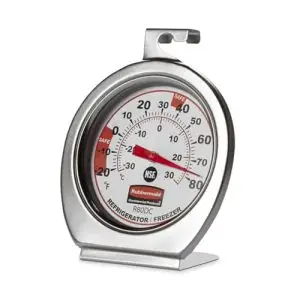
The best thing I ever did for my peace of mind was buying a cheap refrigerator thermometer. They cost about $5 or £4. You hang it on the shelf.
This way, you stop guessing about fridge settings coldest number and start seeing the truth. You want your fridge to be between 35°F and 38°F (1.7°C – 3.3°C).
- If the thermometer reads 42°F, turn the dial to a higher number.
- If it reads 30°F, turn the dial to a lower number.
This completely solves the mystery of fridge temperature numbers explained because you get real-time feedback.
Common Myths About Fridge Temperatures
There is a lot of bad advice floating around. Let’s bust a few myths.
Myth 1: “Colder is always better.” False. Too cold ruins food texture. Tomatoes get mealy, and leafy greens turn to mush. You want cold, not frozen.
Myth 2: “A full fridge needs to be set to the max.” Sort of. A full fridge actually holds temperature better than an empty one (cold food helps keep other food cold). However, if you just put a massive load of warm food inside, you might need to temporarily increase the setting.
Myth 3: “1 is the coldest because it’s like 1st place.” I’ve heard people argue this! But no, regarding refrigerator temperature control, 1 is almost always the warmest setting.
Resource for Food Safety
For those who want to get technical about why these temperatures matter for bacteria growth, the FDA has a comprehensive guide on safe food storage that is worth a read.
Dealing with Freezer Dials
Since we are talking about numbers, we should briefly mention the freezer. Usually, the fridge and freezer share a cooling system. Sometimes the dial in the fridge controls both. Other times, the freezer has its own dial labeled A-E or 1-9. The logic is generally the same: Higher number (or letter further in the alphabet) equals colder.
Frequently Asked Questions
Does 1 mean cold or hot on a fridge?
On a fridge dial, 1 stands for the “warmest” cooling setting. It does not mean hot; it just means the least amount of cold.
Is 5 colder than 1 on a fridge?
Yes, 5 is colder than 1. The higher the number, the more cooling power the fridge uses.
What is the normal setting for a fridge 1-7?
The ideal setting is usually right in the middle, around 3 or 4. This typically keeps the temperature in the safe zone of 37°F to 40°F.
Why is my food freezing on setting 2?
If your food freezes on a low setting like 2, your thermostat might be broken, or the air vents are blocked. It could also mean your kitchen is very cold, so the fridge doesn’t need to work hard to reach freezing temperatures.
Does higher number mean colder fridge on all brands?
For brands with mechanical dials (Whirlpool, GE, Frigidaire, Kenmore, etc.), yes. If the fridge has a digital display, you simply set the target temperature degrees.
Conclusion
Navigating the confusion of appliance settings can be annoying, but it is solvable. To recap: Does higher number mean colder fridge? Yes.
If you see numbers 1 through 5 or 1 through 7, turning the knob to the highest number will make your fridge colder. Turning it to 1 will make it warmer.
My advice? Don’t stress too much about the specific number. Set it to the middle (usually 3 or 4), buy a cheap thermometer to verify, and check your milk. If the milk is cold and fresh, and the butter is spreadable but firm, you have found the sweet spot.
“The kitchen is the heart of the home.”
Keep that heart healthy by keeping your food at the right temp. Hopefully, this clears up the confusion and saves you from another morning of sour coffee!
Next Step for You: Go to your kitchen right now, open the fridge, and check where your dial is pointing. If it is on 6 or 7 and you haven’t checked your veggies lately, turn it down to 4 to save energy and save your salad!