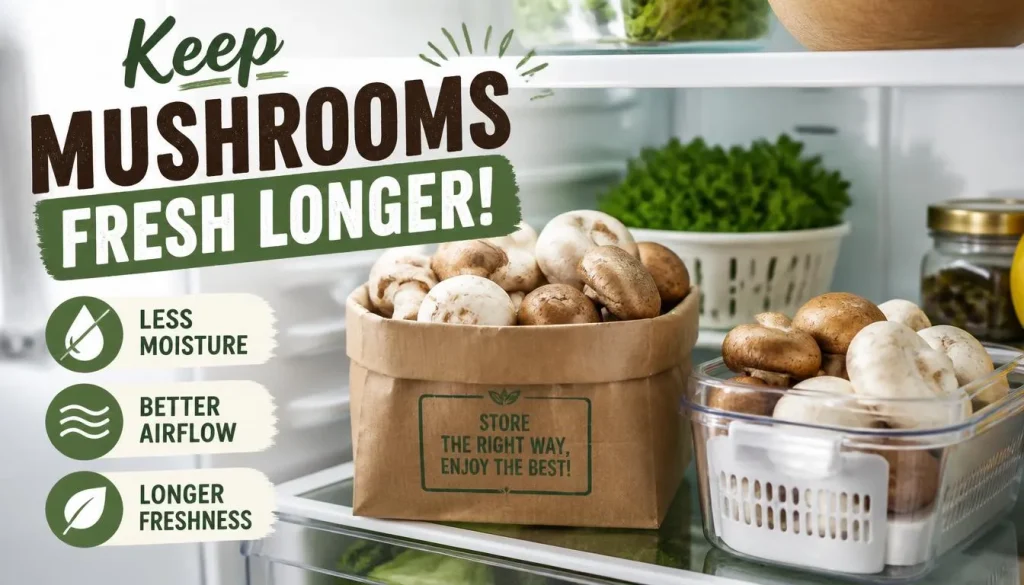
The best way to store mushrooms in refrigerator is to keep them dry, unwashed, and able to breathe. For loose fresh mushrooms, a simple brown paper bag works especially well because it absorbs excess moisture without trapping the mushrooms in a sealed, humid environment. Prepackaged mushrooms can usually stay in their original ventilated package until it is opened, after which moving them to a paper bag is often the easiest way to protect their texture.
Mushrooms are a little different from most produce. They naturally contain a lot of water, yet too much moisture around their surface can quickly make them sticky, slimy, or moldy. On the other hand, leaving them exposed to very dry refrigerator air can make them shrivel. Good mushroom storage is therefore about balance: keep them cold, keep surface moisture under control, and give them enough airflow.
If you have ever bought a perfect carton of mushrooms only to find them slippery a few days later, this guide explains exactly what to do differently.
What Is the Best Way to Store Mushrooms in the Refrigerator?
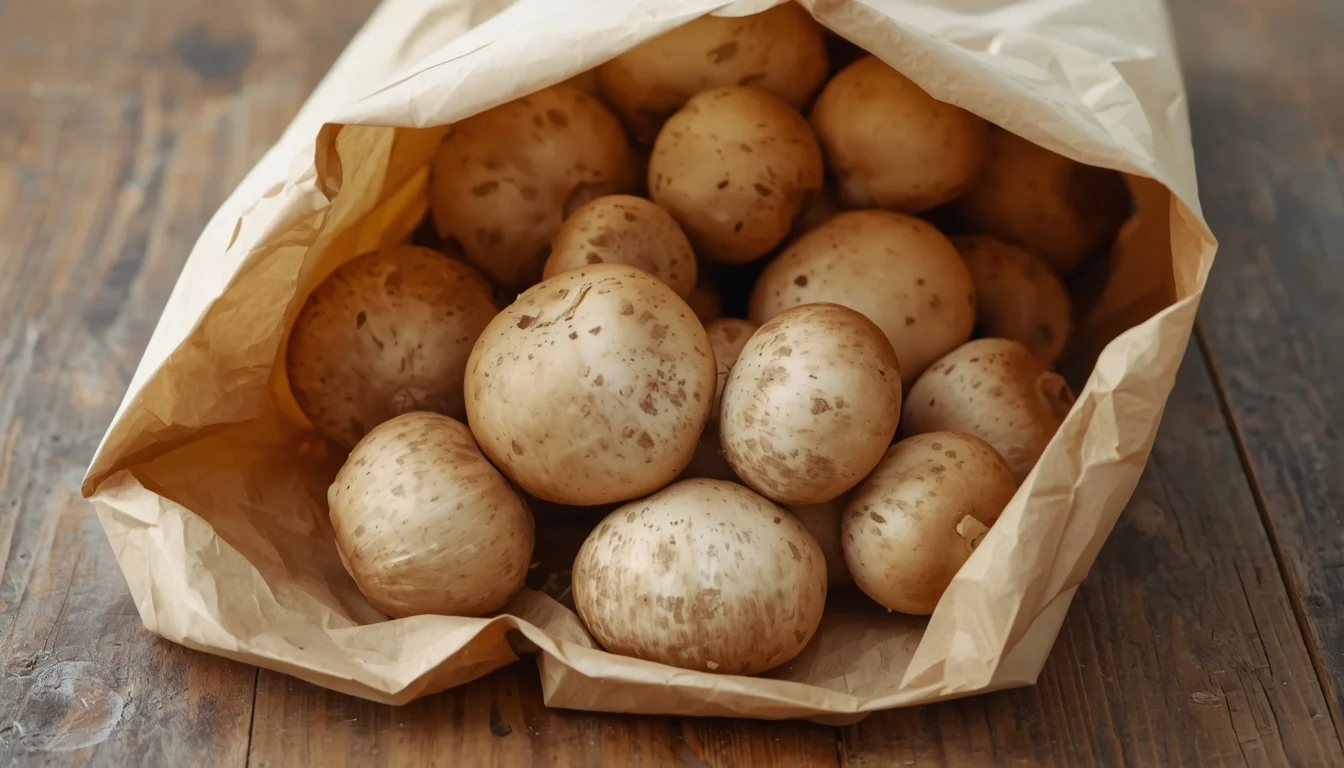
For most fresh mushrooms, the simplest method is:
- Leave the mushrooms unwashed.
- Remove any mushrooms that are already damaged or slimy.
- Place loose mushrooms in a clean, dry paper bag.
- Fold the top of the bag loosely rather than sealing it tightly.
- Refrigerate them promptly.
- Check the bag every few days for excess moisture.
- Wash or clean the mushrooms only when you are ready to cook them.
Health Canada specifically recommends refrigerating loose mushrooms in a paper bag and notes that prepackaged mushrooms can remain in their original packaging or be transferred to a paper bag.
The reason this method works is simple: mushrooms need protection from both excess condensation and excessive drying.
Why Mushrooms Spoil So Quickly
Fresh mushrooms have a delicate structure and high water content. After harvesting, they continue to respire and gradually lose quality.
Three things usually make them deteriorate faster:
Too Much Surface Moisture
Water collecting on the caps or inside a plastic bag creates the damp conditions associated with slime, discoloration, and faster deterioration.
Poor Air Circulation
A completely sealed environment traps moisture and reduces airflow. Commercial mushroom packaging is often designed with perforations specifically to allow air exchange.
Warm Refrigerator Temperatures
Mushrooms deteriorate much faster when they are stored too warm. Keeping your refrigerator properly chilled is important for mushrooms as well as other perishable foods.
For broader refrigerator temperature guidance, see RefrigeratorSolve’s guide to the ideal refrigerator temperature setting.
How to Store Fresh Mushrooms in the Refrigerator Step by Step
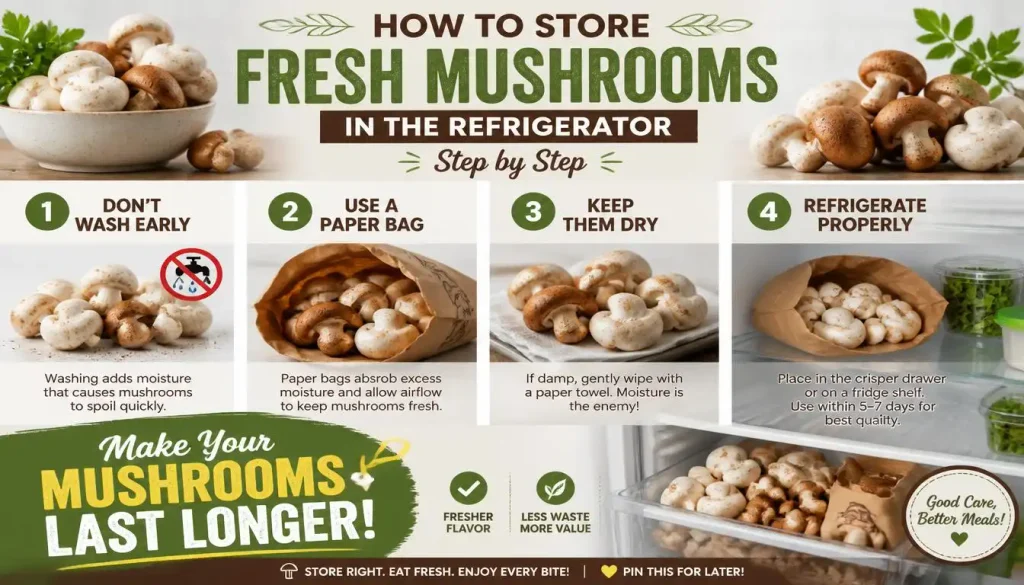
Step 1: Inspect the Mushrooms
Before putting the package away, take a quick look at what you bought.
Good fresh mushrooms should generally be:
- Firm
- Relatively dry
- Free from obvious mold
- Free from a strong unpleasant odor
- Not coated in slime
One damaged mushroom can release moisture and deteriorate faster than the rest, so remove obviously spoiled pieces instead of leaving them in the bag.
Step 2: Do Not Wash Them Before Storage
One of the easiest mistakes to make is washing an entire package as soon as you get home.
Unless the mushrooms were sold prewashed, it is usually better to clean them shortly before cooking rather than before storage.
Extra water left on the surface can shorten the time they remain in good condition.
When you are ready to use them, brush away loose debris or clean them quickly and dry them well before cooking.
Step 3: Keep the Mushrooms Dry
If you notice condensation inside the store packaging, gently remove the mushrooms and make sure their surfaces are reasonably dry before transferring them.
Do not aggressively squeeze or rub them. Mushrooms bruise easily.
If necessary, gently blot visible moisture with a clean paper towel.
Step 4: Transfer Loose Mushrooms to a Paper Bag
Place the mushrooms into a clean brown paper bag.
Do not cram the bag completely full. A little room between mushrooms helps air circulate and reduces moisture buildup.
Step 5: Fold the Bag Loosely
You do not need to tightly seal the paper bag.
Simply fold the top over once or twice.
This keeps the mushrooms protected while still allowing some exchange of air.
Step 6: Refrigerate Promptly
Put the bag into the refrigerator rather than leaving mushrooms sitting on the kitchen counter for extended periods.
As a general food-safety rule, a refrigerator should remain at 4°C/40°F or colder.
Step 7: Check Them Before Each Use
Open the bag and inspect the mushrooms whenever you cook.
If the bag has become noticeably damp, replace it with a fresh dry one.
This tiny step can make a surprisingly large difference.
Why a Paper Bag Works So Well for Mushrooms
You may be wondering why something as basic as a lunch bag is often recommended over a fancy storage container.
The answer is moisture management.
Paper absorbs some moisture released by the mushrooms while remaining breathable. Plastic, especially when tightly sealed, tends to trap condensation.
Commercial storage research has also long recognized that mushrooms need to “breathe” after harvest and that water condensation inside packaging should be avoided.
Here is a simple comparison:
| Storage Method | Airflow | Moisture Control | Best Use |
|---|---|---|---|
| Paper bag | Good | Good | Loose whole mushrooms |
| Original ventilated package | Good | Moderate | Unopened prepacked mushrooms |
| Sealed plastic bag | Poor | Poor if condensation develops | Generally not ideal |
| Vented container with paper towel | Moderate | Good when monitored | Short-term storage |
| Open plate or bowl | High | May dry mushrooms too quickly | Very short-term use |
For most households, the paper bag wins because it requires almost no effort.
Can You Keep Mushrooms in Their Original Packaging?
Yes, particularly when the mushrooms are commercially packaged in a ventilated tray or film.
Health Canada advises that prepackaged fresh mushrooms can be refrigerated in their original packaging or in a paper bag for up to five days.
If the Package Is Unopened
If the package is dry inside and the film is intact and ventilated, you do not necessarily need to transfer the mushrooms immediately.
Keep them refrigerated and follow the date information on the package.
After Opening the Package
Once opened, moisture control becomes more important.
If condensation starts developing or the mushrooms are sitting in a damp tray, move them into a clean paper bag.
If the Package Is Already Wet
Do not simply close it again.
Remove the mushrooms, discard any spoiled ones, gently blot visible moisture, and transfer the good mushrooms into a dry paper bag.
Should You Wash Mushrooms Before Storing Them?
Usually, no.
Washing mushrooms before refrigeration adds moisture at exactly the time you are trying to keep their surfaces relatively dry.
It is easier to store them first and clean only the quantity you need before cooking.
What If You Already Washed the Mushrooms?
It happens. You do not need to throw them away.
Instead:
- Drain them immediately.
- Spread them out on a clean towel or paper towels.
- Pat them gently until the surfaces are as dry as possible.
- Give them a little time to air-dry if necessary.
- Store them with a dry paper towel in a breathable or loosely closed container.
- Use them sooner rather than later.
Once mushrooms have been washed, I would prioritize them in your next meal instead of expecting them to store as long as untouched whole mushrooms.
How to Store Mushrooms With Paper Towels
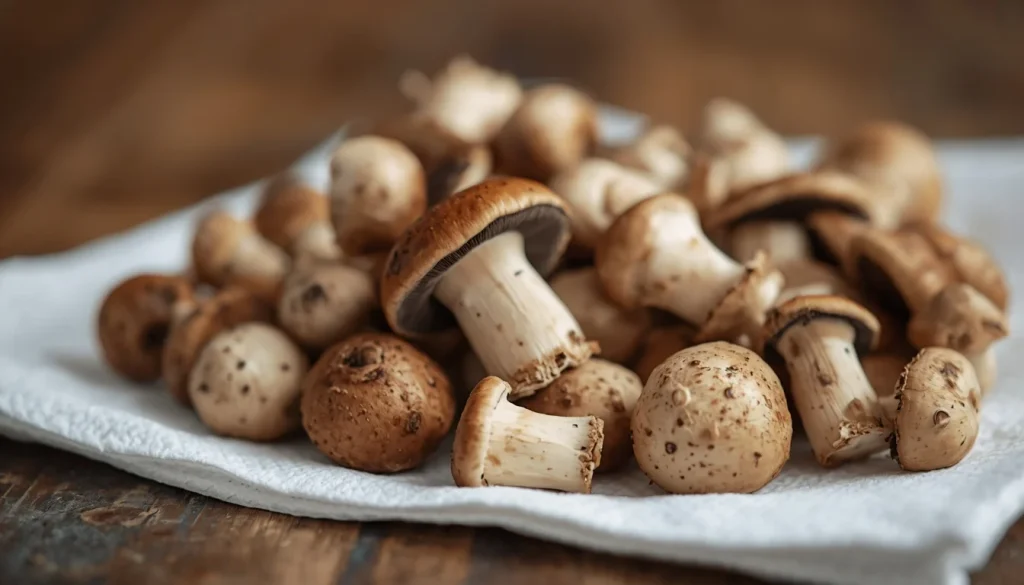
A paper towel can be useful when you do not have a paper bag or when a package develops a little condensation.
Line a ventilated container or the bottom of the mushroom package with a clean, dry paper towel. Place the mushrooms on top without packing them tightly together.
Check the towel daily.
If it becomes damp, replace it.
The towel’s job is not to make the container completely dry. It simply catches excess surface moisture before the mushrooms sit in it.
Paper Bag vs. Plastic Bag: Which Is Better?
For loose mushrooms, I would choose the paper bag.
A tightly closed plastic bag can trap water vapor released by the mushrooms. That moisture may collect as droplets and leave the mushrooms sitting in a damp environment.
Paper takes up some of that moisture while allowing the mushrooms to breathe.
The exception is properly designed commercial packaging. Store-bought mushroom trays may use perforated film specifically engineered to permit airflow, so you do not have to automatically throw away good original packaging.
The issue is not simply “plastic equals bad.”
The real issue is trapped moisture plus inadequate airflow.
Can You Store Mushrooms in an Airtight Container?
An airtight container is not my first choice for whole fresh mushrooms.
Health Canada warns that fresh mushrooms stored unrefrigerated in airtight conditions can create a food-safety concern and specifically recommends refrigeration in a paper bag or appropriate original packaging.
If you prefer a reusable container, choose one that allows some ventilation and consider adding a dry paper towel.
Avoid creating a warm, wet, completely sealed environment.
Can You Store Mushrooms in a Glass Container?
You can, but the setup matters more than the material.
A glass container with a tightly sealed lid may trap condensation. A better approach is to use a breathable or vented lid, or leave the container slightly open if appropriate.
Line the bottom with a dry paper towel and check regularly for moisture.
For whole mushrooms, a paper bag is still usually simpler.
Where Should You Store Mushrooms in the Fridge?
Mushrooms need a consistently cold spot with reasonable airflow.
You can keep a paper bag of mushrooms on a refrigerator shelf or in an appropriate produce drawer.
The exact location matters less than three things:
- The mushrooms stay cold.
- The bag does not become soaked with condensation.
- The mushrooms are protected from cross-contamination.
If you want to better understand how refrigerator drawers manage moisture, RefrigeratorSolve has a detailed guide explaining the ideal humidity setting for fridge drawers.
Main Shelf vs. Crisper Drawer
Different refrigerators manage humidity differently.
A produce drawer can work well if mushrooms remain dry inside their paper bag. However, if your drawer constantly develops condensation, moving them to a colder, drier shelf may work better.
The paper bag is doing much of the moisture-control work, so pay attention to the mushrooms themselves instead of obsessing over a particular drawer label.
Avoid the Refrigerator Door
The refrigerator door usually experiences more temperature fluctuation because it warms each time the door is opened.
A stable interior shelf or produce area is a better choice for highly perishable mushrooms.
Keep Them Away From Raw Meat
Do not store mushrooms where raw meat, poultry, or seafood juices could drip onto them.
Cross-contamination can turn a simple freshness issue into a food-safety problem.
For a wider look at safe refrigerator placement, RefrigeratorSolve also explains how to clean and organize your fridge.
How Long Do Mushrooms Last in the Refrigerator?
There is no single number that applies to every mushroom.
Freshness depends on:
- How fresh they were when purchased
- Mushroom variety
- Refrigerator temperature
- Whether they are whole or sliced
- Packaging
- Moisture
- Handling
USDA consumer guidance recommends refrigerating mushrooms and using them within roughly 3 to 7 days of purchase for best quality. Health Canada gives a more conservative guideline of up to five days for prepackaged fresh mushrooms.
Use those ranges as a guide rather than ignoring what the mushrooms actually look and smell like.
| Mushroom Type | Typical Home-Fridge Approach | Practical Priority |
|---|---|---|
| Whole fresh mushrooms | Paper bag | Use within several days |
| Prepackaged mushrooms | Original ventilated pack or paper bag | Follow package date and use promptly |
| Sliced mushrooms | Vented container with dry towel | Use sooner than whole mushrooms |
| Washed mushrooms | Dry thoroughly and refrigerate | Use quickly |
| Cooked mushrooms | Covered clean container | Treat as refrigerated leftovers |
For more general storage timing, see RefrigeratorSolve’s guide to the shelf life of refrigerated foods.
Is It Better to Store Mushrooms Whole or Sliced?
Whole mushrooms generally keep their quality better than sliced mushrooms.
Once you cut a mushroom, you expose more surface area to air and moisture. The cut surfaces also dry and discolor more easily.
If you are meal prepping several days in advance, leaving mushrooms whole until closer to cooking time is usually the better choice.
Slice only what you expect to use.
How to Store Sliced Mushrooms
If your mushrooms are already sliced:
- Inspect them for sliminess or discoloration.
- Make sure the slices are reasonably dry.
- Place a dry paper towel in a clean container.
- Arrange the slices without compressing them.
- Use a vented or loosely closed lid rather than trapping heavy condensation.
- Refrigerate immediately.
- Use them before your whole mushrooms.
Pre-sliced mushrooms have less room for error because the exposed surfaces deteriorate faster.
How to Store Cooked Mushrooms
Cooked mushrooms require different storage from raw mushrooms.
After cooking:
- Transfer leftovers to a clean, shallow container.
- Refrigerate promptly once appropriate for storage.
- Keep the container covered after cooling.
- Date the container if you are likely to forget when you cooked them.
Health Canada recommends using refrigerated leftovers within about two to three days as a conservative general rule.
If the cooked mushrooms were part of another dish, follow the storage guidance for the entire dish, not just the mushrooms.
How to Store Different Types of Mushrooms
The basic principles remain similar, but some varieties are more delicate than others.
White Button Mushrooms
Button mushrooms are among the easiest to store.
Keep them unwashed in their ventilated package or transfer loose mushrooms to a paper bag.
Cremini Mushrooms
Cremini mushrooms can be treated much like white button mushrooms.
Keep them dry and refrigerated and avoid trapping moisture around the caps.
Portobello Mushrooms
Large portobello caps take up more space and may bruise if piled heavily.
Keep them in a paper bag or breathable container without crushing them.
Shiitake Mushrooms
Fresh shiitakes can also be kept dry and refrigerated in breathable packaging.
Their stems may become tougher as they age, so inspect both the caps and stems before cooking.
Oyster Mushrooms
Oyster mushrooms are more delicate.
They bruise and deteriorate relatively quickly, so avoid packing them tightly and plan to use them early.
Enoki Mushrooms
Keep commercially packaged enoki refrigerated and follow the producer’s packaging and date instructions.
Because recall and handling advice can vary by product and country, always check local food-safety notices if you are concerned about a specific packaged product.
How to Keep Mushrooms From Getting Slimy
Sliminess usually points to excess moisture and deterioration.
To reduce the chances:
- Do not wash mushrooms before storing them.
- Use a paper bag.
- Replace a wet bag.
- Do not leave mushrooms sitting in condensation.
- Refrigerate them promptly.
- Do not pack them too tightly.
- Check the package regularly.
- Use older mushrooms before newer ones.
These habits are also useful beyond mushrooms. RefrigeratorSolve’s guide on how to prevent food spoilage in the refrigerator covers temperature, airflow, organization, and other ways to reduce wasted food.
How to Keep Mushrooms From Drying Out
You can go too far in the other direction.
If mushrooms are left completely uncovered in a dry refrigerator, they may wrinkle and shrivel.
A paper bag helps here as well. It controls excess moisture but gives the mushrooms some protection from direct refrigerator airflow.
If they are drying very quickly, check whether they are sitting directly beside a cold-air vent.
How to Tell If Mushrooms Have Gone Bad
Storage time is useful, but your senses still matter.
Look for several signs together.
Slimy or Sticky Surface
A noticeable slippery coating is a strong sign that the mushrooms are deteriorating.
When they have become heavily slimy, discard them.
Mold
Visible fuzzy mold is a clear reason to throw mushrooms away.
Do not simply cut mold from heavily affected mushrooms and keep the rest of the same damaged mushroom.
Strong or Unpleasant Odor
Fresh mushrooms have an earthy aroma.
A sour, rotten, or otherwise unpleasant smell suggests that they should not be eaten.
Mushy Texture
Mushrooms should have some firmness.
If they have collapsed into a very soft, wet texture, they are past their best.
Severe Discoloration
Some browning naturally develops with age, so color alone does not always mean a mushroom is dangerous.
However, dark discoloration together with slime, odor, mold, or extreme softness is a good reason to discard it.
Can You Eat Shriveled Mushrooms?
Slightly dry or wrinkled mushrooms are not automatically spoiled.
If they are simply dehydrated but still smell normal and show no slime or mold, they may still work well in cooked dishes where texture matters less.
For example, slightly dry mushrooms can often be useful in:
- Soups
- Sauces
- Stir-fries
- Omelets
- Pasta dishes
But when mushrooms are both shriveled and slimy, moldy, foul-smelling, or unusually soft, throw them away.
When in doubt about food safety, replacing a small package of mushrooms is not worth taking a risk.
Common Mushroom Storage Mistakes to Avoid
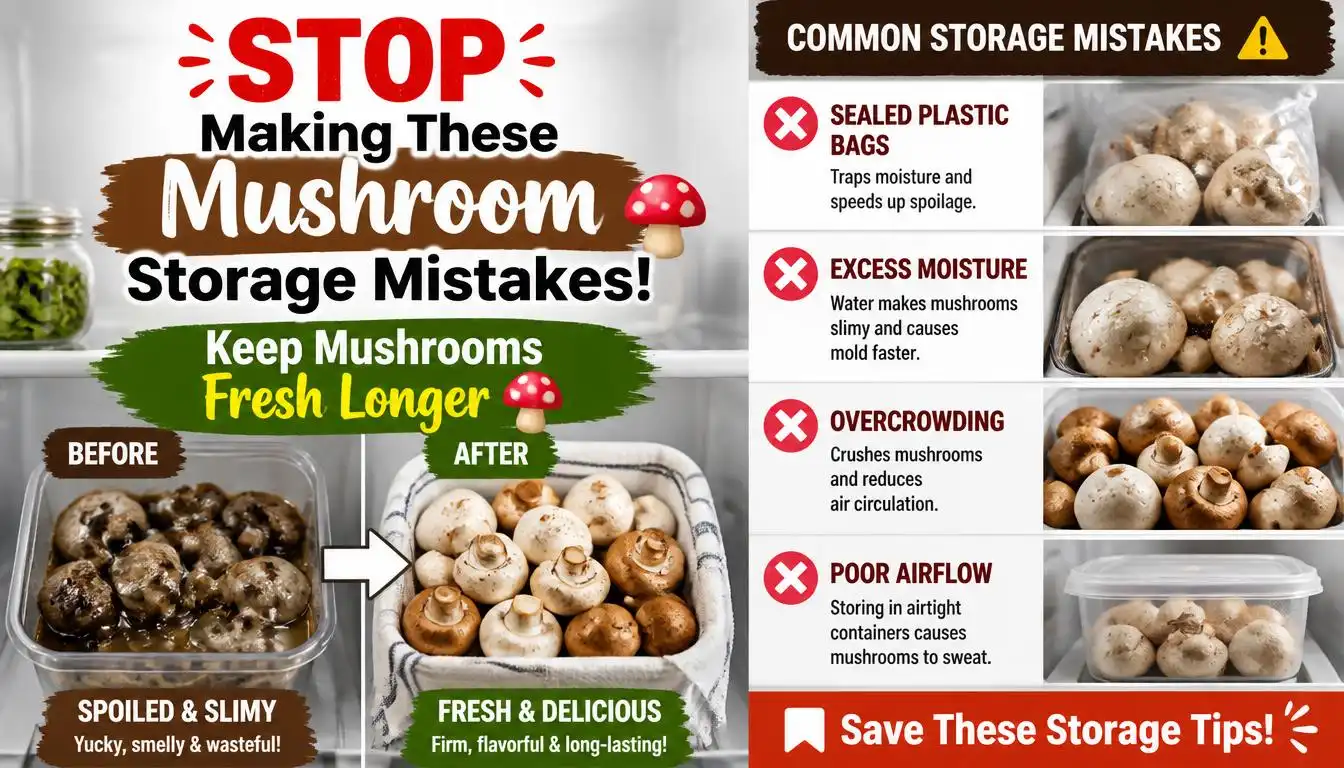
Washing the Whole Package Immediately
This creates extra surface moisture.
Clean mushrooms closer to cooking time instead.
Sealing Them in a Regular Plastic Bag
A tightly closed bag can trap moisture and encourage condensation.
Ignoring Condensation
If you can see droplets inside the package, deal with them instead of leaving the mushrooms wet for several days.
Leaving Spoiled Mushrooms With Good Ones
Inspect the batch and remove damaged mushrooms.
Packing the Bag Too Tightly
Give the mushrooms room to breathe and avoid crushing delicate caps.
Leaving Them Out Too Long
Return mushrooms to refrigeration soon after shopping or preparation.
Forgetting About Them
A paper bag at the back of the fridge is easy to overlook.
Plan your meals so mushrooms are used early in the week.
Should You Trim Mushroom Stems Before Storing?
There is usually no need.
Keeping mushrooms intact means less exposed surface area.
Trim dry or tough stem ends shortly before preparation instead.
If a stem is already damaged or decaying, remove the affected mushroom rather than trying to extend its storage life.
Should the Paper Bag Be Open or Closed?
Loosely folded is ideal.
You do not need to roll it airtight.
Fold the top once or twice so the mushrooms are protected while air can still move through the paper.
If the bag becomes wet, replace it.
Can You Store Mushrooms in a Ziploc Bag?
A standard tightly sealed Ziploc-style bag is not my preferred option for fresh whole mushrooms because moisture can become trapped inside.
If a plastic bag is your only option, do not pack wet mushrooms into it and seal them into a moisture-heavy environment.
A breathable paper bag is simpler and better suited to loose fresh mushrooms.
Can You Vacuum-Seal Fresh Mushrooms?
Vacuum sealing fresh raw mushrooms for ordinary refrigerator storage is not something I recommend improvising at home.
Fresh mushrooms continue to respire, and completely oxygen-restricted packaging requires proper processing, refrigeration, and food-safety controls.
Health Canada has specific industry guidance concerning hermetically sealed and vacuum-packaged fresh mushrooms because of potential botulism concerns.
For home storage, stick to approved original packaging or a breathable paper bag.
Can You Freeze Fresh Mushrooms?
Yes, but cooking them first is the safer and more reliable approach for quality.
Health Canada recommends steaming or sautéing mushrooms before freezing them rather than freezing fresh raw mushrooms directly.
How to Freeze Mushrooms
- Choose mushrooms that are still fresh.
- Clean them.
- Slice them if desired.
- Steam or sauté until cooked.
- Allow them to cool appropriately.
- Portion into freezer-safe containers or bags.
- Label with the date.
- Freeze.
Frozen cooked mushrooms are particularly useful for soups, sauces, casseroles, pasta, and stir-fries.
Their texture after thawing may not be identical to freshly cooked mushrooms, but freezing is useful when you know you will not finish a package in time.
Best Tips to Make Mushrooms Last Longer
If you only remember a few things from this guide, remember these:
- Buy mushrooms that are firm and dry.
- Refrigerate them as soon as practical.
- Keep loose mushrooms in a paper bag.
- Keep them unwashed until you are ready to use them.
- Avoid sealed, moisture-heavy storage.
- Replace damp paper bags or paper towels.
- Keep mushrooms away from raw meat juices.
- Store them in a consistently cold part of the refrigerator.
- Use sliced and delicate mushrooms before whole firm mushrooms.
- Check texture and smell instead of relying only on a calendar.
- Freeze cooked mushrooms if you cannot use them in time.
Frequently Asked Questions
What is the best way to store fresh mushrooms in the refrigerator?
For loose mushrooms, keep them unwashed and dry in a paper bag inside the refrigerator. Loosely fold the bag and check it periodically for moisture.
Should mushrooms be stored in a paper bag or plastic bag?
A paper bag is generally better for loose mushrooms because it absorbs excess moisture while allowing airflow. Properly ventilated original commercial packaging can also work well.
How long do fresh mushrooms last in the fridge?
A practical home-storage range is roughly three to seven days for good quality, although freshness varies. Health Canada advises that prepackaged fresh mushrooms can be refrigerated for up to five days.
Should you wash mushrooms before storing them?
Usually not. Washing adds surface moisture. Clean mushrooms shortly before cooking instead.
How do you store mushrooms after opening the package?
If the original package remains dry and ventilated, you can continue using it. If moisture begins collecting, transfer the mushrooms to a clean paper bag.
Can mushrooms be stored in an airtight container?
A completely airtight container is generally unnecessary for raw whole mushrooms. Breathable storage that controls condensation is more suitable.
Can you put mushrooms in the crisper drawer?
Yes, provided they remain cold and dry inside their paper bag. If your drawer creates excessive condensation, try a refrigerator shelf instead.
How do you keep mushrooms from getting slimy?
Keep them dry, do not prewash them, use breathable storage, refrigerate promptly, and replace damp packaging.
Can mushrooms be stored with paper towels?
Yes. A dry paper towel can absorb excess moisture in a ventilated or loosely covered container. Replace it when it becomes damp.
Is it better to store mushrooms whole or sliced?
Whole mushrooms generally maintain quality longer because less internal surface area is exposed to air and moisture.
Can slightly wrinkled mushrooms still be used?
Often yes, if they are only somewhat dry and show no slime, mold, unpleasant odor, or severe deterioration. They are usually better suited to cooked dishes.
Can you freeze raw mushrooms?
For better handling and quality, cook them first. Health Canada recommends steaming or sautéing mushrooms before freezing.
Final Thoughts
The best way to store mushrooms in refrigerator does not require special equipment. A dry paper bag, a cold refrigerator, and a little attention to moisture are usually all you need.
Keep fresh mushrooms unwashed until you are ready to cook them, avoid trapping them in condensation, and check the bag every few days. Leave whole mushrooms whole when possible, use sliced or delicate varieties first, and cook and freeze any extras before they begin to deteriorate.
The biggest mistake is treating mushrooms like a food that needs to be tightly sealed. They do better when they can breathe while still being protected from excessive drying. Get that balance right, and you will waste fewer mushrooms—and enjoy far better texture when it is finally time to cook them.

Hi, I’m the lead researcher and appliance enthusiast behind RefrigeratorSolve. With years of hands-on experience troubleshooting cooling systems and testing home appliances, I am dedicated to bringing you honest reviews, energy-saving tips, and practical solutions to keep your refrigerator running perfectly.