
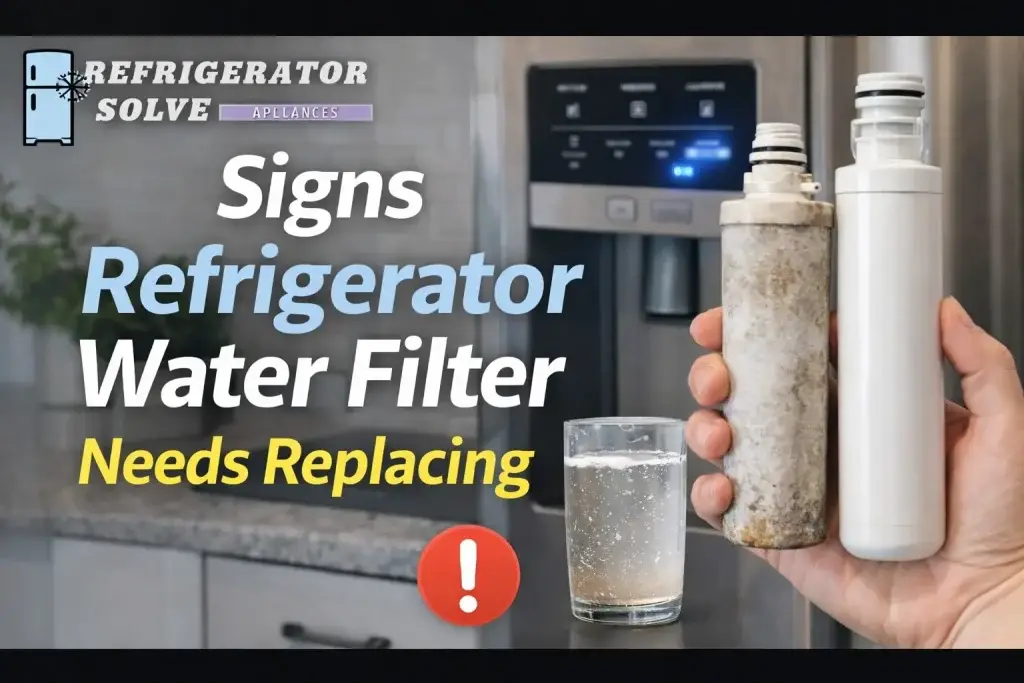
The signs refrigerator water filter needs replacing include bad taste, slow water flow, strange odors, and cloudy ice. Replacing it on time protects your health and keeps your fridge working efficiently.
If your drinking water suddenly tastes off or your ice looks cloudy, you’re probably wondering what went wrong. I’ve been there too thinking something was wrong with the fridge, only to realize the filter was overdue for a change.
I’ve worked with home appliances for over a decade, and one thing I see often is people ignoring early warning signs. In this guide, I’ll walk you through the real signs refrigerator water filter needs replacing, how to spot them early, and what you can do about it today.
Common Pain Points People Face
1. “My Water Tastes Weird”
Why it happens: Over time, filters clog with contaminants like chlorine, sediment, and minerals. Once saturated, they stop filtering properly.
What you can do:
- Replace the filter every 6 months (standard in the US, UK, Canada, and Australia)
- If you live in hard water areas (like parts of Texas or London), change it sooner
Real-life example:
A homeowner in Sydney noticed a metallic taste in water. The filter hadn’t been changed in 10 months. After replacing it, the taste returned to normal instantly.
2. “Water Flow Is Too Slow”
Why it happens: A clogged filter restricts water flow. This is one of the clearest signs refrigerator water filter needs replacing.
What you can do:
- Check if the flow improves after removing the filter temporarily
- Replace it if pressure is still low
Tip: In Canada, colder climates can also slow water flow but if it’s consistent, the filter is likely the issue.
3. “The Filter Light Is On, But I’m Not Sure”
Why it happens: Many modern fridges track usage and alert you. But people often ignore the indicator.
What you can do:
- Treat the light as a reminder, not a suggestion
- Reset it after installing a new filter
Example: In the UK, I’ve seen users wait months after the light turns red leading to poor water quality and even minor blockages.
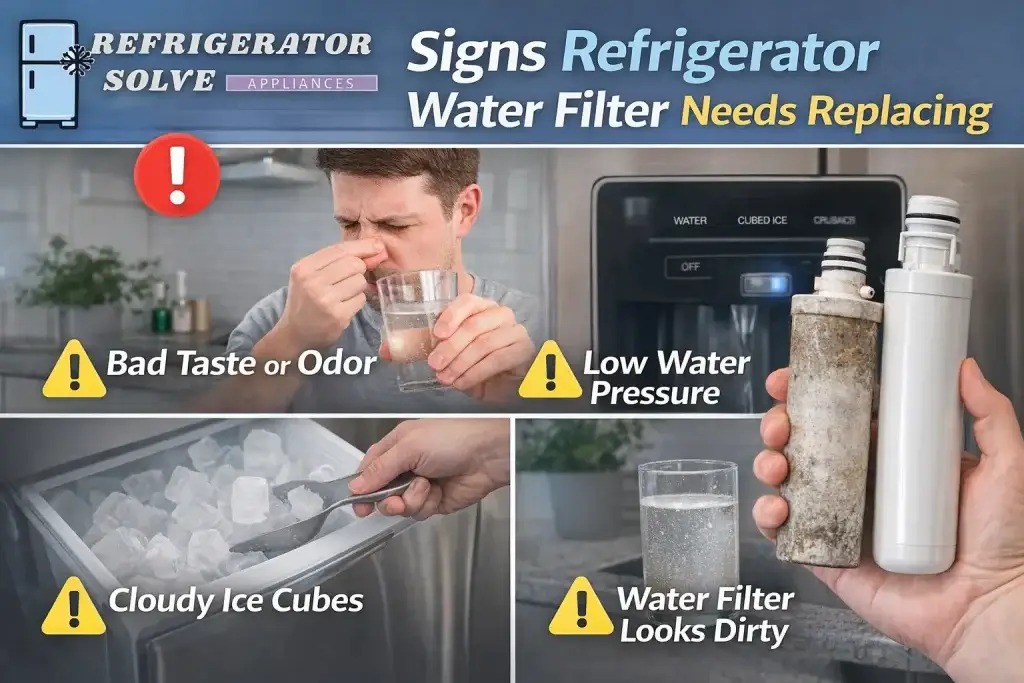
What Are the Main Signs Your Refrigerator Water Filter Needs Replacing?
Bad Taste or Odor in Water
This is usually the first noticeable sign. Filters remove chlorine and impurities. Once saturated, those substances pass through.
Key takeaway:
If your water smells or tastes off, your filter is already overdue.
Cloudy or Dirty Ice Cubes
Ice is made from the same filtered water. If your cubes look cloudy or have particles, your filter isn’t doing its job.
Example:
A family in California noticed white flakes in their ice. The cause? A clogged filter releasing trapped sediment.
Slow Water Dispenser Flow
A blocked filter reduces water pressure.
- Takes longer to fill a glass
- Weak stream instead of steady flow
This is one of the most reliable signs.
Filter Indicator Light
Modern refrigerators have built-in reminders.
- Green = good
- Yellow = soon
- Red = replace now
Important: Even if your water seems fine, follow the indicator.
Strange Noises from the Fridge
A struggling water system can cause unusual sounds.
- Buzzing
- Clicking when dispensing water
This often happens when water struggles to pass through a clogged filter.
How Often Should You Replace Your Refrigerator Water Filter?
Most manufacturers recommend every 6 months. But real life isn’t always that simple.
Factors That Affect Replacement Frequency
- Water quality: Hard water areas (common in parts of the UK and Australia)
- Usage: Large families use more water
- Filter type: Some premium filters last longer
Expert Insight:
“Most refrigerator filters are designed for about six months of use or 200–300 gallons of water.” — Dr. Andrew Whelton, Environmental Engineer
A Practical Schedule
- USA & Canada: Every 6 months (standard municipal water)
- UK: Every 4–6 months (hard water regions)
- Australia: Every 4–6 months depending on mineral levels
What Happens If You Don’t Replace the Filter?
Skipping replacement doesn’t just affect taste it can impact your health and appliance.
Reduced Water Quality
Old filters stop removing:
- Chlorine
- Lead
- Bacteria
Expert Insight:
“A worn-out filter can become a breeding ground for bacteria if left too long.” — Dr. Charles Gerba, Microbiologist
Increased Energy Usage
Your fridge works harder to push water through a clogged filter. That can increase electricity costs.
Potential Damage to the Fridge
Clogs can affect internal components.
Real example:
A homeowner in Toronto ignored filter changes for over a year. The result? A blocked water line and expensive repair.
Step-by-Step: How I Replace My Refrigerator Water Filter
Step 1: Find Your Filter Type
- Inside the fridge (top right corner)
- Bottom grille
- Back panel
Step 2: Remove the Old Filter
- Twist or pull (depends on model)
- Keep a towel handy for drips
Step 3: Install the New Filter
- Align properly
- Twist until locked
Step 4: Flush the System
Run 2–3 gallons of water through the dispenser.
Step 5: Reset the Filter Light
Check your manual or press and hold the reset button.
Expert Insight:
“Flushing the filter after installation removes carbon dust and ensures safe drinking water.” — NSF International
For more safety standards, you can review guidelines from the NSF at
Choosing the Right Replacement Filter
OEM vs Generic Filters
- OEM (Original): Higher reliability
- Generic: Cheaper but varies in quality
Tip: In the US and Canada, look for NSF-certified filters. In the UK and Australia, check local water safety standards.
What I Personally Recommend
- Stick with certified brands
- Avoid extremely cheap options
- Match your fridge model exactly
Extra Tips to Extend Filter Life
- Use filtered tap water if possible
- Clean the dispenser regularly
- Avoid skipping replacement cycles
Key takeaway:
Regular maintenance saves money and protects your health.
Understanding how filters function helps you spot issues earlier and avoid costly mistakes.
Choosing the right filter can improve water quality and extend appliance life.
Frequently Asked Questions
How do I know if my refrigerator water filter is bad?
If your water tastes strange, flows slowly, or smells unusual, your filter likely needs replacing. The indicator light can also confirm this.
Can I use my fridge without a water filter?
Yes, but your water won’t be filtered. This means more contaminants and lower quality.
Why is my water still bad after replacing the filter?
You may need to flush the system fully. If the issue continues, check your water supply or internal lines.
Are expensive filters worth it?
Usually, yes. Certified filters remove more contaminants and last longer than cheaper alternatives.
How long does a refrigerator water filter last?
Most last around 6 months or 200–300 gallons, depending on usage and water quality.
Final Thoughts
By now, you know the most important signs refrigerator water filter needs replacing: bad taste, slow flow, cloudy ice, and warning lights. Ignoring these signs can affect both your health and your fridge.
From my experience, the simplest habit changing your filter on time prevents most problems. Stay consistent, pay attention to early signs, and you’ll always have clean, safe water at home.
Start today. Check your filter—you might be overdue.

Hi, I’m the lead researcher and appliance enthusiast behind RefrigeratorSolve. With years of hands-on experience troubleshooting cooling systems and testing home appliances, I am dedicated to bringing you honest reviews, energy-saving tips, and practical solutions to keep your refrigerator running perfectly.

3 Responses