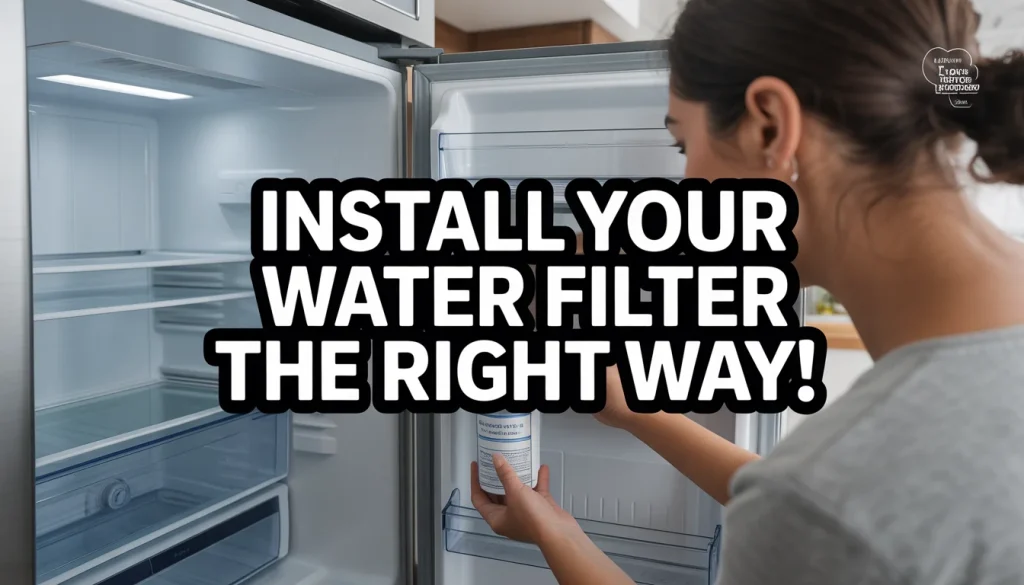
Installing a refrigerator water filter means replacing or inserting a cartridge inside your fridge that removes contaminants from your drinking water and ice. It takes under 10 minutes, requires no tools in most cases, and is one of the simplest home maintenance tasks you can do.
You Deserve Clean Water Without the Confusion
If you have been putting off replacing your fridge’s water filter because you are not sure how to do it, I completely understand. A lot of people feel the same way. You bought the filter, it is sitting on the counter, and somehow three months have passed.
I have helped dozens of friends and family members through this exact situation. The truth is, once you do it once, you will wonder why you ever waited.
This guide walks you through how to install a refrigerator water filter from start to finish, no matter what brand or model you have. By the time you finish reading, you will have clean, filtered water running in your home today.
The 3 Biggest Problems People Face (And How to Fix Them)
Problem 1: Buying the Wrong Filter
This is the most common mistake. You pick up a filter at the hardware store, get home, and it does not fit. It is frustrating, and it wastes a trip.
Why it happens: Refrigerator filters are model-specific. A Whirlpool filter will not fit a Samsung. Even within the same brand, different models use different cartridge sizes.
The fix: Before you buy, find your refrigerator’s model number. It is usually printed on a sticker inside the fridge door or on the back of the unit. In the US, you can use sites like Lowe’s or Home Depot’s filter finder tool. In the UK and Australia, check the manufacturer’s website directly. In Canada, Canadian Tire and Best Buy both have in-store filter matching services.
Problem 2: Water Keeps Dripping After Installation
You install the filter, feel great about it, then notice a slow drip from the dispenser or a small leak near the filter housing.
Why it happens: The filter was not seated properly. Most cartridges need a firm push and a quarter-turn to lock into place. If it is even slightly off, water escapes.
The fix: Remove the filter and reinstall it. Apply firm, even pressure until you feel it click or lock. Run 2–3 gallons of water through the dispenser to flush the system. Minor dripping during this flush period is completely normal.
Problem 3: No Water Comes Out After Installing
You install the filter, press the dispenser lever — and nothing. Or just a weak trickle.
Why it happens: Air gets trapped in the new filter during installation. This is expected and not a fault with the filter or the fridge.
The fix: Hold the dispenser for 30–60 seconds to purge the air. Keep going until water flows steadily. Some Samsung and LG models require you to press and hold the child lock or dispenser lock button first before water will flow. Check your manual for this step if the water does not come after 2 minutes.
How to Install a Refrigerator Water Filter: Step-by-Step
Step 1: Find Your Filter Location
Refrigerator water filters sit in one of three places depending on your model:
- Inside the fridge, upper right corner — common on Whirlpool, Maytag, and KitchenAid
- In the base grille at the bottom front — common on older GE and Frigidaire models
- Inside the fridge, back wall — common on some Samsung and LG models
Open your fridge and look in these spots. You will see a cylindrical cartridge, usually white or grey, with a twist or push mechanism.
Step 2: Turn Off the Ice Maker
Before you remove the old filter, switch off your ice maker. This prevents water from flowing unexpectedly during the swap. You do not need to turn off your main water supply for most modern fridges — the filter housing has a built-in shut-off valve.
“Water filter maintenance is one of the most overlooked aspects of home appliance care, yet it directly affects what your family drinks every day.” — Steve Jenkins, Certified Appliance Technician and founder of ApplianceInsiderPro
Step 3: Remove the Old Filter
- Twist-out style: Turn the filter counter-clockwise about a quarter turn, then pull straight out.
- Push-button style: Press the eject button next to the filter housing and pull the cartridge out.
- Pull-tab style (base grille): Flip open the cover, pull the tab, and slide the filter out.
Have a small towel ready. A few drops of water may come out that is normal.
Step 4: Install the New Filter
Unwrap your new filter and remove any protective caps from the ends. Line up the arrows or notches on the filter with the housing most brands mark this clearly.
For twist-in filters: Push firmly into the housing and turn clockwise until it locks (usually a quarter turn).
For push-in filters: Slide the cartridge straight in until you hear or feel a click.
Do not force it. If it is not going in smoothly, check the alignment again.
Step 5: Flush the System
This step is non-negotiable. New filters contain activated carbon, and the first few litres of water will look cloudy or grey. This is harmless but you do not want it in your drinking water.
Flush at least 2–3 gallons (8–12 litres) through the dispenser before drinking. In the UK and Australia, that is roughly 2 full jugs. This takes about 5–8 minutes at normal dispenser speed.
“Activated carbon filters can release harmless carbon fines during initial use. Flushing the system before drinking is always the right call.” — Dr. Laura Chen, Environmental Engineer and water quality researcher at the University of British Columbia
Step 6: Reset the Filter Indicator Light
Most modern fridges have a filter change reminder light usually red or orange. After installing a new filter, you need to reset it manually. The light will not go off on its own.
Common reset methods:
- Whirlpool/Maytag: Press and hold the “Filter Reset” button for 3 seconds
- Samsung: Press and hold “Ice/Water” + “Child Lock” for 3 seconds
- GE: Press and hold “Reset Filter” for 3 seconds
- LG: Press and hold “Filter” button for 5 seconds
Check your owner’s manual if none of these work for your model.
Step 7: Turn the Ice Maker Back On
Switch your ice maker back on and discard the first batch of ice. These cubes formed from unfiltered or cloudy water during the transition. The second batch will be clean and filtered.
How Often Should You Replace Your Filter?
Most manufacturers recommend replacing your refrigerator water filter every 6 months or after 200–300 gallons of use. If you have a larger household, you may need to replace it more often.
Here is a simple way to remember: change it when you change your clocks for daylight saving. In the US, UK, and Canada, that happens twice a year a perfect reminder built into your routine. In Australia, where not all states observe daylight saving, set a phone reminder instead.
“A filter that has exceeded its lifespan can actually do more harm than good — it stops trapping contaminants and can become a breeding ground for bacteria.” — Marcus Reid, NSF Certified Water Quality Specialist and author of Clean Home, Clean Water
Choosing the Right Replacement Filter
You have two main choices: OEM (original equipment manufacturer) filters and third-party compatible filters.
OEM filters come from your fridge’s brand Whirlpool, Samsung, GE, etc. They are guaranteed to fit and are tested to NSF/ANSI standards. They cost more, typically $40–$60 USD, £30–£45 GBP, or $55–$80 CAD/AUD.
Third-party filters are compatible replacements, often 30–50% cheaper. Look for ones certified to NSF/ANSI Standard 42 and 53 these meet the same contaminant-reduction requirements. The NSF International website lets you verify any filter’s certification, which is a great resource if you are buying in the US, Canada, or Australia.
Special Situations Worth Knowing
Whole House Filters vs. Fridge Filters
If your home already has a whole-house water filtration system, your fridge filter is still worth replacing. Fridge filters add a final-stage polish, removing chlorine taste and odour that can remain after whole-house treatment.
Rental Properties
If you rent in the UK, Canada, or Australia and share a fridge with other occupants, document the filter change. Take a photo of the new filter with a timestamp. It is simple protection if any water quality disputes come up later.
Water Hardness and Filter Life
If you live in an area with hard water which is common in parts of England, Southern California, or Western Australia your filter may clog faster. Watch for a drop in water pressure from the dispenser as a sign you need to change it sooner than six months.
Frequently Asked Questions
Do I need to turn off the water supply to replace a fridge filter?
No — for most modern refrigerators, you do not. The filter housing has an internal shut-off valve that stops water flow when you remove the cartridge. Older models with base grille filters may benefit from turning off the ice maker, but a full water shut-off is rarely needed.
Why is my water cloudy after installing a new filter?
Cloudy or milky water is caused by air bubbles and carbon fines releasing from the new filter. It is completely harmless. Flush 2–3 gallons through the dispenser before drinking and the water will run clear within minutes.
How do I know which filter fits my refrigerator?
Find your fridge’s model number on the sticker inside the door frame or on the back panel. Enter this number on your fridge brand’s official website or a retailer’s filter finder tool to get an exact match. Never guess — even filters that look similar may not be compatible.
Can I use a third-party filter instead of the brand name one?
Yes, as long as it carries NSF/ANSI 42 and 53 certification. These certifications confirm the filter reduces the same contaminants as the OEM version. Many third-party filters are made in the same factories and cost significantly less.
What happens if I don’t replace my fridge filter?
An expired filter stops removing contaminants effectively. Over time it can restrict water flow, reduce ice production, and in some cases, allow bacteria to accumulate in the filter housing. Replacing it every six months is a small task that protects your family’s drinking water quality.
Wrapping Up: Three Things to Take Away
Installing a refrigerator water filter is genuinely one of the easiest home tasks you will ever do. Here are the three most important things to remember:
- Always match the filter to your exact fridge model before buying the model number is inside the door.
- Flush at least 2–3 gallons of water after installation before drinking or using ice.
- Reset the filter indicator light manually after every replacement the fridge will not do it for you.
You have got this. Clean, filtered water is ten minutes away. Go change that filter today your family will thank you for it.

Hi, I’m the lead researcher and appliance enthusiast behind RefrigeratorSolve. With years of hands-on experience troubleshooting cooling systems and testing home appliances, I am dedicated to bringing you honest reviews, energy-saving tips, and practical solutions to keep your refrigerator running perfectly.