Smart fridge installation problems usually happen because of poor space measurement, weak Wi-Fi, improper electrical setup, or incorrect leveling. When installed correctly, a smart fridge offers better temperature control and convenience. However, installation is more complex than a normal fridge and small mistakes can lead to long-term performance or connectivity issues.
When people upgrade to a smart refrigerator, they often expect a smooth, plug-and-play experience. In reality, installation is where most frustrations begin. I’ve seen many homeowners, especially first-time smart fridge buyers, truggle with issues that could have been avoided with a bit of preparation.
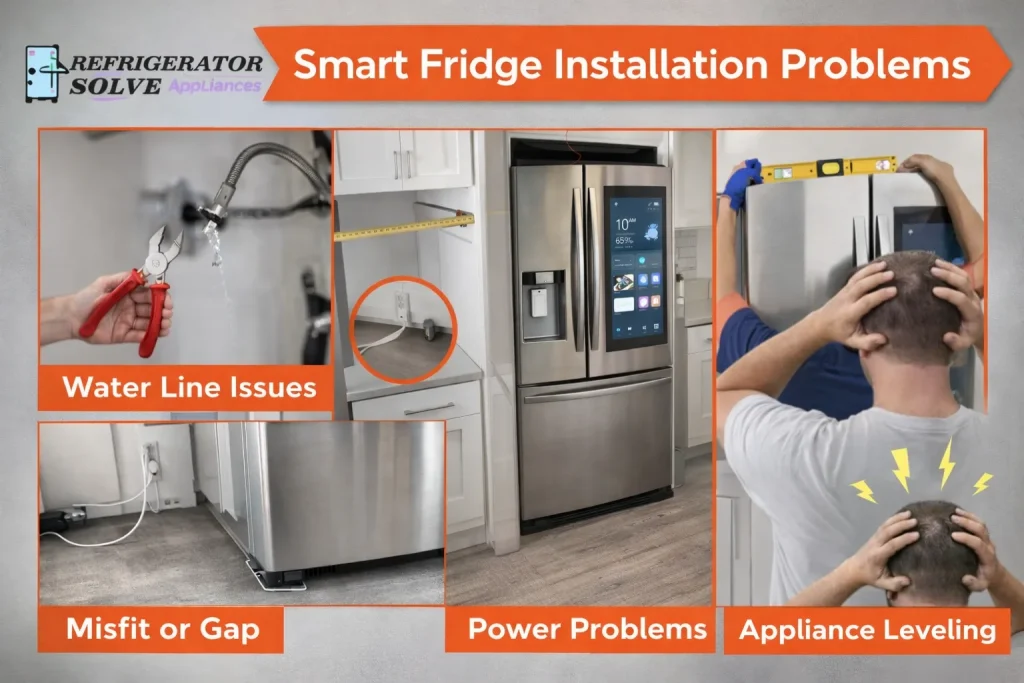
From Wi-Fi dropouts to doors that don’t align properly, smart fridge installation problems can feel overwhelming at first. I’ve personally helped troubleshoot several setups, and the pattern is always the same: the fridge itself isn’t “bad,” but the installation wasn’t done with smart features in mind.
In this guide, I’ll walk you through the real problems people face during smart fridge installation, why they happen, and how to prevent them. If you’re planning to install one or already stuck with issues, this will save you time, money, and frustration.
Why This Topic Actually Matters
Smart fridges are not just cooling boxes anymore—they’re connected appliances. That changes everything about installation.
Here’s why people struggle so much:
- They treat smart fridges like normal refrigerators
- They underestimate Wi-Fi and power requirements
- They skip manufacturer setup steps
- They ignore ventilation and clearance rules
I’ve noticed that one wrong decision during installation can lead to:
- Constant app disconnections
- Ice maker failures
- Error codes within weeks
- Reduced compressor lifespan
Many users later assume smart refrigerators are unreliable, when in reality, the problems started on day one. This is also why reliability concerns come up so often with smart models (I covered this more deeply in my breakdown of common smart refrigerator problems).
My Real Experience
In my experience, the biggest issue is rushed installation. I once saw a high-end smart fridge installed perfectly level but pushed too far back. The result? Overheating, noisy operation, and repeated temperature alerts.
What worked:
- Measuring door swing clearance in advance
- Testing Wi-Fi strength behind the fridge
- Letting the fridge stand upright for 12 hours before powering on
What didn’t:
- Using extension cords
- Skipping firmware updates during setup
- Ignoring minor error notifications
One small thing people miss: smart fridges often need more rear clearance than standard models due to sensors and ventilation.
Main Smart Fridge Installation Problems (And Solutions)
Space & Clearance Miscalculations
Many smart fridges are deeper and taller.
Fix:
- Measure height, width, depth, and door swing
- Leave at least 1–2 inches at the back for ventilation
Electrical & Power Issues
Smart fridges need stable power.
Common mistakes:
- Shared outlets
- Low-quality extension cords
Fix:
- Dedicated grounded outlet
- Voltage-stable connection
According to the U.S. Department of Energy, improper electrical supply can reduce appliance lifespan and efficiency.
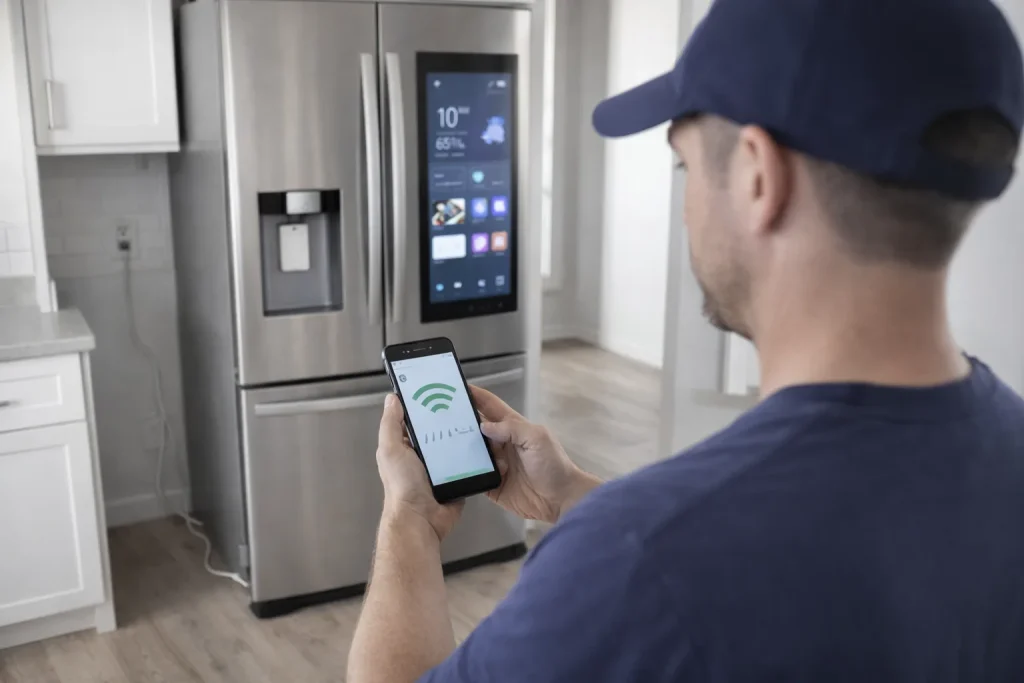
Wi-Fi Connectivity Problems
If your fridge can’t stay connected, smart features become useless.
Fix:
- Use 2.4 GHz Wi-Fi (most smart fridges prefer it)
- Avoid placing routers too far away
- Test signal strength before final placement
Improper Leveling
Even slight imbalance affects door seals and ice makers.
Fix:
- Use a bubble level
- Adjust front legs carefully
- Recheck after 24 hours
App & Software Setup Errors
Many people skip this step.
Fix:
- Install the official app during setup
- Complete firmware updates immediately
As Consumer Reports notes, smart appliance software issues often stem from incomplete initial configuration, not hardware failure.
Pros & Cons of Smart Fridge Installation
| Pros | Cons |
|---|---|
| Advanced temperature control | Installation is more complex |
| Remote monitoring & alerts | Requires strong Wi-Fi |
| Energy usage insights | Higher setup time |
| Smart diagnostics | Sensitive to poor placement |
My Honest Take After Researching This
Smart fridges are not difficult to install—but they are unforgiving if done wrong. My strongest opinion is this: most “smart fridge problems” are actually installation problems.
My caution: if your kitchen setup is old or your Wi-Fi is weak, expect extra work.
My recommendation: plan the installation like you would for a built-in appliance, not a basic fridge. If you’re unsure, professional installation is worth the cost—especially compared to long-term repair expenses.
Common Mistakes to Avoid
- Not checking Wi-Fi strength behind the fridge
→ Test signal where the fridge will sit, not in the middle of the kitchen. - Pushing the fridge fully against the wall
→ Leave breathing room for ventilation. - Skipping the user manual
→ Smart features often require specific setup steps. - Powering on immediately after transport
→ Let the fridge rest upright (especially after delivery).
If you’re moving a smart fridge, transporting it safely is another area where people run into trouble.
Who This Is Best For / Not Ideal For
Best for:
- Tech-comfortable homeowners
- Kitchens with stable Wi-Fi and modern wiring
- Users who value monitoring and automation
Not ideal for:
- Homes with frequent power outages
- Very tight kitchen spaces
- Users who want zero setup involvement
If you’re still deciding, comparing a smart fridge vs normal fridge can help clarify expectations.
FAQs
Can I install a smart fridge myself?
Yes, but only if you carefully follow electrical, leveling, and Wi-Fi setup steps.
Why does my smart fridge keep disconnecting from Wi-Fi?
Weak signal, incompatible frequency, or router distance are the usual causes.
Does a smart fridge need special wiring?
No special wiring, but it does need a stable, grounded outlet.
How long should I wait before turning it on after delivery?
At least 8–12 hours if it was transported on its side.
Are smart fridges harder to maintain?
Not harder—but improper installation increases maintenance issues.
Conclusion
Smart fridge installation problems are common but they’re also preventable. From what I’ve seen, success comes down to planning, patience, and respecting that these appliances are both mechanical and digital.
If you take the time to measure properly, secure stable power, and set up connectivity correctly, a smart fridge can work smoothly for years. Treat installation as part of ownership not an afterthought and you’ll avoid most of the frustrations people complain about later.

Hi, I’m the lead researcher and appliance enthusiast behind RefrigeratorSolve. With years of hands-on experience troubleshooting cooling systems and testing home appliances, I am dedicated to bringing you honest reviews, energy-saving tips, and practical solutions to keep your refrigerator running perfectly.