Fresh herbs can turn an ordinary meal into something bright, fragrant, and flavorful, but they can also be frustratingly easy to waste. A bunch of parsley that looked perfect at the grocery store may become limp within days, while cilantro can go from crisp to slimy seemingly overnight.
The best way to store fresh herbs in the refrigerator depends largely on the type of herb you have. Tender herbs such as cilantro, parsley, dill, and mint generally need more moisture, while hardy herbs such as rosemary, thyme, sage, and oregano do better with controlled humidity and less direct contact with water. Get that balance right, and your herbs can stay usable for considerably longer instead of ending up in the bin.
The most important thing to remember is that there is no single storage method that works equally well for every herb. Some herbs behave almost like cut flowers, while others prefer being loosely wrapped and protected from excess moisture. Basil is an important exception because it is sensitive to refrigerator temperatures and is usually happier on the kitchen counter.
What Is the Best Way to Store Fresh Herbs in the Refrigerator?
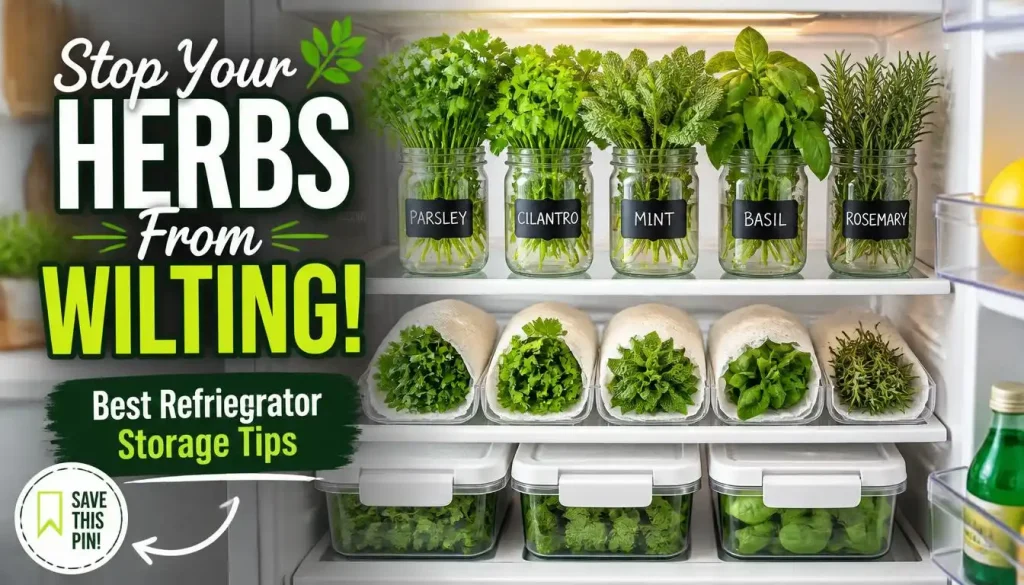
For most fresh herbs, start by removing damaged leaves and making sure the herbs are not dripping wet. Store tender, long-stemmed herbs such as cilantro/coriander and parsley upright in a jar with a small amount of water, then loosely cover the leaves before refrigerating. Store woody herbs such as rosemary and thyme wrapped in a slightly damp paper towel or kitchen roll inside a container or resealable bag.
Here is the quick version:
| Herb Type | Examples | Best Storage Method | Best Location |
|---|---|---|---|
| Tender herbs | Cilantro/coriander, parsley, dill, mint | Jar with water or controlled-moisture container | Refrigerator |
| Delicate herbs | Chives, tarragon | Slightly damp paper towel and container | Refrigerator |
| Hardy/woody herbs | Rosemary, thyme, sage, oregano, marjoram | Slightly damp paper towel and container | Refrigerator |
| Basil | Sweet basil, Genovese basil | Stems in water | Countertop |
Your refrigerator also needs to be cold enough to protect fresh food without freezing delicate produce. A practical target is around 37–40°F (3–4°C). If you are unsure whether your appliance is actually maintaining that range, see this guide to the ideal refrigerator temperature setting.
Know Your Herbs: Tender vs. Hardy Herbs
The easiest way to choose a storage method is to look at the stems.
Tender or Soft Herbs
Tender herbs generally have soft, flexible stems and delicate leaves. Common examples include:
- Cilantro, also called coriander in the UK and Australia
- Parsley
- Dill
- Mint
- Tarragon
- Chives
These herbs lose moisture relatively quickly. If they dry out, the leaves droop and lose their crisp texture. Give them too much trapped moisture, however, and the leaves may become slimy.
That is why tender herb storage is mostly about maintaining humidity without leaving the leaves soaking wet.
Hardy or Woody Herbs
Hardy herbs usually have firmer or woody stems. Common examples include:
- Rosemary
- Thyme
- Sage
- Oregano
- Marjoram
These herbs are less prone to sudden wilting than cilantro or parsley. They usually do not need to sit in water. A lightly damp paper towel or kitchen roll inside a container provides enough protection from dehydration without creating an overly wet environment.
Why Basil Is Different
Basil may look like a tender herb, but you should not automatically treat it like cilantro or parsley.
Fresh basil is sensitive to chilling. Very cold refrigerator temperatures can damage the leaves, causing dark patches, blackening, soft texture, and loss of quality. UC Davis Postharvest Research and Extension identifies basil as chilling-sensitive and recommends temperatures above 10°C/50°F for optimal postharvest quality.
For ordinary home storage, trim the basil stems and place them in a glass or jar containing a small amount of water. Keep the jar on the countertop away from direct sunlight and strong heat.
How to Store Tender Fresh Herbs in the Refrigerator

The bouquet or jar method works especially well for herbs with longer stems, including parsley and cilantro/coriander.
1. Inspect the Bunch
Remove:
- Yellow leaves
- Crushed leaves
- Slimy pieces
- Damaged stems
One deteriorating section can trap moisture against neighboring leaves, so it is worth spending a minute sorting the bunch before storage.
2. Trim the Stem Ends
Cut a small amount from the bottom of the stems with clean kitchen scissors or a sharp knife.
You do not need to cut away half the bunch. A fresh cut at the base is enough.
3. Add a Small Amount of Water to a Jar
Pour roughly an inch or two of clean water into a glass or jar.
You want the stem ends in the water—not the leaves.
Leaves sitting below the waterline are more likely to soften and deteriorate.
4. Place the Herbs Upright
Put the stems into the jar as you would with a small bouquet of flowers.
Avoid cramming an oversized bunch into a narrow container. The leaves should have enough room that they are not crushed together.
5. Loosely Cover the Leaves
A loose produce bag or similar cover helps reduce moisture loss.
The key word is loosely. You are trying to create a protected, humid environment rather than tightly sealing wet leaves against each other.
6. Refrigerate
Choose a stable area of the refrigerator where the herbs will not be pressed against the cold back wall or directly blasted by a cooling vent.
If you are reorganizing more than herbs, this guide to the ideal fridge layout for food safety explains how different refrigerator zones can affect food storage.
7. Check the Water
If the water becomes cloudy or develops debris, replace it with fresh water.
While you are there, inspect the leaves and remove anything beginning to deteriorate.
How to Store Hardy or Woody Herbs in the Refrigerator
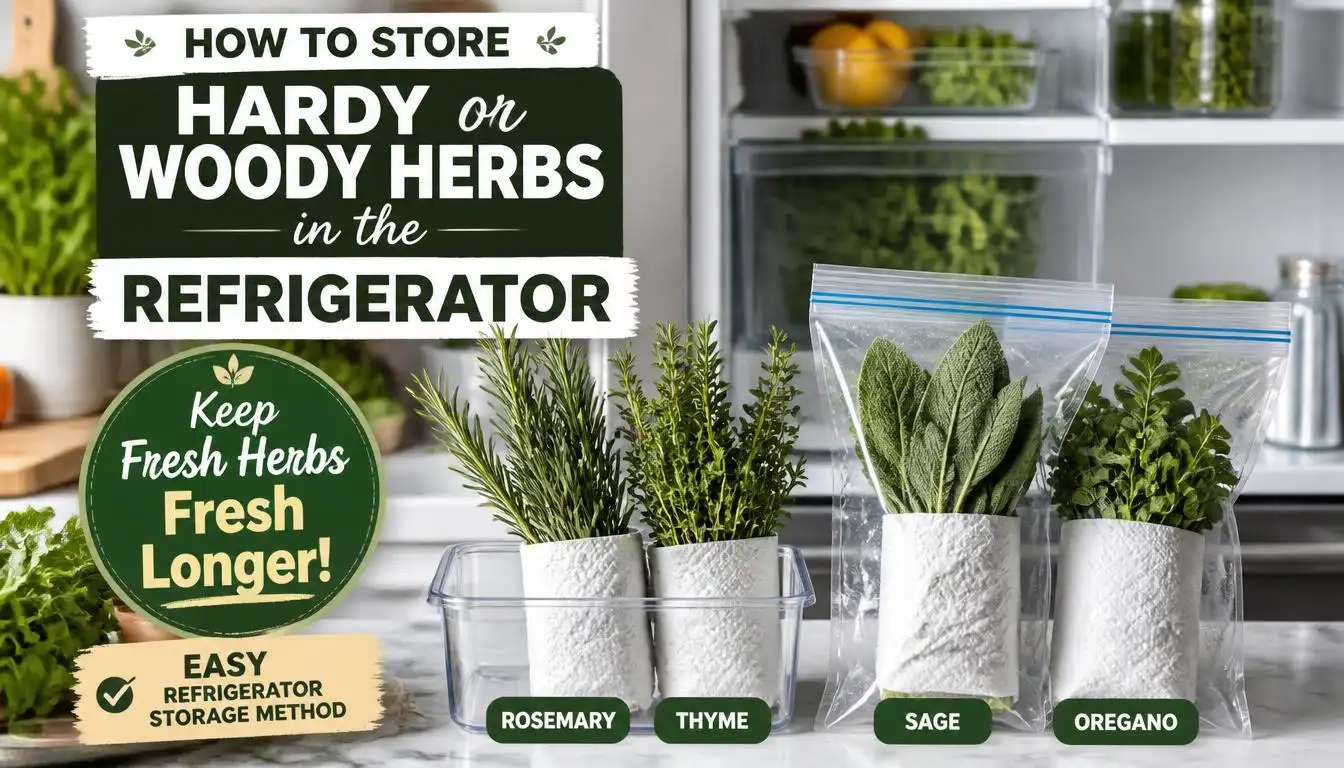
Rosemary, thyme, oregano, sage, and marjoram usually need a different approach.
Step 1: Inspect the Herbs
Discard damaged or visibly spoiled leaves and stems.
Step 2: Make Sure They Are Not Soaking Wet
If the herbs are wet, gently blot them dry.
Excess surface water is not the same thing as useful humidity.
Step 3: Wrap Them Loosely
Place the herbs on a slightly damp paper towel or kitchen roll and wrap them gently.
The towel should feel barely damp—not wet enough to drip when squeezed.
Step 4: Put Them in a Container
Place the wrapped herbs inside:
- A food-storage container
- A reusable silicone bag
- A resealable food bag
Do not crush the bundle to make it fit.
Step 5: Refrigerate
Keep the herbs in a cool, stable part of the refrigerator, often the crisper or produce drawer.
If you frequently store lettuce, spinach, kale, or similar produce alongside your herbs, the same moisture-management principles are discussed in this guide on how to store leafy greens in the refrigerator.
Jar of Water vs. Damp Paper Towel: Which Method Is Better?
Neither method is universally better. The right choice depends on the herb.
| Storage Method | Usually Best For |
|---|---|
| Jar + water | Cilantro/coriander, parsley, some mint and dill |
| Damp paper towel + container | Rosemary, thyme, oregano, sage, chives |
| Countertop jar + water | Basil |
| Airtight container with moisture control | Chopped or delicate herbs |
The jar method helps long-stemmed herbs continue taking up moisture through their stems.
The paper-towel method is better when you want humidity around the herb without leaving woody stems standing in water.
When in doubt, look at the stems: soft and long usually points toward the bouquet method; woody usually points toward the wrapped method.
Best Refrigerator Storage Method for Each Fresh Herb
Use this table as a quick reference.
| Fresh Herb | Recommended Storage | Location | Typical Home-Storage Range* |
|---|---|---|---|
| Cilantro / coriander | Stems in water, loosely covered | Fridge | About 1–2 weeks |
| Parsley | Stems in water, loosely covered | Fridge | About 1–2 weeks |
| Mint | Jar or lightly damp towel | Fridge | About 1 week or longer |
| Dill | Jar or lightly damp towel | Fridge | About 5–10 days |
| Chives | Damp towel + container | Fridge | About 5–7 days |
| Tarragon | Damp towel + container | Fridge | About 1 week |
| Rosemary | Damp towel + container | Fridge | Often 2–3 weeks |
| Thyme | Damp towel + container | Fridge | About 1–2 weeks |
| Sage | Damp towel + container | Fridge | About 1–2 weeks |
| Oregano | Damp towel + container | Fridge | About 1–2 weeks |
| Marjoram | Damp towel + container | Fridge | About 1–2 weeks |
| Basil | Stems in water | Countertop | Usually several days to about a week |
*These are practical estimates, not expiration dates. Freshness at purchase, refrigerator conditions, handling, moisture, and the individual bunch can significantly change storage life.
For a broader look at how storage time varies across refrigerated foods, see the guide to the shelf life of refrigerated foods.
Should You Wash Fresh Herbs Before Storing Them?
You will find two common approaches:
- Wash herbs immediately, then dry them very thoroughly.
- Store them unwashed and rinse them shortly before use.
Both can work.
The bigger problem is putting herbs into storage while they are visibly wet. Water trapped between tightly packed leaves can speed deterioration.
If your grocery-store herbs look clean and dry, there is nothing wrong with waiting to wash them until you are ready to cook.
If you prefer washing them immediately, rinse them gently under clean running water and dry them thoroughly before choosing your storage method.
A salad spinner can be useful for sturdier leafy herbs. For very delicate herbs, gently pat them dry with a clean towel.
How to Store Fresh Herbs After Washing
Already washed the entire bunch? You can still store it successfully.
Follow this order:
- Drain off as much water as possible.
- Gently spin or pat the herbs dry.
- Spread them briefly on a clean towel if moisture remains between the leaves.
- Remove bruised or damaged pieces.
- Choose the correct jar or paper-towel method.
- Refrigerate once the leaves are no longer visibly wet.
Do not compensate for freshly washed herbs by wrapping them in a soaking-wet towel. That simply adds more moisture.
How to Store Store-Bought Fresh Herbs
Fresh herbs often come home in plastic sleeves, clamshell containers, or tied bunches.
Do not assume the original packaging is automatically the best long-term storage container.
When you get home:
- Open the package.
- Look for crushed or decaying leaves.
- Remove damaged pieces.
- Check whether condensation has collected inside the packaging.
- Decide whether the herb needs the jar method or wrapped method.
- Transfer it to a more suitable container if necessary.
If the original package is clean, dry, roomy, and designed to provide some ventilation, it may be usable. The goal is not to change containers for the sake of it; the goal is to prevent dehydration, crushing, and excess condensation.
What Is the Best Container for Storing Fresh Herbs?
The best container depends on the herb and the storage method.
| Container | Best For | Main Advantage |
|---|---|---|
| Glass or Mason jar | Cilantro, parsley, mint | Keeps stems hydrated |
| Food-storage container | Hardy herbs | Protects leaves from drying and crushing |
| Resealable bag | Wrapped herbs | Flexible and space-efficient |
| Herb keeper | Long-stemmed herbs | Combines hydration and protection |
| Small airtight container | Chopped herbs | Reduces drying and odor transfer |
| Reusable silicone bag | Hardy herbs | Reusable alternative to disposable bags |
Mason Jar vs. Herb Keeper
A dedicated herb keeper can be convenient, but it is not essential.
A clean drinking glass or Mason jar can perform the most important part of the bouquet method perfectly well: keeping the stems hydrated.
An herb keeper may be worth considering if you regularly buy multiple bunches and want a container specifically designed to fit refrigerator shelves.
Airtight Container vs. Resealable Bag
Both are useful for wrapped hardy herbs.
A rigid container offers better protection from crushing.
A bag takes up less room.
Whichever you use, manage the moisture inside it. If heavy condensation develops, wipe the container dry or replace an overly wet paper towel.
How to Store Fresh-Cut Herbs in the Refrigerator
“Cut herbs” can mean two different things.
If you simply cut a bunch from the garden but the stems are still intact, treat the herbs much like store-bought whole herbs. Trim the stem ends and use the appropriate storage method.
If the leaves have been removed from the stems or sliced, they need more protection because cutting increases exposed surface area.
Keep Herbs Whole When Practical
If you know you will use parsley on Tuesday and Thursday, it is generally better to keep the bunch whole and chop what you need each time rather than chopping everything several days ahead.
Whole herbs usually maintain their texture and aroma better.
Storing Cut Tender Herbs
Dry them carefully, place them in a small container, and avoid compressing them.
A piece of dry paper towel can help manage condensation if moisture collects inside the container.
Storing Cut Hardy Herbs
Remove obviously tough stems if desired, but keep the leaves as intact as possible until cooking.
Store them dry in a covered container.
How to Store Chopped Fresh Herbs
Sometimes meal prep makes advance chopping convenient.
For chopped herbs:
- Start with clean herbs.
- Dry them thoroughly before chopping.
- Use a clean, dry knife and cutting board.
- Transfer the chopped herbs to a small food-storage container.
- Add a dry piece of paper towel if condensation becomes a recurring problem.
- Refrigerate promptly.
- Use them sooner than you would an intact bunch.
Chopped herbs generally lose quality faster because cutting damages plant tissue and exposes more surface area to air.
If you have much more than you can use soon, freezing may be more practical than trying to stretch refrigerator storage.
Where and at What Temperature Should You Store Fresh Herbs?
Fresh herbs need refrigeration that is cold enough for safe produce storage but not so cold that delicate leaves freeze.
For a practical household target, keep your refrigerator around 37–40°F (3–4°C). The FDA recommends 40°F/4°C or below, Health Canada recommends 4°C/40°F or lower, UK Food Standards Agency guidance recommends 5°C or below, and Australian food-safety guidance uses 5°C or colder for refrigerated perishable foods.
Crisper Drawer vs. Refrigerator Shelf
A crisper drawer is useful for many herbs because it reduces exposure to dry circulating refrigerator air.
However, tall jars of parsley or cilantro may be easier to keep on a shelf.
The storage method matters more than forcing every herb into the crisper.
Avoid Freezing-Cold Spots
Do not press delicate herbs directly against the refrigerator’s back wall or place them immediately beside a cold-air vent.
Temperatures can vary significantly across a refrigerator, and tender leaves may suffer cold damage in unusually cold spots.
Keep Herbs Away From Raw Meat
Fresh herbs are often eaten raw or added near the end of cooking.
Store them where they cannot be contaminated by leaking raw meat, poultry, or seafood. A well-organized refrigerator keeps raw foods below ready-to-eat produce.
Why Do Fresh Herbs Wilt, Turn Brown, or Get Slimy?
If your herbs keep going bad quickly, the appearance often gives you a clue about what went wrong.
Too Little Moisture
Symptoms:
- Limp leaves
- Drooping stems
- Dry edges
- Shriveling
Tender herbs are especially vulnerable to dehydration.
Too Much Moisture
Symptoms:
- Slimy leaves
- Water pooling in the container
- Soft stems
- Rapid decay
- Mold
If you repeatedly see heavy condensation, reduce the moisture in your storage setup.
Cold Damage
This matters most for cold-sensitive herbs such as basil.
Basil exposed to refrigerator temperatures may darken rather than simply wilt. Keeping fresh basil on the counter is usually a better choice.
Crushed Leaves
A container that is too small can damage delicate herbs.
Bruised leaves tend to deteriorate faster than intact ones.
One Bad Sprig Was Left in the Bunch
Check stored herbs occasionally.
If one section becomes slimy or badly damaged, remove it rather than allowing it to remain pressed against healthy leaves.
How to Keep Fresh Herbs From Wilting in the Fridge
A few small habits make a surprisingly large difference.
Maintain Balanced Moisture
Tender herbs need hydration, but leaves should not be sitting in water.
Hardy herbs need humidity, but their paper towel should not be soaking wet.
Avoid Overpacking
Give herbs room.
Packing a large bunch into a tiny sealed box crushes leaves and traps pockets of moisture.
Check Herbs Every Few Days
You do not need to obsess over them.
Simply look for:
- Cloudy jar water
- Excess condensation
- An overly dry towel
- Slimy leaves
- Wilted sections
Fixing a small problem early can protect the rest of the bunch.
Keep Your Refrigerator Properly Set
Produce may wilt quickly in a refrigerator that runs too warm, while delicate foods can freeze if settings are excessively cold. If your temperature dial is confusing, RefrigeratorSolve’s guide on how to set fridge temperature correctly explains how to check and adjust it.
Common Mistakes When Storing Fresh Herbs
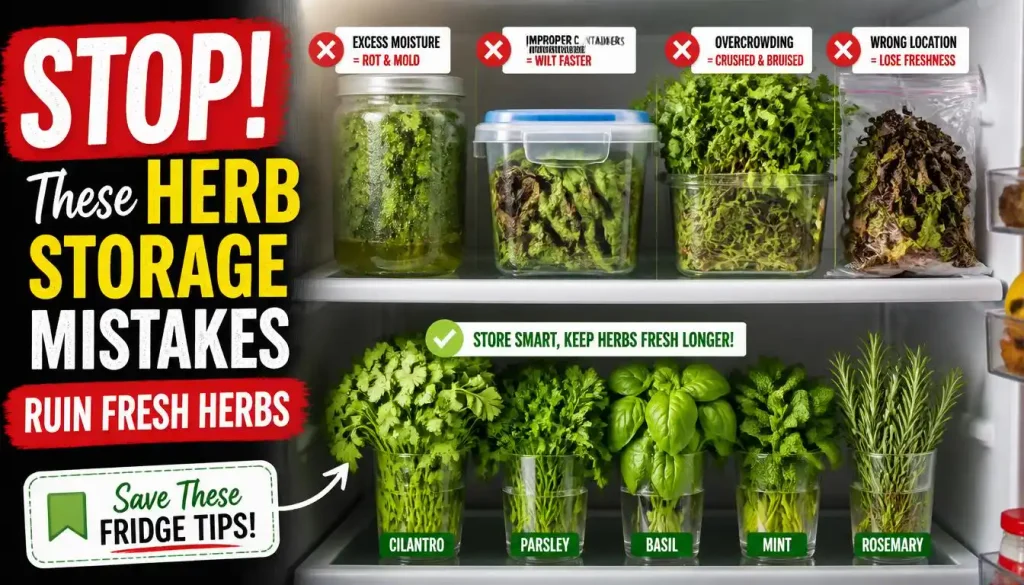
Storing Every Herb the Same Way
Parsley and rosemary do not have identical storage needs.
Separate tender herbs from woody herbs before deciding how to store them.
Putting Wet Herbs Straight Into a Sealed Bag
A small amount of humidity helps. Water-coated leaves trapped together are a different matter.
Dry washed herbs before storage.
Using a Soaking-Wet Paper Towel
The towel should be slightly damp, not saturated.
Leaving Leaves Under Water
With the bouquet method, only the lower stems should sit in water.
Forgetting About Condensation
Inspect clear containers and bags.
If the inside is covered with droplets and the herbs look wet, dry the container and adjust your setup.
Refrigerating Basil Like Parsley
Basil is the exception worth remembering.
Keep cut basil at a cool room temperature rather than placing it in the coldest part of your refrigerator.
Keeping Herbs Beside a Freezing Vent
Even when the average refrigerator temperature is correct, the air immediately around a cooling outlet may be much colder.
Ignoring Damaged Leaves
Remove badly deteriorated pieces when you see them.
How to Tell If Fresh Herbs Have Gone Bad
Wilting alone does not necessarily mean an herb is spoiled.
A slightly limp bunch may still be perfectly usable in soups, sauces, marinades, stocks, or cooked dishes.
Discard herbs when you see clear signs of spoilage such as:
- Visible mold
- Extensive sliminess
- Mushy or decomposing stems
- Strong unpleasant odor
- Widespread decay
- Severe discoloration accompanied by soft or rotten texture
Moldy produce should be discarded rather than relying on smell alone to judge safety.
Can You Revive Wilted Fresh Herbs?
Sometimes.
If cilantro, parsley, or mint is simply dehydrated rather than spoiled, trim the stem ends and place the stems in cool water.
Give the herbs time to rehydrate.
For loose leaves, a brief soak in cold water may help restore some firmness. Dry them before storing or using them.
Do not attempt to “revive” herbs that are moldy, rotten, or extensively slimy.
Can You Store Fresh Herbs Without Plastic?
Yes.
Plastic can be useful for controlling moisture, but it is not the only option.
Alternatives include:
- Glass jars
- Glass food-storage containers
- Reusable silicone bags
- Dedicated herb keepers
- Clean kitchen towels
- Reusable produce containers
Choose based on how well the container manages humidity and protects the herb rather than simply whether it contains plastic.
Can You Freeze Fresh Herbs for Longer Storage?
Yes. Freezing is useful when you know you will not finish a bunch while it is fresh.
Frozen herbs usually lose the crisp texture needed for garnishing, but they can still be excellent for:
- Soups
- Stews
- Sauces
- Curries
- Pasta
- Roasted dishes
- Dressings
- Pesto
- Marinades
Freeze Whole Leaves
Wash the herbs if necessary, dry them thoroughly, remove unwanted stems, and freeze the leaves in an appropriate freezer container or bag.
Freeze Chopped Herbs
Chop clean, dry herbs and freeze them in small portions.
Small portions make it easier to take only what you need during cooking.
Freeze Herbs in Ice Cube Trays
Chopped herbs can also be frozen in small amounts of water for recipes where additional liquid will not be a problem.
Herbs intended for savory cooking can sometimes be frozen with oil instead.
Once the cubes are solid, move them to a freezer-safe container to save space.
Refrigerator vs. Freezer vs. Countertop
| Storage Location | Best For | Main Benefit | Main Limitation |
|---|---|---|---|
| Refrigerator | Most fresh herbs | Preserves fresh texture and flavor | Wrong moisture balance causes wilting or slime |
| Countertop | Basil | Avoids chilling damage | Not appropriate for most refrigerated herbs |
| Freezer | Surplus herbs | Much longer storage | Leaves lose fresh-garnish texture |
If you are also trying to reduce spoilage across the rest of your produce drawer, these tips for keeping fruits fresh in the refrigerator can help you organize fruit separately from delicate herbs and vegetables.
Quick Fresh Herb Storage Cheat Sheet
Cilantro/coriander: Trim stems → place stems in water → loosely cover → refrigerate.
Parsley: Trim stems → place in water → loosely cover → refrigerate.
Mint: Use a jar for long stems or wrap gently with controlled moisture → refrigerate.
Dill: Jar or lightly damp paper towel → refrigerate.
Chives: Lightly damp paper towel → container → refrigerate.
Rosemary: Lightly damp paper towel → container → refrigerate.
Thyme: Lightly damp paper towel → container → refrigerate.
Sage: Lightly damp paper towel → container → refrigerate.
Oregano: Lightly damp paper towel → container → refrigerate.
Tarragon: Lightly damp paper towel → container → refrigerate.
Basil: Trim stems → place in water → keep on the countertop away from direct sun.
Frequently Asked Questions
What is the best way to store fresh herbs in the refrigerator?
Store tender, long-stemmed herbs such as cilantro/coriander and parsley upright in a jar containing a small amount of water and loosely cover the leaves. Wrap woody herbs such as rosemary and thyme in a slightly damp paper towel or kitchen roll and place them in a food-storage container.
How do you keep fresh herbs fresh longer in the fridge?
Start with the freshest bunch possible, remove damaged leaves, avoid excess surface moisture, use the correct storage method for the herb type, keep the refrigerator properly chilled, and inspect the herbs every few days.
Should fresh herbs be washed before refrigerating?
You can wash herbs before storage if you dry them thoroughly. You can also wait and wash them immediately before use. The most important storage rule is to avoid trapping visibly wet leaves inside a closed container.
Should fresh herbs be stored in water?
Some should. Cilantro/coriander and parsley respond well to having their stems placed in a small amount of water. Woody herbs such as rosemary, thyme, and sage generally do not need to stand in water.
Can you store herbs in a Mason jar in the refrigerator?
Yes. A Mason jar works well for the bouquet method. Add enough water to cover the lower stem ends, place the herbs upright, keep the leaves above the water, loosely cover them, and refrigerate.
Should fresh herbs be wrapped in a damp paper towel?
Hardy herbs such as rosemary, thyme, sage, and oregano often store well in a slightly damp paper towel inside a container. Avoid using a soaking-wet towel.
Should herbs be stored in an airtight container?
An airtight or covered food-storage container can protect herbs from dehydration and crushing, especially when used with the paper-towel method. However, the herbs should not go into the container dripping wet.
What herbs should not be refrigerated?
Fresh basil is the most important exception. It is sensitive to chilling and generally keeps better with the stems in water at room temperature.
Why does basil turn black in the refrigerator?
Basil is sensitive to low temperatures. Chilling can damage leaf tissue and contribute to darkening and deterioration, which is why basil is usually better stored above normal refrigerator temperatures.
How do you keep cilantro or coriander fresh in the fridge?
Trim the stems, stand them in a jar with a small amount of clean water, loosely cover the leaves, and refrigerate. Replace cloudy water and remove deteriorating leaves as needed.
How do you keep parsley fresh in the refrigerator?
Treat parsley much like a bouquet. Trim the stem ends, place them in water, loosely cover the leaves, and keep the jar in the refrigerator.
How do you store rosemary and thyme in the fridge?
Wrap rosemary or thyme loosely in a slightly damp paper towel or kitchen roll. Put the bundle in a container or resealable bag and refrigerate it.
How long do fresh herbs last in the refrigerator?
It varies by herb, initial freshness, storage method, and refrigerator conditions. Delicate herbs may remain at their best for roughly a week, while properly stored parsley, cilantro, rosemary, and some hardy herbs can sometimes remain usable considerably longer. Always judge the actual herb rather than relying only on a calendar date.
How do you store fresh herbs after washing them?
Dry the herbs thoroughly first. Remove damaged pieces, then use the appropriate jar, towel, or container method. Avoid sealing visibly wet herbs inside a bag.
Is a jar or paper towel better for fresh herbs?
Use a jar for long-stemmed tender herbs such as parsley and cilantro/coriander. Use a slightly damp paper towel for woody herbs such as rosemary, thyme, sage, and oregano.
Can you freeze fresh herbs instead of refrigerating them?
Yes. Freezing is a good choice when you have more herbs than you can use while fresh. The texture will change, so frozen herbs are best used in cooked dishes, sauces, soups, and similar recipes.
Final Thoughts on Storing Fresh Herbs in the Refrigerator
The best way to store fresh herbs in the refrigerator becomes much easier once you stop treating every herb the same.
Use the jar-and-water method for tender, long-stemmed herbs such as cilantro/coriander and parsley. Use a slightly damp paper towel and container for hardy herbs such as rosemary, thyme, sage, and oregano. Keep washed herbs dry enough that water is not trapped across the leaves, check your containers for excess condensation, and remove deteriorating pieces before they affect the rest of the bunch.
And remember the major exception: basil usually belongs on the countertop, not in a cold refrigerator.
Those few habits can make fresh-herb storage far more predictable, reduce food waste, and give you a better chance of having crisp, flavorful herbs ready when your recipe actually calls for them.

Hi, I’m the lead researcher and appliance enthusiast behind RefrigeratorSolve. With years of hands-on experience troubleshooting cooling systems and testing home appliances, I am dedicated to bringing you honest reviews, energy-saving tips, and practical solutions to keep your refrigerator running perfectly.