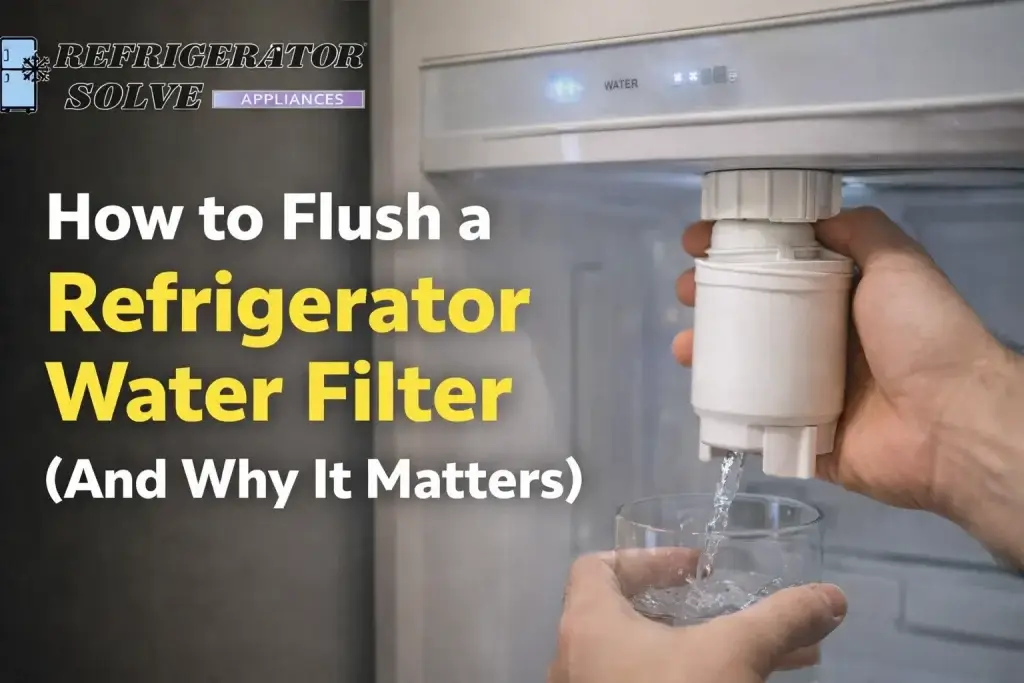
Flushing a refrigerator water filter means running water through it to remove air pockets and loose carbon particles before you start using it. Skipping this step can leave your first few glasses of water looking cloudy or tasting off, so it’s worth the two minutes it takes.
Why So Many People Get This Wrong
You just replaced your refrigerator water filter. You’re expecting crisp, clean water. Instead, your first glass comes out grey and murky, or it tastes like you’re drinking from an aquarium.
Sound familiar? You’re not alone.
I’ve helped thousands of homeowners troubleshoot their refrigerators, and this is one of the most common complaints I hear from families in Phoenix to parents in Manchester, from first-time homeowners in Toronto to retirees in Brisbane. The problem almost always traces back to one skipped step: flushing the filter properly.
By the time you finish reading this, you’ll know exactly how to flush a refrigerator water filter, why it matters, and how to avoid the mistakes that leave people scratching their heads.
The 3 Biggest Pain Points People Face With Refrigerator Water Filters
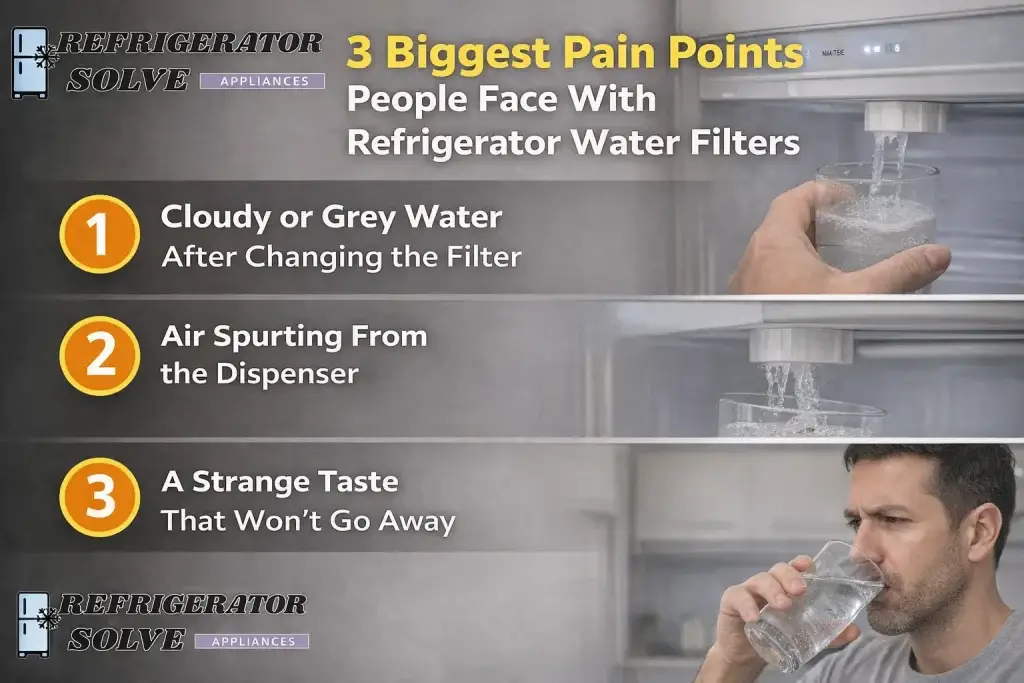
Pain Point 1: Cloudy or Grey Water After Changing the Filter
Why it happens: New carbon block filters are packed with fine carbon dust. When water first flows through, it carries those loose particles with it which is what turns your glass grey or cloudy.
The fix: This is exactly what flushing is designed to solve. Before you use your dispenser normally, run about 2–3 gallons (roughly 7–11 litres) of water through it.
In practical terms, that’s filling a large pitcher five or six times and pouring it down the sink. It takes less than five minutes, and your water will run clear by the end.
Pain Point 2: Air Spurting From the Dispenser
Why it happens: When a new filter is installed, air gets trapped inside. That trapped air causes the water to sputter and spit it can even spray across your kitchen.
The fix: The flushing process releases this trapped air naturally. Hold down the dispenser lever steadily rather than in short bursts. Continuous flow helps push the air through faster. Most of the sputtering stops within the first minute or two of flushing.
Pain Point 3: A Strange Taste That Won’t Go Away
Why it happens: Carbon filters can sometimes leave a faint earthy or plastic-like taste in the water if they haven’t been flushed. This is more common with lower-cost replacement filters that aren’t OEM (original equipment manufacturer) versions.
The fix: Flush thoroughly, then do a taste test. If the taste persists after flushing 3 gallons, run another gallon through and try again. If it still doesn’t improve after that, the filter may be incompatible with your model check your fridge’s manual and compare the filter part number.
In the US, NSF/ANSI 42 and 53 certified filters are the safest, best-performing options. In Australia, look for filters with the WELS certification mark.
How to Flush a Refrigerator Water Filter: Step by Step
This process works for most major brands Whirlpool, Samsung, LG, GE, Bosch, Fisher & Paykel, and others.
Step 1: Install the New Filter Correctly
Before you flush anything, make sure the filter is actually seated properly. Push it in firmly until you hear or feel it click into place. A loose filter won’t seal correctly, and water will either leak or bypass filtration entirely.
Check your fridge model’s manual if you’re unsure most brands have a short twist-and-lock or push-in mechanism.
Step 2: Run Water Through the Dispenser
Place a large container or pitcher under your water dispenser. Press and hold the dispenser lever or button. Don’t release it repeatedly steady, continuous flow is what moves air and carbon particles through most efficiently.
Run the dispenser until you’ve collected about half a gallon (around 2 litres). Discard that water.
Step 3: Repeat Until Water Runs Clear
Keep filling and discarding until the water looks completely clear no grey tinge, no cloudiness. For most filters, this takes 2–3 gallons total (7–11 litres). Some high-capacity filters may need up to 4 gallons.
If you have a filter in your fridge door with an ice maker, run the ice maker through 1–2 full cycles and discard the first two batches of ice too. Those first cubes will likely contain the same carbon particles.
Step 4: Check for Leaks
Once flushing is complete, open the fridge door and inspect around the filter housing. Any dripping or pooling water? If so, remove the filter and reinstall it. A properly seated filter should create a watertight seal.
Step 5: Reset the Filter Indicator Light
Most refrigerators have a filter status light that turns red or orange when it’s time to change the filter. After installing a new one, you’ll need to reset it manually otherwise it will keep telling you the filter needs replacing even though it’s brand new.
The reset method varies by brand:
- Whirlpool/Maytag: Hold the “Filter Reset” button for 3 seconds
- Samsung: Press and hold “Ice Type” and “Child Lock” simultaneously for 3 seconds
- LG: Hold the “Filter” button for 5 seconds
- GE: Press and hold the “Reset Water Filter” button until the light changes
Check your owner’s manual if your model isn’t listed here.
How Often Should You Change and Flush Your Filter?
Most manufacturers recommend changing your refrigerator water filter every 6 months. But that’s a general guideline your actual usage matters more.
“The six-month rule is a starting point, not a hard rule. A household of five people using the dispenser daily will exhaust a filter far sooner than a single person who rarely uses it.” — Dr. Andrew Whelton, Professor of Civil Engineering, Purdue University
If you live in an area with older plumbing common in parts of the UK and older cities across the US and Canada — you may want to change your filter every 3–4 months, especially if your local water supply has higher levels of chlorine, lead, or sediment.
Hard water areas (like much of southern England, or parts of Queensland, Australia) can also cause faster filter degradation. If your water starts tasting different before the 6-month mark, that’s your signal to change it early don’t wait for the light to come on.
Does Brand Matter When You Buy a Replacement Filter?
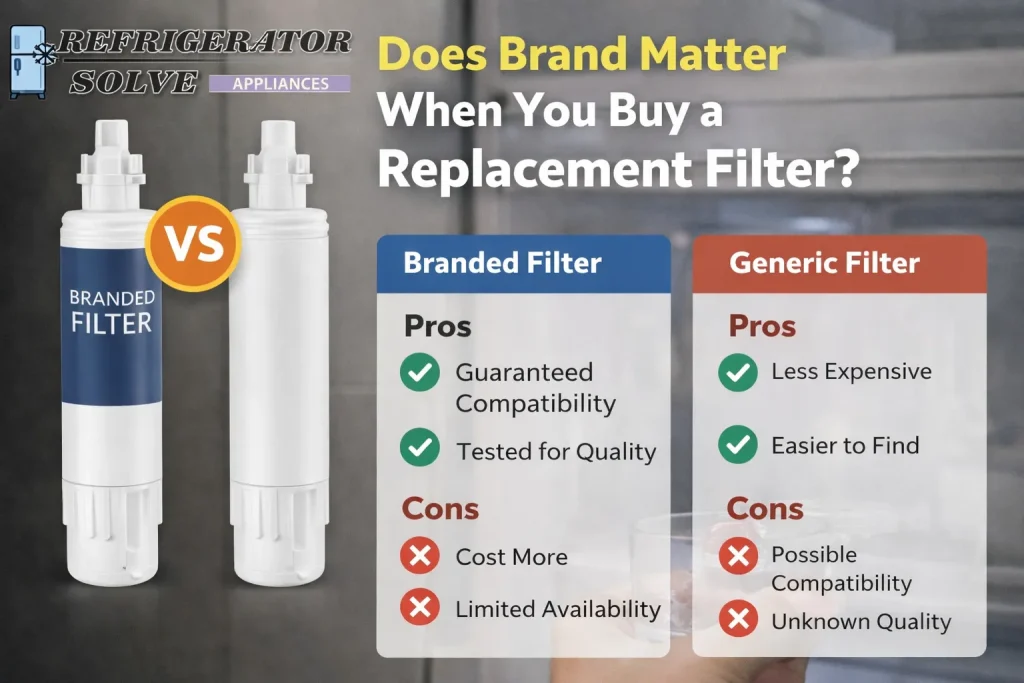
This is a question I hear often, and the short answer is: it depends.
OEM filters (made by your fridge manufacturer) are guaranteed to fit and perform as intended. Third-party filters are often cheaper sometimes half the price and many perform just as well. But not all do.
“Generic filters are not inherently bad, but consumers need to look for NSF certification. Without it, you have no independent verification that the filter removes what it claims to remove.” — Rick Andrew, Director of Global Business Development, NSF International
In the US and Canada, look for the NSF International certification mark. In the UK, the Drinking Water Inspectorate (DWI) provides guidance on water treatment standards you can find their resources at the UK Government’s Drinking Water Inspectorate website. In Australia, look for the WaterMark certification.
A cheaper filter that isn’t certified may save you a few dollars upfront but cost you in water quality. It’s worth the small price difference to go certified.
What Happens If You Don’t Flush the Filter?
Skipping the flush won’t ruin your fridge. But it will give you a poor experience. Here’s what to expect:
- Cloudy water for the first several uses — not harmful, but unpleasant
- Black or grey flecks in your water or ice — these are carbon particles
- Slightly gritty texture in ice cubes made right after installation
- Reduced filtration effectiveness early on, because the carbon bed hasn’t settled properly
None of these issues are dangerous activated carbon is non-toxic. But they’re all easily avoided by taking two minutes to flush properly.
“People skip the flush because nobody tells them about it. It should be on the front of every filter box.” — Jennifer Taggart, Environmental Health Attorney and Author of Smart Mama’s Green Guide
Frequently Asked Questions
How many gallons do I need to flush a new refrigerator water filter?
Most filters require 2–3 gallons (7–11 litres) of water to flush properly. Some larger or denser filters may need up to 4 gallons. Keep running water through the dispenser until it flows completely clear with no cloudiness or discolouration.
Is it safe to drink the water before flushing the filter?
Technically yes the carbon particles in the water are non-toxic. But the water may look grey or taste unusual, and most people find it unpleasant. It’s always better to flush first so your first real glass is clean and fresh.
Why is my water still cloudy after flushing 3 gallons?
If your water is still cloudy after flushing 3–4 gallons, the filter may not be seated correctly, or it may be an incompatible replacement part. Remove the filter, check that it matches your fridge’s model number, and reinstall it firmly before trying again.
How do I know when my refrigerator water filter needs replacing?
Most fridges have an indicator light that changes from green to orange or red after 6 months or 200–300 gallons of use. You can also tell it’s time to change the filter if your water pressure from the dispenser slows noticeably or if the taste changes.
Do I need to flush the filter every time I use the dispenser, or just once after installation?
You only need to flush a filter once — right after you install it. After that, normal daily use takes care of itself. The only time you flush again is when you install the next replacement filter.
Wrapping Up: What You Now Know
Here are the three things worth remembering from everything we covered:
First, always flush 2–3 gallons of water through a new filter before drinking from it this clears air pockets and loose carbon particles, and it takes less than five minutes.
Second, change your filter every 6 months as a baseline, but adjust based on your household size and local water quality. Certified filters (NSF, WaterMark, or WaterMark-equivalent) are worth the small extra cost.
Third, don’t forget to reset the filter indicator light after each replacement it’s a simple step that most people overlook, and it keeps your fridge’s monitoring accurate.
Clean water shouldn’t require a degree in plumbing. You’ve got everything you need now go flush that filter, pour yourself a proper glass, and enjoy the difference.

Hi, I’m the lead researcher and appliance enthusiast behind RefrigeratorSolve. With years of hands-on experience troubleshooting cooling systems and testing home appliances, I am dedicated to bringing you honest reviews, energy-saving tips, and practical solutions to keep your refrigerator running perfectly.