In simple terms, refrigerator skincare products are made to stay fresh, stable, and effective at lower temperatures, while regular skincare products are formulated to remain stable at room temperature. I’ve learned that this difference affects ingredients, shelf life, texture, and how the products perform on my skin.
My honest experience with refrigerator skincare
I still remember the first time I placed a face serum inside a skincare fridge. I wasn’t trying to follow a trend, I was struggling with redness, irritation, and products that seemed to spoil faster than expected. Living part of the year between the UK and North America, I deal with changing climates, heated indoor air, and long shipping times.
Over time, I realized that refrigerator skincare products differ from regular skincare products in ways that actually matter for real skin concerns, not just aesthetics.
This article is based on what I’ve personally tested, researched, and compared. My goal is to help you decide whether chilled skincare is useful for your routine or if traditional products already meet your needs.
What are refrigerator skincare products?
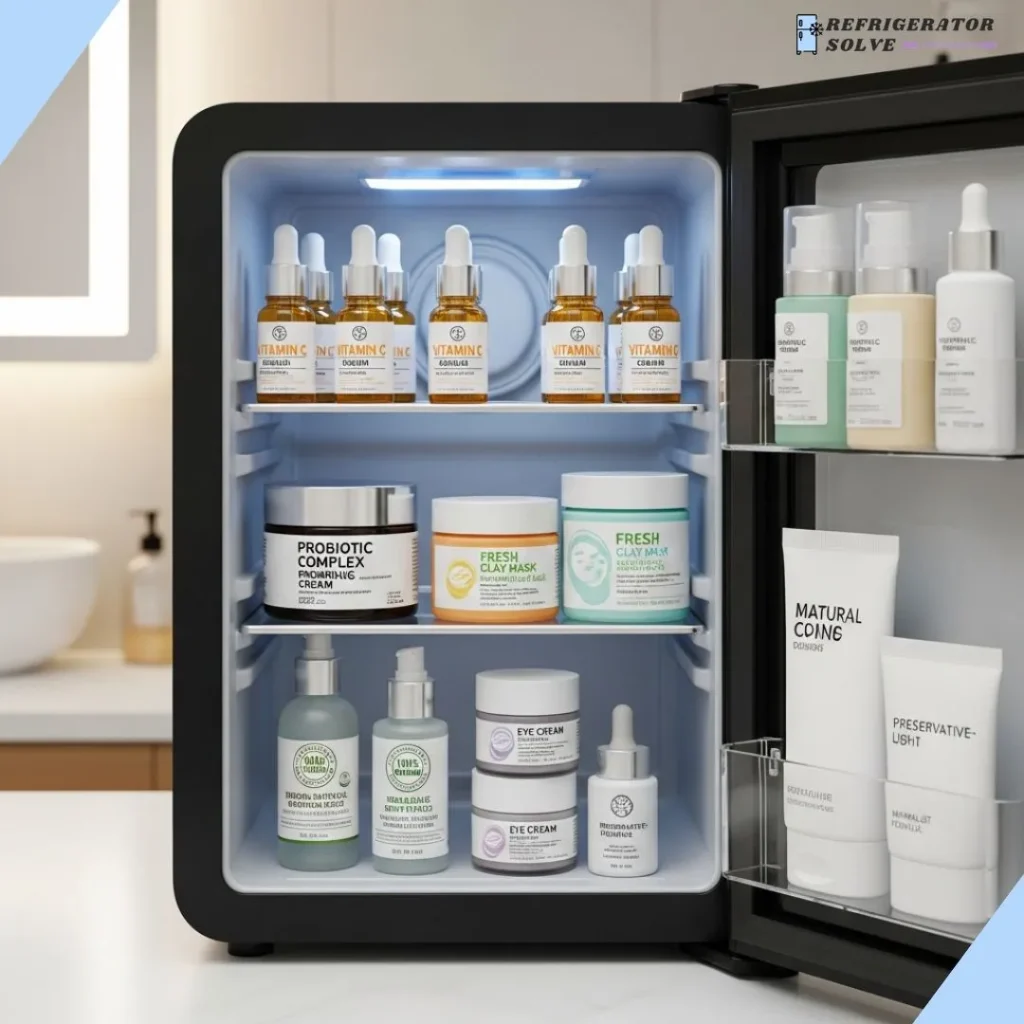
Refrigerator skincare products are formulas meant to be stored in a skincare fridge or standard refrigerator, usually between 4°C and 10°C. These products often include:
- Vitamin C serums
- Probiotic skincare
- Fresh face masks
- Eye creams
- Natural skincare products
- Preservative-light formulations
Many of these products focus on freshness, ingredient stability, and soothing benefits. Regular skincare products, on the other hand, are created to remain stable on a bathroom shelf at room temperature, even with frequent exposure to air and light.
How do refrigerator skincare products differ from regular skincare products?
From my experience, the difference shows up in five main areas.
1. Ingredient stability and freshness

Refrigerator skincare products often contain active ingredients like antioxidants, peptides, enzymes, and live cultures. These ingredients can break down faster when exposed to heat, light, and air.
Regular skincare products usually rely on stronger preservatives so they can survive warmer environments, including shipping and storage in homes across the USA, UK, Canada, and London apartments without climate control.
Cold storage helps slow oxidation and bacterial growth. This matters if you’ve ever opened a serum only to notice a strange smell or color change after a few weeks.
“Freshness is a key part of skin comfort, especially for sensitive skin.” — Dr. Whitney Bowe
2. Texture and skin feel

One thing I noticed right away is how chilled skincare feels on application. Cold eye cream reduces puffiness, and refrigerated face masks feel calming after sun exposure or long screen time.
Regular skincare products are consistent in texture regardless of storage temperature. They work well, but they don’t provide that immediate cooling relief many people with inflammation or rosacea appreciate.
This is especially helpful in warmer US states or during summer in Canada and the UK.
3. Shelf life and product waste

Many people struggle with skincare products expiring before they’re finished. Refrigerator skincare products often have a shorter shelf life but remain usable longer when stored cold.
Regular skincare products last longer unopened, but once opened, heat and humidity can still cause problems. Bathrooms in older UK flats or small Canadian condos often lack ventilation, which speeds up spoilage.
Cold storage helps reduce waste, which is a big pain point for customers spending good money on skincare.
4. Skin sensitivity and irritation
If you’ve ever experienced stinging from vitamin C or retinol, temperature may be part of the issue. Cooler products tend to feel gentler during application.
Refrigerator skincare products differ from regular skincare products because they often aim to support sensitive skin, eczema-prone skin, and post-treatment care after chemical peels or laser sessions.
Regular skincare products can still work well, but they may feel harsher during flare-ups.
“Calm skin responds better to care.” — Dr. Shereene Idriss
5. Formulation philosophy
Refrigerator skincare products usually focus on simplicity and freshness. Many brands reduce heavy stabilizers and rely on cold storage instead.
Regular skincare products prioritize convenience, long-term stability, and ease of use for people who don’t want extra steps.
Neither approach is wrong—it depends on your lifestyle, skin type, and environment.
Common pain points (and how chilled skincare helps)
Pain point 1: Products going bad too fast
I’ve thrown away expensive serums because they oxidized. Refrigeration slows this process, especially for vitamin C, niacinamide blends, and botanical extracts.
Pain point 2: Puffy eyes and tired skin
Cold eye creams help constrict blood vessels, reducing morning puffiness. This is helpful for people working long hours or dealing with screen fatigue in cities like London or New York.
Pain point 3: Redness and inflammation
Cooling skincare can reduce visible redness and provide relief after shaving, sun exposure, or professional treatments.
Pain point 4: Sensitive skin reactions
Cold application feels less aggressive, especially during seasonal changes common in Canada and the northern USA.
Ingredients that benefit most from refrigeration
From my research and usage, these ingredients respond well to cold storage:
- Vitamin C (ascorbic acid)
- Retinol alternatives
- Probiotics and fermented extracts
- Aloe vera gel
- Green tea extract
- Hyaluronic acid serums
- Peptide formulas
These ingredients can still exist in regular skincare products, but refrigeration helps preserve their quality.
Do you need a skincare fridge?
You don’t need one, but it can help. A small skincare fridge keeps products at a steady temperature, separate from food odors.
If you prefer using a regular refrigerator, store products in a sealed container on a dedicated shelf.
For safety and ingredient guidelines, I often refer to trusted resources like the U.S. Food and Drug Administration’s cosmetics safety information: fda
Refrigerator skincare vs regular skincare: quick comparison
| Feature | Refrigerator Skincare | Regular Skincare |
|---|---|---|
| Storage | Cold temperature | Room temperature |
| Shelf life after opening | Longer with care | Standard |
| Skin feel | Cooling and soothing | Neutral |
| Best for | Sensitive, inflamed skin | General use |
| Convenience | Slightly lower | High |
My routine using both types
I don’t rely on one category alone. I refrigerate eye cream, vitamin C serum, face masks, and calming gels. I keep cleansers, sunscreens, and moisturizers at room temperature.
This balanced approach works well in different climates and seasons across the USA, UK, and Canada.
“Skincare works best when it fits your real life.” — Paula Begoun
Frequently Asked Questions
Are refrigerator skincare products better for everyone?
No. They are helpful for sensitive skin, acne-prone skin, and products with delicate ingredients, but regular skincare products work well for many people.
Can cold skincare clog pores?
No. Temperature does not clog pores. Ingredients and formulation matter more.
Does refrigeration replace preservatives?
No. Products still need preservation, but cold storage reduces stress on ingredients.
Is cold skincare safe for daily use?
Yes, as long as the product instructions allow refrigeration.
Do dermatologists recommend skincare fridges?
Some do for specific products, especially vitamin C and eye creams.
Final thoughts
After years of testing, I’ve learned that refrigerator skincare products differ from regular skincare products mainly in how they protect ingredients and support sensitive skin. Cold storage offers freshness, comfort, and reduced waste, while regular skincare offers simplicity and convenience.
You don’t have to choose one over the other. The best routine is the one that fits your skin, climate, and daily habits. I hope this guide helps you feel confident, informed, and supported in making that choice.

Hi, I’m the lead researcher and appliance enthusiast behind RefrigeratorSolve. With years of hands-on experience troubleshooting cooling systems and testing home appliances, I am dedicated to bringing you honest reviews, energy-saving tips, and practical solutions to keep your refrigerator running perfectly.