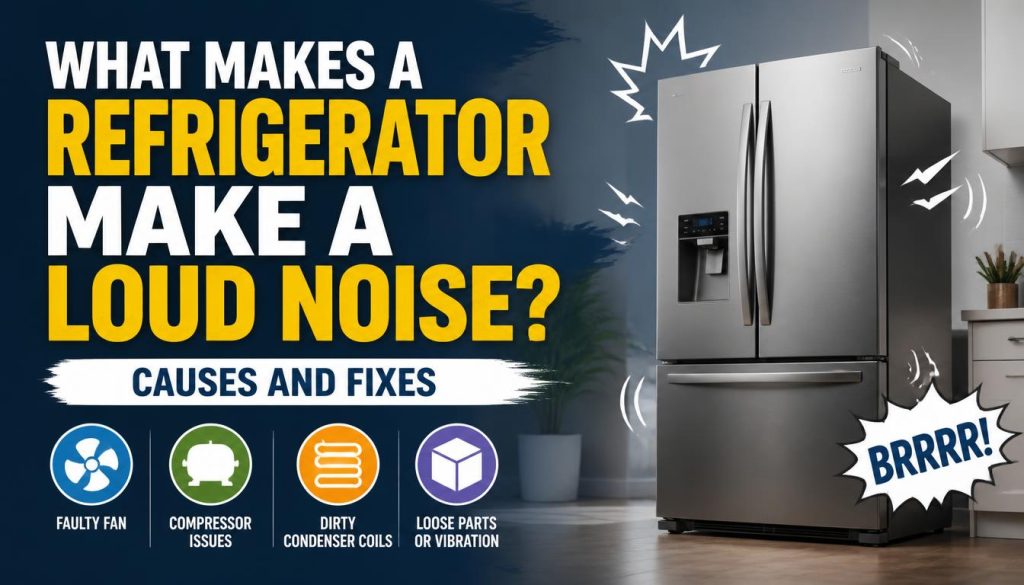
What makes a refrigerator make a loud noise? A refrigerator may become unusually loud because of a vibrating cabinet, loose components, a faulty fan, ice buildup, an ice maker problem, or compressor-related issues. Some humming, clicking, and gurgling sounds are normal, but sudden grinding, persistent rattling, or loud noises accompanied by poor cooling may require repair.
A refrigerator should not make you wonder whether something is about to break every time it starts running. Yet many homeowners notice their fridge buzzing loudly, vibrating against the kitchen cabinets, grinding inside the freezer, or producing a strange knocking sound at night.
The challenge is that different refrigerator problems can sound surprisingly similar. A rattling water line can resemble a loose internal component, while a fan hitting ice can produce a grinding noise that sounds like a serious mechanical failure.
The good news is that you can often narrow down the cause without taking your refrigerator apart. Pay attention to the type of noise, where it comes from, when it happens, and whether the appliance is still cooling properly. This guide explains the most common causes, the checks you can safely perform, and the warning signs that mean it is time to call a refrigerator repair technician.
What Makes a Refrigerator Make a Loud Noise?
A refrigerator usually makes a loud noise when a moving component vibrates, a fan encounters an obstruction, the ice maker or water valve operates, or a mechanical component develops a problem. An uneven installation or contact with nearby cabinets can also amplify normal operating sounds.
The most common causes include:
- An uneven refrigerator or loose leveling feet
- Contact with a wall, cabinet, or water line
- Vibrating shelves, bottles, or a loose drain pan
- A condenser fan or evaporator fan problem
- Ice buildup around a fan blade
- An ice maker or water inlet valve issue
- Compressor vibration or a faulty starting component
- Normal refrigerant movement, cooling cycles, or defrost sounds
Before assuming that an expensive component has failed, start with the easiest external checks. You may discover that the noise comes from something vibrating against the refrigerator rather than from a damaged part.
8 Common Reasons Your Refrigerator Is Making a Loud Noise
1. The Refrigerator Is Not Level
An improperly leveled refrigerator can rock slightly during operation. As the compressor and fans run, this movement may create a loud humming, rattling, or vibrating sound.
You may notice the problem after moving the refrigerator, installing a new appliance, cleaning behind it, or changing the kitchen flooring.
How to check it:
Gently check whether the refrigerator rocks when you touch the cabinet. Inspect the leveling feet and confirm that the appliance sits firmly on the floor.
How to fix it:
Adjust the leveling feet according to the manufacturer’s instructions. Make sure the refrigerator remains stable and that its doors close properly. The precise leveling requirements vary by model, so consult the owner’s manual rather than guessing at the correct angle.
If the refrigerator continues vibrating after it has been properly leveled, another component may be responsible.
2. The Refrigerator Is Touching a Wall or Cabinet
A refrigerator does not need to be defective to make an irritating noise. Sometimes the cabinet simply transfers vibration to a nearby wall, kitchen unit, or countertop.
This is particularly noticeable in smaller kitchens, where refrigerators are fitted tightly between cabinets.
Common signs include:
- A rattling sound from the back or side
- A low vibration that travels through the wall
- Noise that changes when the refrigerator is repositioned slightly
- A water line knocking against the wall behind the appliance
How to fix it:
Check the clearance around the refrigerator and make sure it is not pressing against nearby surfaces. If it can be moved safely, create the clearance specified in the owner’s manual.
Also check that the power cord and water supply line are not trapped or rubbing against the cabinet. Never pull a connected refrigerator forcefully, because doing so can damage the water line or electrical connection.
For more guidance on this type of problem, see our guide to refrigerator vibrating noise and its causes.
3. Loose Shelves, Bottles, or the Drain Pan
Sometimes the sound does not come from the refrigerator’s mechanical system at all. A loose shelf, glass bottle, food container, or drain pan can vibrate whenever the compressor or fans operate.
These sounds often resemble rattling, tapping, or intermittent knocking.
The easiest way to investigate is to check the refrigerator’s interior first. Make sure bottles are not touching one another, shelves are sitting correctly in their supports, and removable bins are properly installed.
If the noise appears to come from underneath the refrigerator, a loose drain pan may be responsible. The drain pan collects water produced during defrosting, and a loose pan may vibrate against the cabinet.
How to fix it:
Reposition loose containers and secure removable shelves and bins. If the drain pan is accessible according to the owner’s manual, inspect it for looseness.
Do not remove sealed panels or reach near moving components to investigate a sound. If the pan cannot be accessed safely, ask a technician to inspect it.
4. A Condenser Fan Is Dirty, Obstructed, or Worn
The condenser fan helps move air through the condenser area on refrigerator models equipped with one. Depending on the design, it may be located near the compressor at the bottom or rear of the appliance.
A damaged fan blade, accumulated debris, or a worn fan motor may produce a buzzing, rattling, grinding, or scraping sound.
However, not every refrigerator uses the same fan arrangement. Some models have different condenser designs, and not every refrigerator has an externally accessible condenser fan.
What to check:
Pay attention to whether the noise is loudest near the bottom or rear of the appliance. A fan-related noise may become more noticeable when the cooling system is running.
What to do:
Disconnect power before cleaning any accessible area, and follow the manufacturer’s cleaning instructions. Do not reach into a fan opening or attempt to move the blade while the refrigerator is connected to power.
If the sound continues, the fan may be obstructed internally or its motor may need attention. A technician can determine whether cleaning, repair, or replacement is appropriate.
5. The Evaporator Fan Is Hitting Ice
A loud grinding or scraping noise from inside the freezer is an important clue. The evaporator fan circulates cold air through the refrigerator, and ice buildup around its blade can interfere with its movement.
You might hear the noise becoming louder during a cooling cycle. On many models, the internal fan stops when a door opens, so the sound may temporarily disappear when you open the freezer door.
That behavior can point toward a fan-related problem, although it does not prove that the fan is defective.
Possible causes include excessive frost, a defrost-system problem, a damaged fan blade, or a failing fan motor.
How to respond:
Look for visible frost buildup inside the freezer and note whether the refrigerator is still maintaining the correct temperature. Avoid removing internal panels to inspect the fan unless you are qualified to perform the repair.
Do not chip ice away with a knife, screwdriver, or other sharp object. You could damage the evaporator or another component.
If heavy frost keeps returning, or the noise occurs alongside poor cooling, arrange a professional inspection. Simply removing visible ice may not solve the underlying problem.
6. The Ice Maker or Water Inlet Valve Is Making Noise
Refrigerators with automatic ice makers can produce buzzing, humming, clicking, and banging sounds during ice production.
A short noise while the ice maker fills with water or releases ice is often normal. However, a loud buzzing that repeats without producing ice may indicate a water-supply issue.
For example, the water supply may be turned off while the ice maker remains enabled. The water inlet valve may attempt to operate even though water cannot reach it.
A loose water line can also vibrate against the wall, while a faulty valve may create unusual buzzing or humming.
How to fix it:
If the refrigerator is connected to a water supply, check whether the supply valve is open and the line is visibly undamaged. Follow the manufacturer’s instructions for checking the ice maker.
If the refrigerator is not connected to a water supply, turn off the ice maker if the model’s instructions recommend doing so.
Do not force a valve, disconnect a pressurized water line, or dismantle the inlet valve yourself.
You can also read our troubleshooting guide to refrigerator buzzing noise and possible fixes.
7. The Compressor Is Vibrating or Struggling to Start
The compressor circulates refrigerant through the cooling system and plays a central role in keeping food cold. It normally produces some humming or vibration while operating.
Modern refrigerators may sound different from older models because many use efficient variable-speed compressors that adjust their operation according to cooling demand.
However, unusually loud humming, repeated clicking, or severe vibration near the lower rear of the refrigerator may indicate a problem involving the compressor, its mounting, or its starting components.
One especially important warning sign is repeated clicking accompanied by poor cooling. The compressor may be attempting to start without successfully running, although other electrical or control problems can produce similar symptoms.
What should you do?
First, check the simple possibilities. Make sure the refrigerator is stable and is not vibrating against a wall or cabinet.
If the loud noise continues, especially when accompanied by rising temperatures inside the refrigerator, contact a qualified appliance technician. Diagnosing a compressor or electrical starting problem requires more than identifying the sound.
Avoid replacing the compressor or ordering parts based on noise alone.
For a more detailed explanation of unfamiliar refrigerator sounds, see our guide to why a refrigerator makes a weird noise.
8. Normal Refrigeration and Defrost-Cycle Sounds
Not every unfamiliar refrigerator sound indicates a problem.
During normal operation, refrigerant moves through the cooling system, fans change speed, water drains after defrosting, and internal materials expand or contract as temperatures change.
These processes can produce humming, hissing, gurgling, dripping, clicking, popping, or occasional cracking sounds.
The ice maker may also produce a distinct sound when ice cubes fall into the storage bin.
The key is whether the noise is consistent with the refrigerator’s normal operating pattern.
According to Whirlpool’s refrigerator noise guide, sounds such as vibration, buzzing, hissing, gurgling, and popping can have different explanations depending on when and where they occur.
A soft sound that comes and goes while the refrigerator cools is generally less concerning than a new, harsh grinding noise or repeated clicking accompanied by poor cooling.
If your refrigerator is cooling normally and producing only brief, familiar operating sounds, monitor it rather than immediately assuming a component has failed.
How to Identify the Cause by the Type of Noise
The sound itself can help narrow down the possibilities, but it is not enough to confirm a faulty component. Use the following table as a starting point.
| Refrigerator Noise | Possible Cause | What to Check |
|---|---|---|
| Loud buzzing | Ice maker, water valve, fan, or vibration | Water supply, ice maker, and nearby surfaces |
| Rattling | Loose parts, drain pan, or uneven installation | Shelves, bottles, leveling feet, and external contact |
| Grinding or scraping | Fan touching ice or debris, or a worn motor | Freezer frost and the location of the noise |
| Repeated clicking | Compressor starting issue or an electrical control problem | Whether cooling is normal |
| Banging or knocking | Ice maker, water line, loose parts, or vibration | When the noise occurs and where it originates |
| High-pitched whining | Fan motor, airflow, water valve, or compressor | Whether the sound comes from the freezer or rear of the appliance |
| Hissing or gurgling | Refrigerant movement or defrost water | Whether the sound is brief and cooling remains normal |
| Popping or cracking | Expansion and contraction of internal materials | Whether the noise is occasional or accompanied by other symptoms |
If the sound resembles a low groan or a moan, our guide to refrigerator moaning noises may help you narrow down the possibilities.
For a sharp whistle, squeal, or other high-frequency sound, see why a refrigerator makes a high-pitched noise.
Why Is the Refrigerator Making a Loud Noise but Still Cooling?
A refrigerator can continue cooling even when a fan, ice maker, water valve, or another component is producing an unusual noise.
For example, a fan may begin wearing out before cooling performance noticeably changes. A loose drain pan may vibrate while the cooling system works normally. An ice maker may buzz because of a water-supply problem even though the refrigerator compartment remains cold.
Start by identifying where the sound originates. Check the refrigerator’s positioning, removable containers, water line, and visible frost.
Next, monitor the temperature rather than relying only on how cold the refrigerator feels when you open it. A refrigerator thermometer can help you determine whether the appliance is maintaining a safe temperature.
If the noise becomes progressively louder, the refrigerator begins cycling repeatedly, or the temperature rises, seek professional help.
Important: Normal cooling does not guarantee that every component is healthy. A new or unusually loud mechanical noise deserves attention even when food is still cold.
Why Is the Refrigerator Making Noise and Not Cooling?
A loud refrigerator that is no longer cooling properly needs more urgent attention than one producing a mild noise during normal operation.
Possible causes include a fan failure, a compressor starting problem, restricted airflow, heavy frost buildup, or another mechanical or electrical fault.
Look for additional warning signs:
- The freezer or refrigerator compartment is getting warmer.
- The compressor clicks repeatedly but does not appear to run normally.
- The freezer has an unusual amount of frost.
- The refrigerator is running for long periods without maintaining temperature.
- The noise is accompanied by a burning smell or severe vibration.
Do not remove internal panels or attempt to test electrical components while the refrigerator is powered.
If the noise is severe and the appliance is not cooling, arrange a repair assessment. Move perishable food to a properly functioning refrigerator or suitable cooler while following food-safety guidance.
For related diagnostic steps, consult our broader refrigerator troubleshooting guide and the appliance manufacturer’s instructions for your specific model.
How to Troubleshoot a Loud Refrigerator Safely
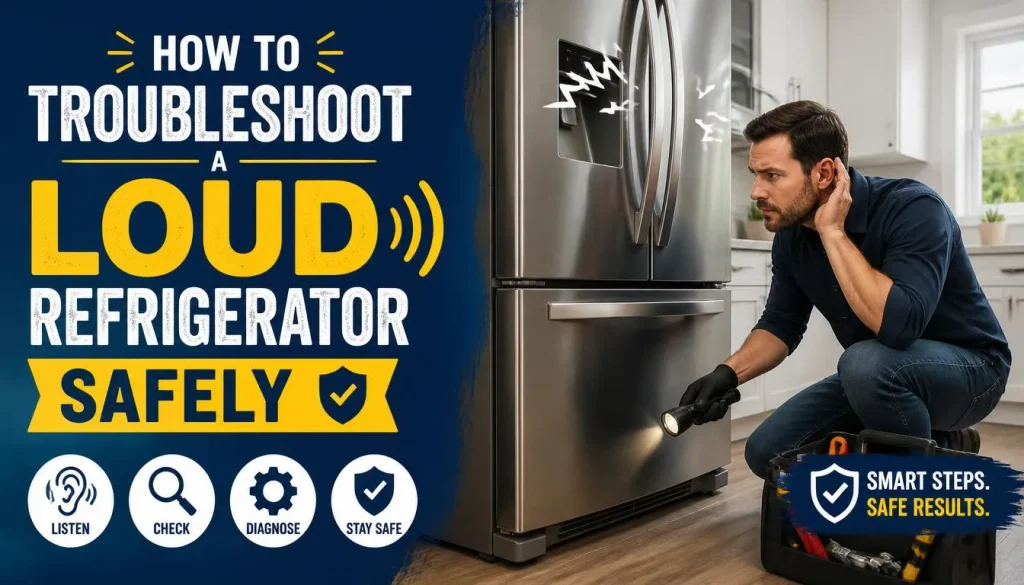
You can investigate several common causes without disassembling the appliance. Work through these checks in order.
Step 1: Identify the sound. Determine whether it is buzzing, rattling, grinding, clicking, or banging. Notice whether it occurs continuously or only during certain parts of the cooling cycle.
Step 2: Locate the noise. Listen from outside the appliance to determine whether the sound is loudest near the freezer, the back, the bottom, or the ice maker. Avoid reaching behind internal covers.
Step 3: Check for external vibration. Make sure the refrigerator sits firmly on the floor and does not touch the wall or cabinets. Adjust its position only if it can be moved safely.
Step 4: Inspect removable items. Secure bottles, shelves, bins, and containers that may be vibrating against one another.
Step 5: Check the water supply and ice maker. If the sound appears during ice production, follow the manufacturer’s instructions to check the supply and ice maker settings.
Step 6: Look for visible frost or cooling problems. Excessive frost, rising temperatures, or repeated clicking can indicate a more serious issue. Do not remove panels to inspect fans or electrical parts.
Step 7: Clean only accessible areas as instructed. If your refrigerator requires condenser-area cleaning, consult the owner’s manual and disconnect power before cleaning. Not all models provide the same level of access.
If these checks do not identify a simple cause, arrange a professional diagnosis rather than replacing parts through trial and error.
Which Refrigerator Noises Are Normal and Which Are Serious?
Some sounds are expected during ordinary refrigerator operation. Others deserve a closer look.
Usually normal:
- A steady, moderate hum from the compressor
- Brief clicking as cooling cycles change
- Occasional gurgling or hissing
- Water dripping into the drain pan during defrosting
- Ice dropping into the ice bin
- Occasional popping or cracking as materials change temperature
Potentially concerning:
- A sudden, loud grinding or scraping noise
- A fan-like noise that becomes progressively louder
- Repeated clicking with poor cooling
- Strong vibration that continues after basic positioning checks
- A persistent loud buzzing that does not match normal operation
- Any unusual mechanical noise accompanied by rising temperatures
The distinction matters because an occasional operating sound may not require repair, while a new noise combined with other symptoms may indicate a problem.
Samsung’s refrigerator noise guide explains that refrigerators are not completely silent, even when new, and discusses several sounds associated with normal operation.
Similarly, Bosch’s loud refrigerator troubleshooting guide identifies fan and compressor issues among the possible reasons for excessive noise.
Always consult the documentation for your own model because component layouts, operating sounds, and troubleshooting procedures vary.
When Should You Unplug the Refrigerator or Call a Technician?
A loud refrigerator does not always need immediate professional repair, but certain symptoms should not be ignored.
Contact a refrigerator repair technician if the noise remains unusually loud after basic checks, if a fan appears to be obstructed internally, or if you suspect a compressor or electrical problem.
Professional inspection is especially important when the refrigerator is not cooling, the compressor repeatedly attempts to start, or heavy frost keeps returning.
If you smell something burning, notice smoke, or suspect an electrical fault, stop using the appliance. Disconnect the power if you can do so safely without approaching smoke, exposed wiring, or another hazard. Do not reconnect it until the cause has been checked.
Avoid working on live electrical components, removing sealed refrigeration-system parts, or using sharp tools to clear ice around a fan.
A technician can identify whether the problem involves a fan motor, start component, compressor, defrost system, water valve, or another part that requires repair.
How to Prevent Your Refrigerator From Making Loud Noises
Regular care can help reduce unnecessary vibration and make developing problems easier to identify.
- Keep the refrigerator level. Check that the appliance sits firmly on the floor, especially after moving it.
- Maintain the recommended clearance. Follow the manufacturer’s ventilation requirements and prevent the cabinet from pressing against surrounding surfaces.
- Keep removable items secure. Position bottles, containers, bins, and shelves so they do not rattle during operation.
- Clean accessible areas appropriately. Follow the owner’s manual for condenser-area maintenance and cleaning.
- Check the water line when applicable. Make sure the line is not kinked, damaged, or vibrating against a wall.
- Pay attention to frost buildup. Repeated heavy frost may indicate a door-seal, defrost, or airflow problem.
- Notice changes in sound. Learning your refrigerator’s usual operating sounds can help you identify a problem early.
Routine care will not prevent every mechanical failure, but it can reduce avoidable vibration and help you recognize when something changes.
Frequently Asked Questions
What makes a refrigerator suddenly make a loud noise?
A refrigerator may suddenly become loud because a fan is hitting ice, a loose component is vibrating, the appliance has shifted out of position, or a water line is moving against the cabinet. A worn fan motor or compressor-related problem is also possible. Check the noise location and whether cooling remains normal before deciding what to do next.
Is it normal for a refrigerator to make a loud humming noise?
A moderate hum is a normal part of refrigerator operation. However, a hum that suddenly becomes much louder may indicate vibration, a fan issue, an ice maker problem, or a compressor-related fault. If the noise is persistent or accompanied by poor cooling, arrange a professional inspection.
Why does my refrigerator stop making noise when I open the door?
On many refrigerators, opening a door activates a door switch that stops the internal evaporator fan. If a noise stops at that moment, the fan or something interfering with it may be responsible. However, this is not a definitive diagnosis because fan controls and operating behavior vary by model.
Can a loud refrigerator noise mean the compressor is failing?
Yes, although noise alone cannot confirm compressor failure. A loud hum, repeated clicking, or unusual vibration near the compressor may indicate a starting or mechanical problem. Loose components and fan issues can produce similar symptoms, so a technician should diagnose the source before any parts are replaced.
Why is my refrigerator making noise but still cooling?
A refrigerator can maintain its temperature while a fan, ice maker, water valve, or loose component makes an unusual noise. Some minor problems appear before cooling performance changes. If the sound is new, unusually loud, or progressively worsening, investigate it rather than assuming everything is fine because the food is still cold.
Should I unplug my refrigerator if it is making a loud noise?
Not every loud noise requires unplugging the refrigerator. Start with safe external checks if there are no warning signs. If you notice a burning smell, smoke, or suspected electrical trouble, stop using the appliance and disconnect power only if it is safe to do so. A refrigerator that is not cooling or repeatedly clicking should be checked promptly.
Why is my refrigerator making a loud noise at night?
A refrigerator may seem louder at night because the surrounding environment is quieter. You may become more aware of normal compressor cycles, fan operation, ice production, or vibration through the floor or cabinets. If the noise is genuinely new, harsh, persistent, or accompanied by cooling problems, investigate the source.
How do I know if my refrigerator fan is faulty?
Grinding, scraping, squealing, or unusual rattling near the freezer or lower rear of the refrigerator can indicate a fan problem. A sound that stops when a door opens may also point toward an internal fan on some models. These clues are not conclusive, so avoid removing panels or reaching near moving parts. Have the fan inspected if the noise continues.
Final Thoughts
A refrigerator making a loud noise can be frustrating, but the cause is not always a major mechanical failure. An uneven appliance, vibrating water line, loose drain pan, ice maker operation, or fan problem can all create unusual sounds.
Start by identifying the type of noise, finding where it comes from, and checking whether the refrigerator is still cooling properly. Simple external adjustments may resolve some problems, while persistent grinding, repeated clicking, excessive vibration, or electrical warning signs require more attention.
Most importantly, do not replace expensive components based on sound alone. Follow the manufacturer’s troubleshooting guidance, perform only safe checks, and call a qualified technician when the cause is unclear or the refrigerator is no longer operating normally.

Hi, I’m the lead researcher and appliance enthusiast behind RefrigeratorSolve. With years of hands-on experience troubleshooting cooling systems and testing home appliances, I am dedicated to bringing you honest reviews, energy-saving tips, and practical solutions to keep your refrigerator running perfectly.